Oh, The iRonny

After less than a week as the Slovenian-appointed arbitrator at the Arbitration Tribunal, Ronny Abraham quit the post, saying he agreed to the appointment “in the hope that this would help restore confidence between the Parties and the Arbitral Tribunal and to allow the process to continue normally, with consent of the both parties” but realized this is not the case hence it is no longer appropriate for him to serve on the tribunal (this via CPA press release). Obviously, all hell broke loose this side of the Alps where only days earlier foreign minister Karl “Teflon” Erjavec lauded Abraham’s appointment as a victory for Slovene diplomacy. Sneers about victory turning into a defeat were inevitable, as were renewed calls for his resignation. The irony, of course, was not lost on anyone. Or, rather, the iRonny.

20150807_blog
Original picture via the ICJ

To be honest, other than driving Slovenian foreign policy from embarrassment to embarrassment, Erjavec is not really the man responsible here. I mean, sure, his bravado was unfounded as usual, but it was mostly for internal consumption rather than anything else. The man is sly enough not to have done any actual moves in this mess without express backing either of PM Cerar or the government as a whole. Indeed, Abraham was appointed by the government in an extraordinary session and – truth be told – Erjavec, for all his political prowess does not strike pengovsky as having the capacity of coming up with a heavyweight like Abraham, who currently serves as President of the International Court of Justice in the Hague.

Which, incidentally, might be the clue to his resignation. Abraham stated in no unclear terms that the reason for his withdrawing is the fact that one of the parties (that be Croatia) has no intention of adhering to whatever decision the tribunal comes up with. Which is bad enough and not something you want on your resume, especially if you’re late to the party. But it could also indicates that he expect the case to land in front of ICJ some time in the future (something Croatia was hoping to achieve all along). But regardless od whether this happens or not, his message was clear: he will have nothing to do with cases where one of the parties reneges on a written and signed promise.

The arbitration, however, continues. Slovenia will again appoint an arbitrator, probably in the next two weeks (the usual suspect are already lining up in the media stream), the only difference being that the government will take much more flak over it. Both from the media (which have unreservedly echoed politicians’ cries of happiness first time around) as well as the opposition. In fact, while conspiracy theories about who’s really behind the shenanigans were initially on the back burner, they’re on full-throttle this time around. Stupid as they are.

initially, the word on the street was that the Sekolec-Drenik leak was orchestrated by either the Social Democrats (junior coalition partners) or the opposition SDS of Janez Janša. The logic of it being that the SD is a) in control of the intelligence community by virtue of having the defence portfolio and b) still pissed with PM Cerar over #Vebergate and the sale of Telekom Slovenije (which, incidentally, fell through). Or, in the case of the SDS, that the general assumption that Janša still has every fucking intelligence service penetrated with this people back from his heyday as the defence-mofo-in-chief.

Both of these theories have holes the size of Greek debt-to-GDP ratio in them. Namely: the SDS would have been a prime suspect, had it not been for the slight detail of Janša still rotting in jail at the time of the first Sekolec-Drenik convo. At that particular junction the Party was completely focused on getting the Glorious Leader from behind bars and could spare precious few resources to pull a stunt like that – and then sit on it. As for SD, the explanation is painfully simple. Right now, they can’t even tie their own shoelaces, let alone orchestrate what would in these circumstances amount to high treason and get away with it. Case closed on items One and Two

Then there’s the idea that it’s the Americans who were somehow punishing Slovenia for supposedly being too close to Russia. The largest-circulation Slovenian tabloid Slovenske novice even ran a story to that effect. Which is some of the biggest load of bullshit we’ve seen recently in this sorry excuse for a country. Because not only is the Slovenian-Russian hug-fest at the Russian Chapel on the Vršič mountain pass an annual event dating back a whole lotta years (cue Led Zeppelin), the incessant belief that this sorry excuse for a country is a battlefield for proxy wars between superpowers is, well, delusional at best. Damir Lucić in Rijeka-based Novi List took apart the Croatian aspect of this particular argument quite well (Croatian only). Basically, his argument goes along the lines that the Croatian notion of US being in Croatia’s corner on this one is weird (to put it mildly) in the context of US oil company pulling out of oil exploration/exploitation off the Croatian coast, citing border disputes of all things (this time with Montenegro where one of the richest oil fields is tought to be located).

Pengovsky’s favourite (not in the least because it was concocted by moi personally) is that it was the Austrians which picked up the Sekolec-Drenik international call (spying on international calls is perfectly legal, both are foreign nationals and Sekolec lives in Vienna), somehow delivered the goods to Croatia on account of them being the Austrians neighbour’s neighbour (one usually gets along better with those than one’s immediate neighbours) and rocked the boat a bit. On the other hand, Slovenia could have some dirt on Croatia, courtesy of the Dutch, of all people. Which would account for PM Cerar’s appointing his Dutch counterpart Rutte to cast a vote in Slovenia’s name during the last round of the Greek clusterfuck in Brussels (Cerar puzzled a lot of people with that move and took a lot of flak over it).

Had the above really been the case, it would have been one for the textbooks, but unfortunately is has about the same amount of relevance as any other conspiracy theory on this particular issue. Absolutely none. The Austrians even went on the record saying the expect the countries to stick to the agreement (this, admittedly, via the Slovene Press Agency).

Anyways. No matter how you look at it, this is simply yet another case of Hanlon’s Razor, i.e. attributing malice where stupidity suffices. And boy, there is a lot of stupid floating around in this debate.


SuperKarl and Croatian Rapid-Fire Mode

Karl Erjavec is one lucky sonofabitch. In fact, he is so lucky that his middle name could well be changed from Viktor to Felix. I mean, the lucky with this guy is so strong that if he’d been thrown out of an airlock in the middle of the universe, he’d beat the probability of survival of two to the power of 276,709 to one against. Because that’s how improbable it is that Karl Erjavec found himself at the epicentre of not one, but two political and diplomatic scandals in Slovenia and was told by PM Cerar that he will not seek his replacement.

20150728_blog
SuperKarl and the Mystery of The Arbitration. Sounds like a film with Harrison Ford

You see, if this was a time like any other, Erjavec would be flying out of the ministry, legs first, over a scandal with Slovenian ambassador to France where she allegedly embezzled state funds, repeatedly went on unauthorised leaves and fabricated reports. Shit was apparently brewing for some time, while the wrongdoing was uncovered months ago by an internal audit results of which were then sat on by the foreign ministry. The report was released only yesterday after the Information Commissioner ordered the ministry to do so, following an apparently unusually long deliberation on the issue.

However, since Slovenia is momentarily embroiled in the Arbitration Agreement omnishambles which already claimed the two directly involved senior diplomats, PM Miro Cerar apparently decided against beheading the foreign ministry in what is shaping to be a crucial, all-hands-on-deck period in the arbitration on the Slovenia-Croatia border dispute.  Not to mention the quite probable outbreak of a political crisis in Slovenia dismissing the leader of the second largest coalition party would probably incur. Thus SuperKarl lives to see another day.

Namely, after the initial panicky response to what is now dubbed PiranLeaks, Slovenian political class is finally getting its shit together. Thus a new national arbiter will be appointed soonest (probably today), circumventing the usually protracted process in the parliament, in the hope that the arbitration proceedings can continue and ultimately conclude. Which is precisely what Croatia wants to prevent.

The government of Zoran Milanović went into rapid-fire mode, upping the ante almost daily. Thus on Sunday FM Vesna Pusić was still writing a concerned letter to the Arbitration Tribunal, formally notifying it of what had happened, but on Monday PM Milanović already announced the government is considering withdrawing from the arbitration altogether. And when his Slovenian counterpart Cerar said neither country can quit the arbitration (as per agreement), Milanović retorted by saying that it can and it will.

This is the point where things start to get tricky indeed. For all its bravado (probably amplified by the de facto election campaign Croatia is in), the incumbent Croatian government has talked itself into a rather cramped corner. Not putting their money where their mouth is would mean certain ruin for Milanović and his fellow political travellers. But the signals they are receiving are anything but clear and/or encouraging. Namely, the European Commission stated in no unclear terms that it expects the rules of the agreement to be adhered to and for the tribunal to finish the job at hand. The tribunal itself demanded Slovenia explain its version of events. Whether or not this heralds a chastising of Slovenia or not remains to be seen, but it does suggest the tribunal sees itself fit to handle the current clusterfuck as well.

Point being that Croatia used up most of its ammo (provided there’s not another batch of phone-taps waiting to miraculously appear in Croatian media) while everyone else barely made a move. This, too, suggest the pace of Croatian moves is dictated by internal political dynamics (looming elections) rather than the arbitration itself. And while one can fully expect attempts at broadening the field (like Zagreb filing a complaint with the Int’l Maritime Tribunal in Hamburg), the fact is that the Arbitration Tribunal has it within its power to conclude the proceedings as per the agreement. Even if that means unilaterally appointing a new arbiter for Croatia, since Vukas is rumoured to be stepping down at the behest of the government in Zagreb which will not name a replacement, or so the wisdom goes.

Unless, of course, Slovenia has a trick or two up its sleeve, as well. That, at least, that was the translation of Branko Grims’ cryptic praise of SOVA, the Slovenian spook service yesterday. Namely, Gizmo (generally, a pretty undesirable character) said the country’s intelligence services had done an excellent job which led to speculations that Slovenia, too, had been listening in on Croatian convos (link in Slovenian).

If that really is the case, one can only hope no one is stupid enough to actually release the recordings. We’ve seen enough embarrassment these days to go around. Twice over.

UPDATE
This, via the STA


The Wire: Arbitration Agreement Edition

In the good old days, men were men, women were women, Eccentrica Gallumbits, the triple-breasted whore of Eroticon Six was Eccentrica Gallumbits, the triple-breasted whore of Eroticon Six and Slovenia-Croatia border disputes flared up every summer. Like clockwork. Then came the Arbitration Agreement and put an end to all that. And I’m not talking about hipsters here, if you catch my meaning. Since yesterday, however, it feels like the good old days.

20150723_arbitration

Arbitration Tribunal in session (source)

Croatian daily Večernji list ran a bombshell of a story, claiming Slovenia acted in bad faith vis-a-vis the Arbitration Tribunal and had the country’s agent with the court Simona Drenik (full disclosure: pengovsky knows her personally) discuss tactics of Slovenian case with Jernej Sekolec, the country’s appointee to a five-member tribunal. Obviously all hell broke loose, with the Croats going all Captain Renault on arbitration and hinted at bailing out of the proceedings, which, if the three phone records are to be believed (and so far no-one has denied their authenticity), were going well in Slovenia’s favour.

There are multiple aspects to the issue, not in the least why exactly were the records made public now, when they were apparently made between November last year and January this year. But while Croatia is crying foul, the debate in Slovenia immediately took on a holier-than-thou attitude, taking the Zagreb spin at face value and started dissecting the Sekolec-Drenik convo, looking for clues to support Croatian claims. Which are, well, on rather thin ice.

Namely, Croatia claims that Slovenia tried to influence the tribunal consisting of three independent experts plus an arbiter from either side by coaching the national arbiter in aspects that are beneficial to the Slovenian cause. Well, is the Pope Catholic? I mean, both sides have put forward a memorandum stating their case and left it to the tribunal to decide on the merits of claims. The fact that both countries agreed to appoint a national arbiter shows that the conflicting parties wanted to have a) continuous oversight over the proceeding (as opposed to being merely informed of the decision) and b) the ability to at least try to steer the deliberations to their benefit. Sekolec at one point even implies that everyone subscribed to the tacit understanding that the national arbiters are by default biased (duh!) by hinting at the three foreign experts (occasionally?) meeting separately to discuss the issues at hand.

The gist of the story is that the tribunal is due to release a binding decision in December and – apparently – award two-thirds of the Bay of Piran to Slovenia and provide for a short corridor to international waters. Thus a key Slovenian maritime goal would have been achieved, after more than two decades of border incidents and even armed confrontations on land and on the sea. Which explains why the Croatian side went public with the wiretaps only now and not immediately after they were recorded.

For all intents and purposes, this is a major intelligence scoop by Croatian spooks. Despite the prevailing narrative of “amateur hour”, Slovenian foreign ministry takes security pretty seriously. Doubly so in the case of the arbitration. This, pengovsky knows for a fact. So what we are dealing with here in all probability is not two bureaucrats with a frivolous attitude towards security but rather a major breach or even an inside job (conspiracy theories! \o/). Which means that Slovenian spook services will have a lot of explaining to do.

But the main takeaway here is not that Sekolec and Drenik were indeed confabulating (no-one on the Slovenian side denied the authenticity of the recordings and both have since resigned) but that the Croats went public with phone taps at all. Which means either that a) the breach was since sealed (unlikely, given the panic on the Slovenian side) or b) the wiretap had lost operational potential and Slovenia achieved what it wanted regardless. Which left Zagreb only with the nuclear option, to burn their asset and hope the whole thing takes the arbitration agreement with it.

Doubly so when one takes into account the fact that the final decision of the tribunal is to be published in December, awfully close to Croatian parliamentary elections where the incumbent left-wing government is apparently poised to lose to HDZ, prompting PM Milanović to suck up make overtures to right-wing voters to try and turn the trend. Should the tribunal indeed award more than a half of the Bay of Piran to Slovenia, the projected defeat of the Milanović government would most likely turn into a rout, especially since the Blut-und-Boden rhetoric is even more hyped-up in Croatia as it is in Slovenia. So while official Zagreb is professing its shock and innocence, the conclusion here is that the other party is trying to mitigate the disastrous effects a decision, favourable to Slovenia, international credibility be damned.

Interestingly, while Croatian political class is united feigning disbelief (former PM Jadranka Kosor, who signed the agreement with Slovenian then-PM Pahor, called the deal null and void), it is getting a lot of help from Slovenia as well. Not only did PM Cerar and FM Erjavec immediately leave Sekolec and Drenik hang out to dry, the two have been treated to a generous helping of proper backstabbing, either by various elements of the opposition, trying to cash in on the panic or by would-be arbiters who failed to wiggle their way into this story. Case in point by judge at the Constitutional Court and a long-time diplomat Ernest Petrič who saw it fit to delve right into the fray (Slovenian only).

Curiously enough, the only two high-profile individuals who have appealed for calm and warned against buying into the Croatian narrative are the two people who at the height of their game were seen as arch-enemies – Janez Janša and Gregor Golobič

Both appeal for calm and point out that it is Croatia which is in a weaker position, a stark opposite to the prevailing narrative of a Slovenian diplomatic failure. The President, however, who in his capacity as PM signed the Arbitration Agreement in 2009, was  – 24 hours after the crisis erupted – making hay while sun shone. Literally.

But, to be fair, the man did later say he expected the tribunal to finish the job. Whis it apparently intends to do, as per tweet of this Večer newspaper reporter

Just how exactly this will play out, is hard to say. But it does suggest Croatia found itself in a spot so tight, FM Vesna Pusić stated publicly that it doesn’t matter who made the tapes or how Croatia obtained them. Now, this is a bit of a Catch 22 situation for them, as problematic activity was detected by problematic methods and revealing that makes Croatia just as problematic as it believes Slovenia is. Which doesn’t exactly further their cause. Not to mention that wiretapping senior officials is somewhat frowned upon in this day and age. In the final analysis, the releasing of the tapes seems more like a domestic policy stunt to cover their asses if the tribunal really does decide to award a large part of the Piran Bay to Slovenia than anything else. But for all the talk about declaring the agreement null and void, just because they don’t like the result, it is worth to remember that one series which dealt with wiretapping, bad life decisions and tautologies.

A deal is a deal.


P.S.: For a good take on the issue, friend and colleague Nataša Briški provides over at Metina lista (Slovenian only)

Transfer Window

Since the hubbub on the impending #Grexit has, for now at least subsided or – at the very least – morphed into #Agreekment, a short update on the sordid sorry state of Slovenian politics beckons. For it would seem that we have entered the Transfer Window.

20150720_blog

To be honest, what was and still is happening is peanuts compared to the sabre-rattling which occasionally threatened to break up the coalition, mostly along the privatisation fault lines. And although a full-scale political crisis was never a real possibility (not with the current distribution of power, at least), there was enough bad blood accumulated that some sort of a fallout was inevitable. Curiously, however, these tremors are not limited to the government of Miro Cerar only but are, for now at least, equally present in the opposition as well.

It takes a certain amount of ingenuity to re-re-rat

The big shocker was the parting of ways between former eternal foreign minister Dimitrij Rupel and his political home of the last decade, Janez Janša‘s SDS. Rupel, a long-time LDS cadre under Drnovšek famously switched sides in 2004 and crossed over to SDS where he continued his diplomatic exploits. After Janša 2.0 government was toppled, the man fixed himself a cosy cushion to land on, having the outgoing government appoint him Consul General in Trieste (a prestigious but not all that demanding a position). However, he was axed from the position by his successor at the foreign ministry, one Karl Erjavec, following the letter of the austerity legislation, passed by Janša’s government (oh, the irony!) which stipulated that all civil servants over the age of 67 must retire, unless their superior finds a particular use for them. Needless to say Erjavec found no particular use for Rupel.

In fact, even before Teflon Karl started wielding the axe, Rupel and his supposedly coveted black book of contacts have been declining in demand. Which sort of made everyone think the man has finally thrown in the towel and limited himself to lecturing on a faculty of, shall we say, wanting reputation. After all, he clocked in his forty and should be able to enjoy the fruits of his long and illustrious career (give or take). Which is why it came as a complete surprise that he publicly announced his parting ways with the SDS. Quitting the Party is not small potatoes, because it was long assumed that if you in the Party, you in the Party.

Not so for the old fart Dimitrij. The Party, reeling from the massive haemorrhaging of resources to defend the Leader (that be Ivan) from the subversive communist abuse of the judiciary (that be The Patria Affair), just launched its shadow cabinet, a.k.a. SDS Council of Experts. Now, Rupel was apparently aiming at chairing the Foreign Policy Committee, but was passed over for Milan Zver MEP. This infuriated Dimitrij to the point of packing his shit up and leaving. He claims he was being punished for a recent interview in Reporter magazine where he (let’s be honest) failed to praise the Leader and swear to his infallibility. Instead, not only did Rupel had the guts to speculate on the post-Janša future of the political right, he even had the balls to state that there was, in fact, a period in Slovenian history where Milan Kučan (Janša’s arch-enemy) played a positive role. The nerve!

However, one could be excused for not entirely buying into Rupel’s self-righteousness. He is probably the only politico in this country which could possibly lay claim to have done a proper Churchill. Because anyone can rat. But it takes a certain amount of ingenuity to re-rat. Which is exactly what Rupel has done vis-a-vis Janša, parting ways in 1994, only to rejoin Janša in 2004 and now, another decade or so later, parting ways yet again. The conclusion here is simple: if Rupel is in search of a new political master (possibly Miro Cerar’s SMC), then the SDS is indeed in deep trouble since Rupel, one of the great survivors of Slovenian politics, apparently sees no further use for it. And parties which Rupel discarded himself of as un-prospective soon turned out to be politically marginalised and – ultimately – dead. Case in point every of his previous political dwellings: Slovene Democratic Union (SDZ), Demokrati Slovenije (DS), the once-mighty LDS and now SDS.

If political bellwethers such as Rupel are anything to go by, then the SDS should start worrying. However, one should not have high hopes for the SDS to change course any time soon. In fact, regardless of some pretty obvious intra-party opposition, the party proper is by and large committed to its president, increasingly creating a universe of its own and interacting with the reality the rest of us are experiencing only when need be. And before either of the two readers of this blog start pointing out the @prenovljenaSDS (reformed SDS) Twitter account it should be noted that the account might just as well be a ploy of Janša to see who follows the account and thus single out the descenders within his ranks. Just sayin’ 😉

Tr00 fans only

Not that the SDS is overly concerned, it seems. Because, although they’ve lost Rupel, they’ve gained (for all intents and purposes) Aleš Hojs, nominally one of the VPs of the ChristDem NSi, but in reality a tr00 JJ fan. Namely, after the NSi declined to join SDS shadow cabinet, continuing on their own course (an approach which served them well ever since they found their spine a couple of years ago), they poached Hojs and co-opted him as shadow defence minister, thereby sticking a wedge in both NSi leadership as well as rank and file where Hojs does have a certain amount of clout.

The NSi is, for the time being, choosing to ignore the issue and Hojs nominally still remains a member of the NSi senior structure, but they will have to get rid of him expeditiously. The bad blood between the former S/M partners of the political right keeps on accumulating and the NSi with its new-found confidence and a couple of policy scoops under its belt (notably, the recently passed law on post-WWII grave-sites) will not be able to tolerate in-party insubordination and impunity.

Bruised egos

But such solo acts can last surprisingly long. Case in point being Bojan Dobovšek, until recently an MP for SMC of Prime Minister Miro Cerar. Namely, Dobovšek quit the party months ago, citing “continuing old practices” in filing governmental positions, hinting and cronyism and corruption. But you could not be blamed for thinking Dobovšek was – not unlike Rupel – sore for being looked over when booty was split. In this case, he was widely tipped to become the minister of interior.¸But the spot went to Vesna Györkös Žnidar, while Dobovšek quit the party but remained a member of the SMC parliamentary group. Which is technically legal, most unhygienic and sure to generate a lot of media attention. If you catch my meaning.

However, about two weeks ago Dobovšek quit the SMC parliamentary group as well, thereby changing the internal relations within the coalition. Because with him gone, the Social democrats, most junior of coalition partners suddenly started to make a difference, as they provided the votes necessary for the coalition to claim a majority. While Dobovšek was on-board, the SMC and DeSUS themselves had 46 votes with SD more or less simply providing the body-count.

But with the man gone, SD leader Dejan Židan started boasting how the party will now claim its rightful spot, prompting DeSUS main honcho Karl Erjavec to tell Židan to get off that horse and not get ahead of himself. At that time it seemed as if Teflon Karl is (finally) suffering from a case of bruised ego. Little did we know the old trickster was about to do some political poaching of his won. Late last week Peter Vilfan of Alenka Bratušek’s ZaAB announced he is switching allegiances and crossing over to DeSUS.

Transfer window

Vilfan, former professional basketball player (hence the title of the post) started out as an unlikely politician in Ljubljana city council, first elected in 2005 on the coat-tails of Zoran Janković’s sweeping mayoral victory and then – in similar vein – to the parliament in 2011. He quit the city council in February 2014, officially due to corruption charges against Janković, but was rumoured to have ulterior motives in a real-estate deal that a city council vote on a news zoning plan about that time would enable and wanted to avoid unseemly appearances.

Anyhow, Vilfan resigned as MP a couple of months later as well. He was involved in a traffic accident, hitting a pedestrian with his car and was a DUI suspect. To his credit Vilfan did not try to skirt the issue but quit almost immediately and paid the hurt senior citizen a visit in the hospital. Luckily, the victim only suffered a broken arm and a lab analysis showed Vilfan was not intoxicated while driving. In a sense he kept to a standard of political hygiene that one would expect from a representative of the people. Which, sadly, is news in Slovenia. But it probably also helped Vilfan get re-elected in 2014 snap elections as one of four MPs of Alenka Bratušek’s fledgling party ZaAB, which splintered off from Jankovič’s Positive Slovenia. But soon after AB’s failed Euro-bid, things went south there as well, culminating for now in Vilfan switching teams.

Adding insult to injury, DeSUS not only picked up an MP, bringing their total to eleven, they also again marginalised the SD, giving enough votes to PM Miro Cerar to marginalize the most junior coalition partner and – not to be overlooked – being able to drive an even harder bargain protecting their particular interests in an already sluggish privatisation process.

Now, it seems plausible that Vilfan jumping ship on Bratušek will start an exodus from the party group. Well, exodus might be overreaching a word since after Vilfan’s departure the ZaAB party group is down to three MPs, a minimum required to actually be a parliamentary party group rather than just a set of independent MPs and enjoy the perks that come with it, such as participation in committee memberships.

Exodus

But the point is that remaining ZaAB MPs may well be on the market as well. Save former PM Alenka Bratušek herself, although given the egotistical lows she performed after successfully bringing the country from the brink in 2013, it is not entirely inconceivable she’d quit her own party group, too. But that’s just pengovsky being evil. More realistically, rumour has it that Mirjam Bon Klanjšček is to follow in Vilfan’s footsteps and make DeSUS male/female ratio look better come Autumn, the big question is just what exactly will Jani Möderndorfer do.

The man with a plan, the other great survivor of Slovenian politics, he hasn’t placed a bad political bet in his life. At the very least ever since he helped start a rift in the Ljubljana section of LDS in 2002 which ultimately led to the party breaking up and emergence of Zares (of which he, ultimately, was not a member). He then stuck with Janković all the way to the parliamentary elections in 2011, emerging as leader of the largest parliamentary group. But when things came to a head within the party in 2014 and Janković came to collect, Möderndorfer chose PM Bratušek over Janković. Wisely so, it transpired, since Janković’s Positive Slovenia proper did not make it above the 4-percent threshold in 2014 elections, while Bratušek’s ZaAB did, just barely.

Therefore, it will be interesting to see if Möderndorfer jumps ship as well or will he go down with it for the first time. From where he stands, both are equally legitimate. The interesting part is that he now faces a dilemma not dissimilar to that of Dimitrij Rupel: does he quit politics and gets a job (he is, among other things, a certified sign-language interpreter), or does he make another leap, possibly finding himself on the same boat as Rupel – as a member of the SMC.

Politics indeed makes for strange bedfellows.

Oxi


… and then, after the dust had settled, after placards had peeled away and the international clamour dissipated and supporters from foreign lands went home, when hangovers were cured and the euphoria subsided, when there was nothing more to say that hadn’t been said a million times over, the people of Greece were left to pick up the pieces all by themselves…

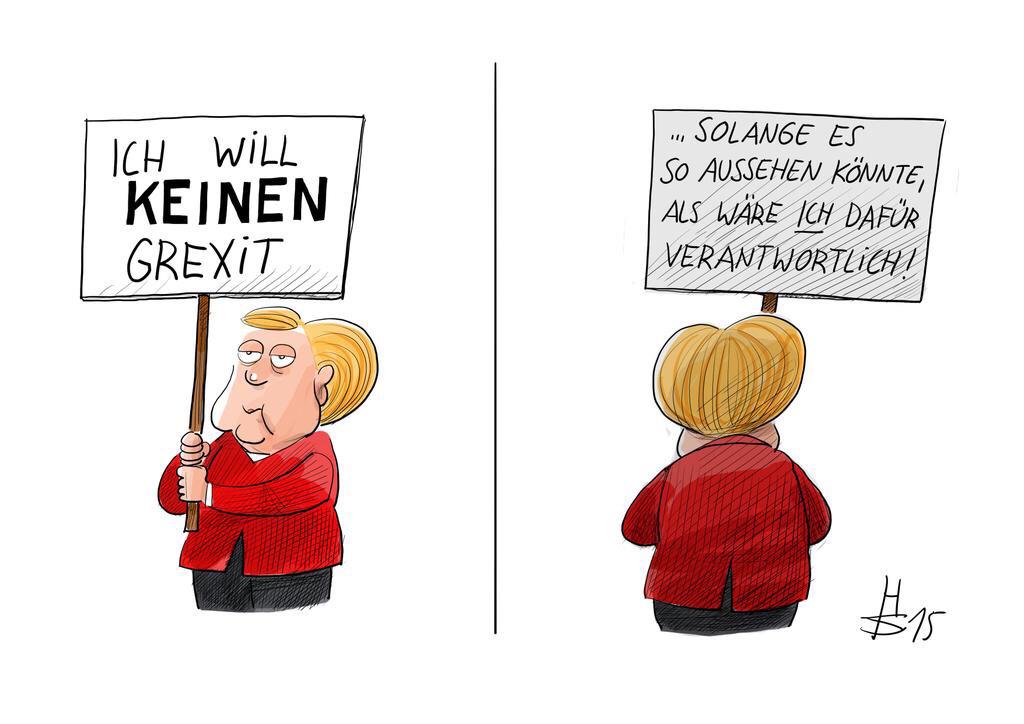
Shituation in Greece: What We Have Here Is Failure To Communicate

A few things need to be said vis-a-vis the impending Greek clusterfuck. Namely, we’ve been listening for weeks on end how the two sides, that is the heavily indebted Greece on one side and the don’t-call-it-Troika on the other were haggling over the finer points of tax hikes, spending cuts, projected values and sums calculated. But for some time now the one thought that has been bugging pengovsky was that we’ve seen it all before. Not in terms of the current economic and financial omnishambles – although one could argue that nothing has apparently been learned either from the Cypriot example or from previous failures of “saving Greece” – but more generally.

20150629_grexit
(source)

While most of the following is, obviously, based on media and other reports which inherently carry their own bias, it would seem that what we’ve got here is a failure to communicate. The shituation in Greece is not unlike the run-up to World War One or The Cuban Missile Crisis. In both cases, the conflicting sides were convinced they understood the position of the other side perfectly and in 1914 it ended in disaster, while in 1962 disaster was only narrowly averted. This is what happens when parties involved expect each other to behave according to their respective plans. When that doesn’t happen, bad things occur. And when bad thing occur, every new move, if not carefully calculated, only adds to the clusterfuck. And it is safe to say that calculated and measured moves were very few and far between, on both sides.

Greek PM Tsipras and his stellar FinMin Varoufakis seem to have expected the EU will simply roll over for the two of them after Syriza won the Greek elections. As if things will automatically start moving in a new and more healthy way just on their say so. Well, they didn’t and had they understood what was it that the Troika was after, they would not have spent months grandstanding and posturing (look ‘ma, no tie!) around Europe, achieving practically nothing. But on the other hand, had the Eurogroup and especially Frau Merkel understood what the Syriza victory in Greece actually meant in terms of legitimacy of austerity policy (rather than trying to prove to Greek voters they voted wrongly), things might have moved forward, despite the initial clumsiness of the Greek Duo. As things stand, there is not an innocent party in this sorry story. All of them have boxed themselves in with their own rules of engagement that could only degenerate into the current shituation.

As pressure bar goes way up into the red, accusations of communists in Athens trying to set Europe alight as well as accusations of fat cats in Brussels trying to make an example of Greece and shift the burden of the bailout squarely on the shoulders of the poorest strata of Greek society. Neither are exactly true, in pengovsky’s opinion.

Yes, this is an ideological fight. Whoever maintains that it is only the Greek government who is flaunting ideology suffers from a massive (self-inflicted) blind spot. Even adhering to pure maths means taking an ideological position. But just as the Greek government is “far left” only in terms of the general European discourse being right-of-centre, the don’t-call-it-Troika is a far cry from a 21st century incarnation of the Sherrif on Nottingham, case in point the latest proposal by the European Commission which, for example, calls for a larger cut in defence spending, a wider base for luxury tax, closing of tax loopholes, et cetera.

Point being there is nothing to be gained from an ideological shouting match. Other than shifting the blame, that is. Which is what the current rush to win the battle for interpretation looks like. Not so much wanting to find a way forward but making sure the other party is to blame when things go all the way south. Thus Varoufakis says Greece has a clear conscience re negotiations. That may be. And I’m sure Merkel, Dijsselbloem and the lot feel the same.

Isn’t that nice. The whole common currency project is about to go tits-up, possibly dragging the Union with it but everyone will have a clear conscience. Here’s a newsflash: you dimwits were not tasked with runing the show to have clear consciences but get shit done.

Conspiracy theories aside, plenty of European press seems to be clamouring for a “12th hour deal”, either counting on Tsipras/Varoufakis to see the light or Merkel, Draghi and even Juncker balking at the idea of going down in history as leaders under whose stewardship the euro (and by extension the EU) started to disintegrate. This line of thought has a big problem: Both “The Institutions” and the Greek government are convinced it is precisely their actions which can save the euro/EU while actions of the opposite side are “uneuropean, inhumane and illogical”. Not necessarily in that particular order. It is, as KAL some time ago so aptly pointed out, a classic case of irresistible force meeting an immovable object. It seems doubly ironic that a renowned expert in game theory should be an active participant in the dismal failure of the entire enterprise. Yes, I’m looking at you, Yanis.

True, both Greece and the don’t-call-it-Troika seem to have gone so far down the chute that a working deal is for all intents and purposes impossible without either of the sides caving in completely. So perhaps what is needed is a non-working deal? Something both sides need to save their respective faces (if not asses), knowing full well that the goals laid out will not be met. Because it is not as if all the previous goals set for Greece were met with flying colours.

So, here we are, with Greek banks closed, capital controls in place and EUR 60 cash withdrawal limit per bank account and/or person. Save a surprising yes vote by the Greeks on the #greferendum (which would, in turn, probably trigger new elections, further complicating events), the country is moving rapidly towards leaving the euro. Just how this plays out no-one knows.

A wise man once said that to jaw-jaw is better than to war-war. The same goes for current omnishambles. The EU and the euro were always perceived as one-way streets. If Greece leaves the euro and possibly the EU as well, the Pandora’s box will have been opened and things thought impossible will suddenly become deceptively easy and many-a-politician’s weapon of last resort. Because if Greece leaves the euro, why not Germany? I’m sure a relevant political party with an anti-euro agenda would appear in no time.

Oh, wait…


Tele-kom, Tele-go

The supervisory board of the Slovenian Sovereign Holding (SDH) is expected to finally end the sad saga of the sale of Telekom Slovenije today. The state owned telco was put up for sale as a part of the deal then-PM Alenka Bratušek and her FinMin Uroš Čufer made with Brussels in 2013 to avoid a bailout that would send Slovenia into the special Olympics category together with Greece and Cyprus (as well as Ireland and Spain, to a lesser extent).

20150610_telekom
Telekom Slovenije management might get new bosses soon (source: The Firm™)

To cut a long story short, the company was put up for sale soon after the SDH was formed and when it became clear that the new Slovenian government will go ahead with the attempted sale, despite PM Cerar’s vocal reservations during the election campaign, all hell broke loose. Cerar’s government nearly went tits-up with the SD threatening to quit the coalition (but didn’t and wouldn’t, because gravy train), there was a very public and very loud stooshie between the PM and his defence minister Janko Veber of SD, who was then relieved of his duties. And in general, as the days passed, the debate on Telekom was becoming ever more charged.

But in the end Deutsche Telekom, the supposed bogeyman in this story did not even place a bid, leaving Cinven, a British fund to go at it alone. Which was a bit of a #wtf moment, especially for opponents of the sale as it became clear that people are not exactly queuing to snap up the company. And after much wrangling the final offer was around 110 euros per share with additional 20 per share later on if certain conditions are met and benchmarks achieved. Yesterday, Telekom Slovenije (TLSG) traded at 98 euros per share. And in the end it was all about whether the SDH will accept Cinven’s offer. And this is where the fun really starts.

The issue is so charged both politically and emotionally that any politician with at least a half-developed survival instinct would rather walk away from it or find a way to maintain status quo. And every so often even PM Cerar gave the impression that he would rather see the Telekom problem simply go away. But it didn’t and in the end, the SDH management OKd the Cinven deal and kicked the issue upstairs, to the supervisory board. Which after much deliberation OKd the deal as well but kicked it upstairs to the government, acting as SDH’s shareholder assembly. And after even more deliberation (an eight-hour cabinet meeting on Sunday last), the government decided to kick the issue downstairs, to the SHD supervisory board, saying they’re paid to do it and that it’s their job.

Thus an interesting situation was created whereupon the SDH management, its supervisory board and government green-lighted the deal, and now everyone is looking around, waiting for someone to say “sold!”. The Board is apparently scheduled to meet later today as to catch a deadline set by Cinven. The fund is threatening to pack-up and leave should the deal be nixed or final decision somehow delayed yet again.

But on the fate of the deal hinges the internal dynamic of the coalition. Namely, should the deal go south at the very last moment (and that at the moment seems unlikely, despite the massive pressure from anti-privatisation camp), the SD, now barely hanging on would probably score massive points, overtake United left (ZL) at the top spot in the polls and probably start calling the shots within the coalition. Most of them, anyway. Because not only is the SD fighting a politically symbolic battle, the outcome will have massive repercussions for the party in terms of access to resources, influencers, decision makers, and the party’s own political prospects.

Watching very carefully will be Karl Erjavec of DeSUS, who is mostly sitting this one out, but is gearing up for a similar fight over Zavarovalnica Triglav, the largest insurer in Slovenia. If Miro Cerar and his SMC prevail, then Teflon Karl better start preparing a different strategy to keep Triglav in state hands and, by extension within his sphere of influence. If, however, the Telekom is not sold, then Erjavec can simply cash in the support he gave to the SD prior to election, divide the spoils and live happily ever after.

Not that the anti-privatisation camp is throwing in the towel, either. While the SD will probably not leave the coalition over the Telekom (not that it could, with its six votes, anyhow), they are trying everything else. Thus yesterday evening an 11th hour attempt was made at derailing the deal. Mladina weekly ran a story about a due-diligence, commisioned by a potential bidder which supposedly showed Telekom shares are worth as much as 190 euro.

Now, under normal conditions would have been a bombshell. But these are not normal conditions. The pressure brought to bear in this case is beyond anything we’ve seen in recent history. At the very least, this is the first time the wrangling, arm-twisting and threats are done out in the open, at the highest level of politics and public life in general. Therefore, the first question that begs asking is why is it then the British fund is the only bidder? This phantom bidder could have made an offer of say, EUR 150 per share and still make a deal of the decade. But it didn’t. And that’s all that matters.

At any rate, whatever the fuck the SDH supervisory board decides today, will probably mark the end of a period. Not just for Telekom Slovenije, but for Slovenian politics. The fallout will be massive. If the deal falls through, what little credibility Cerar’s administration gained at home and in Brussels, will have disappeared as the PM will be seen as being shoved around easily. If, however, the SDH board does finally OK the sale, Cerar’s problems are far from over. Not only on account of DeSUS holding a baseball bat to fend of privatisation of Zavarovalnica Triglav but also because the anti-privatisation camp nearly succeeded this time around and will be anything but disheartened in the next round.

And while early elections are not in the cards any time soon (not yet, at least), life in the ruling coalition will become increasingly difficult as the SD seem to have found their voice (their only problem being that it is the same voice the ZL is using, only much more effectively). With this in mind, the possibility of a coalition expansion or even reshuffle seems plausible.