Oh, The iRonny

After less than a week as the Slovenian-appointed arbitrator at the Arbitration Tribunal, Ronny Abraham quit the post, saying he agreed to the appointment “in the hope that this would help restore confidence between the Parties and the Arbitral Tribunal and to allow the process to continue normally, with consent of the both parties” but realized this is not the case hence it is no longer appropriate for him to serve on the tribunal (this via CPA press release). Obviously, all hell broke loose this side of the Alps where only days earlier foreign minister Karl “Teflon” Erjavec lauded Abraham’s appointment as a victory for Slovene diplomacy. Sneers about victory turning into a defeat were inevitable, as were renewed calls for his resignation. The irony, of course, was not lost on anyone. Or, rather, the iRonny.

20150807_blog
Original picture via the ICJ

To be honest, other than driving Slovenian foreign policy from embarrassment to embarrassment, Erjavec is not really the man responsible here. I mean, sure, his bravado was unfounded as usual, but it was mostly for internal consumption rather than anything else. The man is sly enough not to have done any actual moves in this mess without express backing either of PM Cerar or the government as a whole. Indeed, Abraham was appointed by the government in an extraordinary session and – truth be told – Erjavec, for all his political prowess does not strike pengovsky as having the capacity of coming up with a heavyweight like Abraham, who currently serves as President of the International Court of Justice in the Hague.

Which, incidentally, might be the clue to his resignation. Abraham stated in no unclear terms that the reason for his withdrawing is the fact that one of the parties (that be Croatia) has no intention of adhering to whatever decision the tribunal comes up with. Which is bad enough and not something you want on your resume, especially if you’re late to the party. But it could also indicates that he expect the case to land in front of ICJ some time in the future (something Croatia was hoping to achieve all along). But regardless od whether this happens or not, his message was clear: he will have nothing to do with cases where one of the parties reneges on a written and signed promise.

The arbitration, however, continues. Slovenia will again appoint an arbitrator, probably in the next two weeks (the usual suspect are already lining up in the media stream), the only difference being that the government will take much more flak over it. Both from the media (which have unreservedly echoed politicians’ cries of happiness first time around) as well as the opposition. In fact, while conspiracy theories about who’s really behind the shenanigans were initially on the back burner, they’re on full-throttle this time around. Stupid as they are.

initially, the word on the street was that the Sekolec-Drenik leak was orchestrated by either the Social Democrats (junior coalition partners) or the opposition SDS of Janez Janša. The logic of it being that the SD is a) in control of the intelligence community by virtue of having the defence portfolio and b) still pissed with PM Cerar over #Vebergate and the sale of Telekom Slovenije (which, incidentally, fell through). Or, in the case of the SDS, that the general assumption that Janša still has every fucking intelligence service penetrated with this people back from his heyday as the defence-mofo-in-chief.

Both of these theories have holes the size of Greek debt-to-GDP ratio in them. Namely: the SDS would have been a prime suspect, had it not been for the slight detail of Janša still rotting in jail at the time of the first Sekolec-Drenik convo. At that particular junction the Party was completely focused on getting the Glorious Leader from behind bars and could spare precious few resources to pull a stunt like that – and then sit on it. As for SD, the explanation is painfully simple. Right now, they can’t even tie their own shoelaces, let alone orchestrate what would in these circumstances amount to high treason and get away with it. Case closed on items One and Two

Then there’s the idea that it’s the Americans who were somehow punishing Slovenia for supposedly being too close to Russia. The largest-circulation Slovenian tabloid Slovenske novice even ran a story to that effect. Which is some of the biggest load of bullshit we’ve seen recently in this sorry excuse for a country. Because not only is the Slovenian-Russian hug-fest at the Russian Chapel on the Vršič mountain pass an annual event dating back a whole lotta years (cue Led Zeppelin), the incessant belief that this sorry excuse for a country is a battlefield for proxy wars between superpowers is, well, delusional at best. Damir Lucić in Rijeka-based Novi List took apart the Croatian aspect of this particular argument quite well (Croatian only). Basically, his argument goes along the lines that the Croatian notion of US being in Croatia’s corner on this one is weird (to put it mildly) in the context of US oil company pulling out of oil exploration/exploitation off the Croatian coast, citing border disputes of all things (this time with Montenegro where one of the richest oil fields is tought to be located).

Pengovsky’s favourite (not in the least because it was concocted by moi personally) is that it was the Austrians which picked up the Sekolec-Drenik international call (spying on international calls is perfectly legal, both are foreign nationals and Sekolec lives in Vienna), somehow delivered the goods to Croatia on account of them being the Austrians neighbour’s neighbour (one usually gets along better with those than one’s immediate neighbours) and rocked the boat a bit. On the other hand, Slovenia could have some dirt on Croatia, courtesy of the Dutch, of all people. Which would account for PM Cerar’s appointing his Dutch counterpart Rutte to cast a vote in Slovenia’s name during the last round of the Greek clusterfuck in Brussels (Cerar puzzled a lot of people with that move and took a lot of flak over it).

Had the above really been the case, it would have been one for the textbooks, but unfortunately is has about the same amount of relevance as any other conspiracy theory on this particular issue. Absolutely none. The Austrians even went on the record saying the expect the countries to stick to the agreement (this, admittedly, via the Slovene Press Agency).

Anyways. No matter how you look at it, this is simply yet another case of Hanlon’s Razor, i.e. attributing malice where stupidity suffices. And boy, there is a lot of stupid floating around in this debate.


SuperKarl and Croatian Rapid-Fire Mode

Karl Erjavec is one lucky sonofabitch. In fact, he is so lucky that his middle name could well be changed from Viktor to Felix. I mean, the lucky with this guy is so strong that if he’d been thrown out of an airlock in the middle of the universe, he’d beat the probability of survival of two to the power of 276,709 to one against. Because that’s how improbable it is that Karl Erjavec found himself at the epicentre of not one, but two political and diplomatic scandals in Slovenia and was told by PM Cerar that he will not seek his replacement.

20150728_blog
SuperKarl and the Mystery of The Arbitration. Sounds like a film with Harrison Ford

You see, if this was a time like any other, Erjavec would be flying out of the ministry, legs first, over a scandal with Slovenian ambassador to France where she allegedly embezzled state funds, repeatedly went on unauthorised leaves and fabricated reports. Shit was apparently brewing for some time, while the wrongdoing was uncovered months ago by an internal audit results of which were then sat on by the foreign ministry. The report was released only yesterday after the Information Commissioner ordered the ministry to do so, following an apparently unusually long deliberation on the issue.

However, since Slovenia is momentarily embroiled in the Arbitration Agreement omnishambles which already claimed the two directly involved senior diplomats, PM Miro Cerar apparently decided against beheading the foreign ministry in what is shaping to be a crucial, all-hands-on-deck period in the arbitration on the Slovenia-Croatia border dispute.  Not to mention the quite probable outbreak of a political crisis in Slovenia dismissing the leader of the second largest coalition party would probably incur. Thus SuperKarl lives to see another day.

Namely, after the initial panicky response to what is now dubbed PiranLeaks, Slovenian political class is finally getting its shit together. Thus a new national arbiter will be appointed soonest (probably today), circumventing the usually protracted process in the parliament, in the hope that the arbitration proceedings can continue and ultimately conclude. Which is precisely what Croatia wants to prevent.

The government of Zoran Milanović went into rapid-fire mode, upping the ante almost daily. Thus on Sunday FM Vesna Pusić was still writing a concerned letter to the Arbitration Tribunal, formally notifying it of what had happened, but on Monday PM Milanović already announced the government is considering withdrawing from the arbitration altogether. And when his Slovenian counterpart Cerar said neither country can quit the arbitration (as per agreement), Milanović retorted by saying that it can and it will.

This is the point where things start to get tricky indeed. For all its bravado (probably amplified by the de facto election campaign Croatia is in), the incumbent Croatian government has talked itself into a rather cramped corner. Not putting their money where their mouth is would mean certain ruin for Milanović and his fellow political travellers. But the signals they are receiving are anything but clear and/or encouraging. Namely, the European Commission stated in no unclear terms that it expects the rules of the agreement to be adhered to and for the tribunal to finish the job at hand. The tribunal itself demanded Slovenia explain its version of events. Whether or not this heralds a chastising of Slovenia or not remains to be seen, but it does suggest the tribunal sees itself fit to handle the current clusterfuck as well.

Point being that Croatia used up most of its ammo (provided there’s not another batch of phone-taps waiting to miraculously appear in Croatian media) while everyone else barely made a move. This, too, suggest the pace of Croatian moves is dictated by internal political dynamics (looming elections) rather than the arbitration itself. And while one can fully expect attempts at broadening the field (like Zagreb filing a complaint with the Int’l Maritime Tribunal in Hamburg), the fact is that the Arbitration Tribunal has it within its power to conclude the proceedings as per the agreement. Even if that means unilaterally appointing a new arbiter for Croatia, since Vukas is rumoured to be stepping down at the behest of the government in Zagreb which will not name a replacement, or so the wisdom goes.

Unless, of course, Slovenia has a trick or two up its sleeve, as well. That, at least, that was the translation of Branko Grims’ cryptic praise of SOVA, the Slovenian spook service yesterday. Namely, Gizmo (generally, a pretty undesirable character) said the country’s intelligence services had done an excellent job which led to speculations that Slovenia, too, had been listening in on Croatian convos (link in Slovenian).

If that really is the case, one can only hope no one is stupid enough to actually release the recordings. We’ve seen enough embarrassment these days to go around. Twice over.

UPDATE
This, via the STA


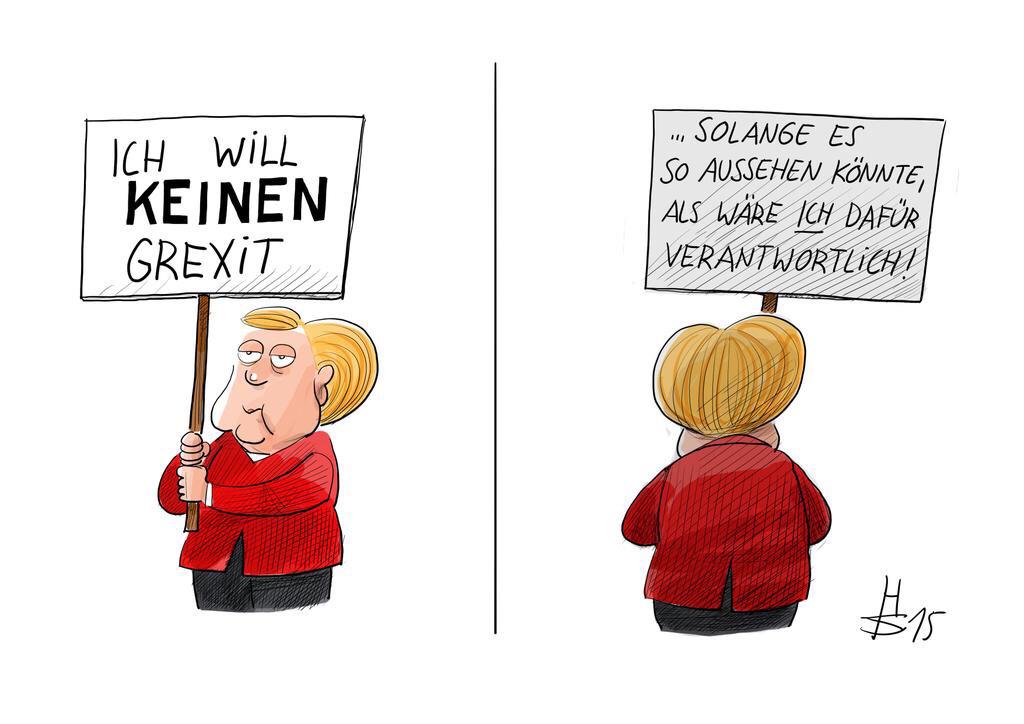
Shituation in Greece: What We Have Here Is Failure To Communicate

A few things need to be said vis-a-vis the impending Greek clusterfuck. Namely, we’ve been listening for weeks on end how the two sides, that is the heavily indebted Greece on one side and the don’t-call-it-Troika on the other were haggling over the finer points of tax hikes, spending cuts, projected values and sums calculated. But for some time now the one thought that has been bugging pengovsky was that we’ve seen it all before. Not in terms of the current economic and financial omnishambles – although one could argue that nothing has apparently been learned either from the Cypriot example or from previous failures of “saving Greece” – but more generally.

20150629_grexit
(source)

While most of the following is, obviously, based on media and other reports which inherently carry their own bias, it would seem that what we’ve got here is a failure to communicate. The shituation in Greece is not unlike the run-up to World War One or The Cuban Missile Crisis. In both cases, the conflicting sides were convinced they understood the position of the other side perfectly and in 1914 it ended in disaster, while in 1962 disaster was only narrowly averted. This is what happens when parties involved expect each other to behave according to their respective plans. When that doesn’t happen, bad things occur. And when bad thing occur, every new move, if not carefully calculated, only adds to the clusterfuck. And it is safe to say that calculated and measured moves were very few and far between, on both sides.

Greek PM Tsipras and his stellar FinMin Varoufakis seem to have expected the EU will simply roll over for the two of them after Syriza won the Greek elections. As if things will automatically start moving in a new and more healthy way just on their say so. Well, they didn’t and had they understood what was it that the Troika was after, they would not have spent months grandstanding and posturing (look ‘ma, no tie!) around Europe, achieving practically nothing. But on the other hand, had the Eurogroup and especially Frau Merkel understood what the Syriza victory in Greece actually meant in terms of legitimacy of austerity policy (rather than trying to prove to Greek voters they voted wrongly), things might have moved forward, despite the initial clumsiness of the Greek Duo. As things stand, there is not an innocent party in this sorry story. All of them have boxed themselves in with their own rules of engagement that could only degenerate into the current shituation.

As pressure bar goes way up into the red, accusations of communists in Athens trying to set Europe alight as well as accusations of fat cats in Brussels trying to make an example of Greece and shift the burden of the bailout squarely on the shoulders of the poorest strata of Greek society. Neither are exactly true, in pengovsky’s opinion.

Yes, this is an ideological fight. Whoever maintains that it is only the Greek government who is flaunting ideology suffers from a massive (self-inflicted) blind spot. Even adhering to pure maths means taking an ideological position. But just as the Greek government is “far left” only in terms of the general European discourse being right-of-centre, the don’t-call-it-Troika is a far cry from a 21st century incarnation of the Sherrif on Nottingham, case in point the latest proposal by the European Commission which, for example, calls for a larger cut in defence spending, a wider base for luxury tax, closing of tax loopholes, et cetera.

Point being there is nothing to be gained from an ideological shouting match. Other than shifting the blame, that is. Which is what the current rush to win the battle for interpretation looks like. Not so much wanting to find a way forward but making sure the other party is to blame when things go all the way south. Thus Varoufakis says Greece has a clear conscience re negotiations. That may be. And I’m sure Merkel, Dijsselbloem and the lot feel the same.

Isn’t that nice. The whole common currency project is about to go tits-up, possibly dragging the Union with it but everyone will have a clear conscience. Here’s a newsflash: you dimwits were not tasked with runing the show to have clear consciences but get shit done.

Conspiracy theories aside, plenty of European press seems to be clamouring for a “12th hour deal”, either counting on Tsipras/Varoufakis to see the light or Merkel, Draghi and even Juncker balking at the idea of going down in history as leaders under whose stewardship the euro (and by extension the EU) started to disintegrate. This line of thought has a big problem: Both “The Institutions” and the Greek government are convinced it is precisely their actions which can save the euro/EU while actions of the opposite side are “uneuropean, inhumane and illogical”. Not necessarily in that particular order. It is, as KAL some time ago so aptly pointed out, a classic case of irresistible force meeting an immovable object. It seems doubly ironic that a renowned expert in game theory should be an active participant in the dismal failure of the entire enterprise. Yes, I’m looking at you, Yanis.

True, both Greece and the don’t-call-it-Troika seem to have gone so far down the chute that a working deal is for all intents and purposes impossible without either of the sides caving in completely. So perhaps what is needed is a non-working deal? Something both sides need to save their respective faces (if not asses), knowing full well that the goals laid out will not be met. Because it is not as if all the previous goals set for Greece were met with flying colours.

So, here we are, with Greek banks closed, capital controls in place and EUR 60 cash withdrawal limit per bank account and/or person. Save a surprising yes vote by the Greeks on the #greferendum (which would, in turn, probably trigger new elections, further complicating events), the country is moving rapidly towards leaving the euro. Just how this plays out no-one knows.

A wise man once said that to jaw-jaw is better than to war-war. The same goes for current omnishambles. The EU and the euro were always perceived as one-way streets. If Greece leaves the euro and possibly the EU as well, the Pandora’s box will have been opened and things thought impossible will suddenly become deceptively easy and many-a-politician’s weapon of last resort. Because if Greece leaves the euro, why not Germany? I’m sure a relevant political party with an anti-euro agenda would appear in no time.

Oh, wait…


Tele-kom, Tele-go

The supervisory board of the Slovenian Sovereign Holding (SDH) is expected to finally end the sad saga of the sale of Telekom Slovenije today. The state owned telco was put up for sale as a part of the deal then-PM Alenka Bratušek and her FinMin Uroš Čufer made with Brussels in 2013 to avoid a bailout that would send Slovenia into the special Olympics category together with Greece and Cyprus (as well as Ireland and Spain, to a lesser extent).

20150610_telekom
Telekom Slovenije management might get new bosses soon (source: The Firm™)

To cut a long story short, the company was put up for sale soon after the SDH was formed and when it became clear that the new Slovenian government will go ahead with the attempted sale, despite PM Cerar’s vocal reservations during the election campaign, all hell broke loose. Cerar’s government nearly went tits-up with the SD threatening to quit the coalition (but didn’t and wouldn’t, because gravy train), there was a very public and very loud stooshie between the PM and his defence minister Janko Veber of SD, who was then relieved of his duties. And in general, as the days passed, the debate on Telekom was becoming ever more charged.

But in the end Deutsche Telekom, the supposed bogeyman in this story did not even place a bid, leaving Cinven, a British fund to go at it alone. Which was a bit of a #wtf moment, especially for opponents of the sale as it became clear that people are not exactly queuing to snap up the company. And after much wrangling the final offer was around 110 euros per share with additional 20 per share later on if certain conditions are met and benchmarks achieved. Yesterday, Telekom Slovenije (TLSG) traded at 98 euros per share. And in the end it was all about whether the SDH will accept Cinven’s offer. And this is where the fun really starts.

The issue is so charged both politically and emotionally that any politician with at least a half-developed survival instinct would rather walk away from it or find a way to maintain status quo. And every so often even PM Cerar gave the impression that he would rather see the Telekom problem simply go away. But it didn’t and in the end, the SDH management OKd the Cinven deal and kicked the issue upstairs, to the supervisory board. Which after much deliberation OKd the deal as well but kicked it upstairs to the government, acting as SDH’s shareholder assembly. And after even more deliberation (an eight-hour cabinet meeting on Sunday last), the government decided to kick the issue downstairs, to the SHD supervisory board, saying they’re paid to do it and that it’s their job.

Thus an interesting situation was created whereupon the SDH management, its supervisory board and government green-lighted the deal, and now everyone is looking around, waiting for someone to say “sold!”. The Board is apparently scheduled to meet later today as to catch a deadline set by Cinven. The fund is threatening to pack-up and leave should the deal be nixed or final decision somehow delayed yet again.

But on the fate of the deal hinges the internal dynamic of the coalition. Namely, should the deal go south at the very last moment (and that at the moment seems unlikely, despite the massive pressure from anti-privatisation camp), the SD, now barely hanging on would probably score massive points, overtake United left (ZL) at the top spot in the polls and probably start calling the shots within the coalition. Most of them, anyway. Because not only is the SD fighting a politically symbolic battle, the outcome will have massive repercussions for the party in terms of access to resources, influencers, decision makers, and the party’s own political prospects.

Watching very carefully will be Karl Erjavec of DeSUS, who is mostly sitting this one out, but is gearing up for a similar fight over Zavarovalnica Triglav, the largest insurer in Slovenia. If Miro Cerar and his SMC prevail, then Teflon Karl better start preparing a different strategy to keep Triglav in state hands and, by extension within his sphere of influence. If, however, the Telekom is not sold, then Erjavec can simply cash in the support he gave to the SD prior to election, divide the spoils and live happily ever after.

Not that the anti-privatisation camp is throwing in the towel, either. While the SD will probably not leave the coalition over the Telekom (not that it could, with its six votes, anyhow), they are trying everything else. Thus yesterday evening an 11th hour attempt was made at derailing the deal. Mladina weekly ran a story about a due-diligence, commisioned by a potential bidder which supposedly showed Telekom shares are worth as much as 190 euro.

Now, under normal conditions would have been a bombshell. But these are not normal conditions. The pressure brought to bear in this case is beyond anything we’ve seen in recent history. At the very least, this is the first time the wrangling, arm-twisting and threats are done out in the open, at the highest level of politics and public life in general. Therefore, the first question that begs asking is why is it then the British fund is the only bidder? This phantom bidder could have made an offer of say, EUR 150 per share and still make a deal of the decade. But it didn’t. And that’s all that matters.

At any rate, whatever the fuck the SDH supervisory board decides today, will probably mark the end of a period. Not just for Telekom Slovenije, but for Slovenian politics. The fallout will be massive. If the deal falls through, what little credibility Cerar’s administration gained at home and in Brussels, will have disappeared as the PM will be seen as being shoved around easily. If, however, the SDH board does finally OK the sale, Cerar’s problems are far from over. Not only on account of DeSUS holding a baseball bat to fend of privatisation of Zavarovalnica Triglav but also because the anti-privatisation camp nearly succeeded this time around and will be anything but disheartened in the next round.

And while early elections are not in the cards any time soon (not yet, at least), life in the ruling coalition will become increasingly difficult as the SD seem to have found their voice (their only problem being that it is the same voice the ZL is using, only much more effectively). With this in mind, the possibility of a coalition expansion or even reshuffle seems plausible.


Fee Fight, A Gift That Will Keep On Giving

While the rest of the EU is musing over the antics of the Slovenian CrimPolice who are flashing search warrants left and right investigating the brouhaha regarding former PM Alenka Bratušek’s bid for the EU Commissioner post, her succerssor Miro Cerar is suddenly faced with a problem of a different and potentially much more disastrous kind. Namely, he may be facing calls for his resignation over the extra pay he earned as a consultant and/or researcher in addition to his tenure at the Faculty of Law.

20150313_blog
Both PM Cerar and FinMin Mramor made The List (source)

The whole thing exploded late last week when the ill-fated anti-graft commission released a report stating that over the past decade or so, about a billion and a half euros in additional earnings were paid mostly (but not exclusively) to high-profile university professors including minister for higher education and science Stanka Setnikar Cankar who apparently earned 600k euros on research projects. Now, 600k over eleven or so ain’t exactly peanuts. 50k per annum in Slovenian terms means doubling an already very hefty paycheck. On the other hand, research projects are where scientists and lecturers put their expertise to (good?) use and make money.

The report was a bombshell, both because the name that appeared on it and included Prime Minister Miro Cerar and financial minister Dušan Mramor and because the amounts in question were within the scope of imagination of the average Slovenian. You see, 600k euros is indeed a lot of money, but it is not an amount of galactic proportions where one would not now what to do with all that cash. Difference between 10 and 20 million? In the mind of the ordinary taxpayer almost negligible because they a) will never see that kind o money and b) would never know how to use it if they did. But 600 big ones? That could buy the house they always wanted, plus the unnecessarily oversized car and a vacation in South-East Asia. It’s the same thing that got Janša. Do millions of euros-worth of arms deals and no one cares. Fail to explain an apartment’s-worht amount of money, people will take to the streets.

So when Setnikar Cankar emerged as one of the top earners, a short but intensive barrage commenced at the end of which she offered to resign. Apparently the accepted wisdom was that due to her hefty additional income in the last decade she has no moral or political clout to negotiate changes to education system. Which poses an interesting question: are the only people acceptable to hold public office those who are unable or do not want to use resources at their disposal. Because save an apparent conflict of interests, Setnikar Cankar broke no law. Sure, it looks unhealthy (and it probably is) but odds are that the whole thing isn’t illegal. So that was mistake numero uno.

Mistake numero due was committed by Cerar who accepted the resignation. This was plainly wrong for a couple of reasons: first and foremost, he just let go a minister from his party’s quota. This suggests that a) he believes there many people who would be willing to take up the job (tehre aren’t) and b) that SMC’s vetting process still sucks donkey balls. This alone would be embarrassment enough by the PM but he exabberated it further when he indeed let Setnikar Cankar go, because he opened a direct route for attacks on himself as he is on that infamous list, too.

And sure enough, the political body of Setnikar Cankar had not even cooled off when Cerar, too, was faced with calls to resign and to take finance minister Mramor with him, forcing him to hold a press conference to respond to the allegations. He said that everything was a-ok, that he earned the extra 350 grand fair and square, ditto finance minister Mramor and that we should all just chill.

Which is a fair point. These high earners, despite their admittedly high cumulative incomes, were in fact applying years if not decades of experience. As Boštjan Narat succinctly put it in his blogpost on the issue (Slovenian only), one should be able to charge for that. Whether or not they were making research projects their private little gardens to cultivate and grow euros is, of course another matter. But this particular angle was hardly addressed. As was the question just how tangible (if at all) were results of their research. Because the issue here is – how very Slovenian – the fact these people earned money beyond their salary. Because Bob forbid you should be doing stuff on the side, let alone pay taxes from it.

But the political take-away here is entirely different. What we have here is a Prime Minister’s blunder of epic proportions which will turn a non-issue into a gift that will keep on giving.

You see, Cerar axed Setnikar Cankar within 48 hours of the story breaking. Probably in the name of political expediency, hoping the issue will go away. But they never do, do they? Thus in effect what PM Cerar had done was

a) accept the issue as a legitimate one (which it needn’t be), thus
b) admitting there was a sense of urgency to is and
c) letting the situation to spiral out of control.

As a result, the issue is no longer a semi-important minister with a semi-important portfolio (gone are the days of then minister Gregor Golobič threatening coalition rift to get additional budget funding for technology and research), but the fate of the prime minister himself.

Sure, Cerar tried to impress on the media that his case was different, but in the end, no one really cared. Why should they? If a portfolio minister is axed because of excess earnings while she was not holding public office, why should the PM be treated any softer? Indeed, going on past experience, the PM is held to an even closer scrutiny, justified or not, than his ministers.

This will not blow over easily. Slovenian public and indeed the media are much more comfortable thinking in the price range of a couple of thousands of euros. To stave off the now inevitable scenario of Cerar himself being in the crosshairs, the PM should have kept Setnikar Cankar in her position, at gunpoint if need be for as long as necessary, letting her go only after the issue had blown over completely.

But as things stand, the prime minister once again fell hostage to his pre-election rhetoric of “higher ethical standards“. The platform which got him elected is now being used against him, not entirely unsuccessfully, regardless of whether accusations are based on fact or fiction.

Days ago the PM finally took stand to defend finance minister Mramor and by extension himself. But if this drags on and if he fails to follow-up with more drastic measures which could very well include an across-the-board reshuffle of the coalition, Cerar’s countermeasures might prove too little too late.


Eurothings Slovenly But Syrizaously Going South

Since Greece and the rest of the Euro zone gave each other the finger the other day, a few things need to be said before things go syrizaously wrong in this neck of the woods. What was expected to be the day of another euro-compromise, brokered in the wee hours of the morning, the whole thing fell apart, seemingly with Greece and its new government on one side and he rest of the Eurozone on the other.

20150218_blog

But in reality, what we have here is not a game of playing chicken, with Greece and the Eurozone counting on each other to blink first. Rather, what we are witnessing is a Mexican stand-off of gigantic proportions where almost every member of the Eurozone is holding a gun to the head of most other members and at the same time virtually all Eurozone governments are held at gunpoint by their electorate, something they’ve only themselves to blame. Namely, by bailing out German and French banks with their taxpayers’ money and now trying to make the Greeks foot the bill, they’ve found themselves in exact opposite of Greek Syriza: while Tsipras and Varoufakis promised to end the vicious cycle of more cuts for more money, leading to less growth which creates the need for even more cuts and the need for even more money (and so on ad nauseam), the governments of Germany, The Netherlands and even Slovenia (to name but a few) are under increasing pressure to make sure the taxpayers get their money back.

Thus, a clustefuck of gigantic proportions was created, where legitimate positions of all governments involved preclude one another and are starting to resemble the old joke about an irresistible force and the immovable object. There rarely was a greater need for the (black) art of the European compromise.

The position of Slovenian government is especially interesting in this case. Apparently, finance minister Dušan Mramor more or lees told his Greek colleague Yanis to go Varoufakimself with his ideas of increasing public sector employment and expenditure while everyone else – including Slovenia – is slashing costs to make ends meet. Not that the ends are anywhere near each other – Slovenia will have to raise 1.5 billion, 15% of the budget, in loans in 2015 alone.

Reassuring Mramor

Mramor was apparently indignant over the fact that in per capita terms Slovenia is among the most exposed member states in the Greece omnishambles but was having no say in the matter as Tsipras and Varoufakis were negotiating with the big boys (and girl) only. As if Mramor way trying primarily to reassure himself by lashing out at Greece rather than trying to find some middle ground or even support Greece in its, well, “need for more time“.

But reassuring himself or the Slovenian taxpayer Mramor is not. It is more than obvious that most (if not all) money loaned to Greece will never get repaid and that Franci Križanič, FinMin in the Borut Pahor government (2008-2011) was talking bullshit when he said Slovenia will make money with the loan.

Mramor’s going after Greece suspiciously coincides with feces coming dangerously close to a mechanical air ventilator in the case of 3-billion-heavy bailout of Slovenian banks in late 2013.

Junior bonds extinction

Namely, accusations were made by Tadej Kotnik (curiously, a biophisycist and vicedean of faculty of Electrical Engineering) that recapitalisation of the banks and especially the accompanying extinction of subordinated bank bonds (in effect, complete nationalisation of Slovenian banks) was illegal, pre-arranged and non-transparent. But the gist of it, it seems, lies in the allegation that the Bank of Slovenia (this country’s central bank, aptly shortened to BS) back-dated a key measure to cover up the fact that eradication of junior bonds was agreed-upon in advance with the European Commission and was not some sort of a last-ditch measure to save the banks.

Now, Kotnik, a private individual and a member of the Association of Small Shareholders, apparently invested heavily in subordinates and thus lost quite a substantial amount of money. He also challenged the bond extinction at the Constitutional Court but the court deferred to the European Court of Justice as the bailout measures were coordinated with the European Commission and under EU law directly.

Anyhoo, the thing is that the Bank of Slovenia, specifically Governor Boštjan Jazbec fucked up their initial response, hiding behind legal clauses and non-disclosure of financial information, thus giving credence to Kotnik’s accusations which are, it seems, mostly based on one or two sources within the BS.

obviously all hell broke loose, with MPs screaming for a parliamentary investigation, various political parties scrambling for cheap political points and Jazbec, after a press conference was finally held, fucking up further with a seriously distorted view of (non)accountability of the institution he heads and the office he holds.

Namely, Jazbec, after explaining that everything is OK and within the bounds of the law and that two wildly different appraisals of the state of the largest bank NLB are not all that unexpected decided to explain the matter further to… the government. As if it wasn’t the parliament who appointed him to the position and as if it wasn’t the parliament who represents the sovereign of this country, the people. Or, as they are more commonly known these days, the taxpayers.

While the government of course needs to be in the loop, Jazbec would do well to address the parliament first, since it was the people’s euros he spent on propping up the banks. But as things stand now, he is making one small(ish) mistake after the other and if he doesn’t stop digging soon, he may find himself in a hole too deep to climb out of. Especially since political parties are scrambling to put a daylight betweeen them and anything that might make them look responsible for the disastrous state of the banking sector. Which is why the Social Democrats are all of a sudden deeply worried about the situation. As if it wasn’t them who ran the financial portfolio in the ill-fated Pahor government (when things started going south for real) and who were junior partners in the Bratušek government which engineered the bailout. Almost the same goes for the SDS, which led the government during the pre-2008 spending spree and which performed a couple of smaller recapitalisations of the NLB (couple a hundred million a pop) and is now screaming bloody murder and demanding a parliamentary investigation.

The sad reality

The reality, of course, is much more prosaic. After Greece and Cyprus, Slovenia was to be next in line for the Troika Treatment. And since the political mantra in the Eurozone at the time was that individual stakeholders, not just the state as such must bear the cost of the bailout, it was more or less obvious that erasing junior debt was unavoidable. Even more. If there is one point where Tadej Kotnik is correct is that the whole process was most likely pre-arranged and coordinated with Brussels. You see, at the time Slovenia for all intents and purposes was under administration, with the European Commission pouring over every aspect of economic and/or fiscal policy, confirming some, rejecting others. And so it seems plausible that the bailout of the banks, the extent and the mechanics of it were approved by the EC before they were enacted by the Bratušek-Čufer-Jazbec trio. That the Commission formally approved the measures taken fairly soon thereafter only goes to strengthen the point.

The above seems to suggest that the problem was not so much in the execution of the bailout but in the definition of the problem. You see, at the time the fate of Slovenia was in the hands of a budget specialist (Bratušek), a higher-level bank manager (Čufer) and a macroeconomist (Jazbec). None of them were in office for a particularly long time, while the country as such was held at gunpoint, not to mention the political turmoil on the home front. For them to understand that the problem was one of policy concept and not (only) of numbers would demand an extraordinary insight. Even more – even if they had the insight (it seems plausible that at least some people advising them did manage a wider outlook), it remains doubtful if they had the room to manoeuver.

Which, not surprisingly, brings us back to the current Greco-German spat. Unlike the Slovenian government of Alenka Bratušek, the new Greek PM Tsipras and his FinMin Varoufakis fully understand the problem is political, even ideological. But they, too, have precious little wiggle room. Because just like Syriza is acting on a mandate by the people, so, too, are the Germans and the rest of the Eurozone. At some point they will have to explain to their voters why they used their money to prop up mostly German and French banks, overexposed in Greece. I’m sure it seemed a good idea at the time and in the panic that gripped the EU when Greece all but defaulted, the last thing anyone wanted was a bank run. But to bailout its banks, the Eurozone took out an even bigger loan with their voters and not being entirely candid on what the money was being spent on.

Extend and pretend

With this in mind, it is not only Greece that is – in the words of Yanis Varoufakis – resembling a drug addict. The (rest of the) Eurozone, too, is asking their voters trust and understanding they may not be ready to give anymore. Which makes the ruling centrist(ish) parties in Europe nervous which, by extent, leads to some uneasy moments of disturbing clarity, such as German FinMin Schäuble apparently saying the Tsipras government is acting irresponsibly. Patronising, even smacking of colonialism. But in reality most likely nothing more than a show of frustration at the realisation that even if the new Greek government does decide to play ball and continue with the established sparprogram, the game is more or less up and “extend and pretend” is from now on a two-way street.

And that no one knows how long the voters are going to continue buying it.


PM Bratušek Down A Minister. Just Not The One SDS Was Aiming For.

Late last night, after a 15+ hours of debate, the parliament voted to reject the bid to oust finance minister Uroš Čufer. The motion was filed by SDS of Janez Janša and the two basic charges against Čufer were that he backed the Bank of Slovenia plan for a “controlled liquidation” of Probanka and Factor banka, two small sort-of-investment banks which were mainly vehicles for financing ventures of their owners (although Probanka had a small contingent of “ordinary” customers) as well as the fact that he dismissed Andrej Šircelj, an SDS MP, from the board of the yet-to-become-operational Bad Assets Management Company, a.k.a. bad bank.

20131121_cufer_stepisnik
Two ministers: one in resignation, the other one not so much. (photo: Aleš Černivec/Delo)

Now, the move-to-oust, or “interpelation” as it is known around here was filed some time ago and it went without saying that the SDS, which was alone in this venture with NSi and SLS watching carefully which way the wind blows, threw at Čufer everything they could get their hands on. Which mostly meant lecturing him at how he should run state finances.

Which is all fine and well, after all this is a democracy of sorts with a relatively well-thought-out system of checks and balances. The same goes for the interpelation instrument. However, what we witnessed yesterday was not so much a case of oppositional oversight as it was a degenerated filibuster where the goal was not to prevent a measure being passed but to drag the proceedings for as long as possible, hoping that somewhere along the way the coalition would drop the ball and fail to produce a majority vote. In fact, this was nothing short of a shit in political tactics. Namely, about a week ago we’ve seen practically the same approach when the parliament debated the 2014 and 2015 budgets. In a multi-day session which culminated in a Thursday all-nighter, the final vote was cast on Friday at 6 in the morning.

The good old days of touch and go

Now, all-night-sessions are not unknown in this part of the world. When shit was hitting the fan while Yugoslavia was disintegrating and the whole Slovenia situation was touch-and-go we used to see them regularly. In fact, one could argue that all-night sessions of the parliament or another high-ranking body were the hallmark of the era. And it seems as if the opposition is trying to bring back the aura of emergency and instability.

Not that there was any lack of urgency to begin with and until the budget was passed, the Bratušek administration sure as hell couldn’t be filed under “stable”. But ever since Janez Janša was toppled he was looking for ways to undermine the current government in any way possible. True, the ruling coalition is perfectly capable to undermine itself (as we’ve seen time and again in the past months) but it would appear there’s some movement in the right direction.

One could argue that Bratušek and Čufer achieved with this budget what Janša and Šušteršič couldn’t. Namely, get at least half a nod from the EU and effectively take threat of the Troika descending off the table at least temporarily. And as demonstrated in the previous post, for Janša the equation is simple: no Troika, no return to power any-time soon. And a derailed budget or a toppled finance minister are not to high a price to pay, apparently. Not to mention inevitable relegation of Slovenia to protectorate status in case the Troika materializes.

Again: Slovenia is not out of the woods yet (not even close) but a hint was given we’re on the right path. And that is not good news for Janša.

It’s about management, stupid

But as someone recently told pengovsky, this country doesn’t have as much of a financial problem as it does have a leadership management problem. Both in government and in business. Which is one of the reasons we find ourselves in the shit we’re in. Case in point being minister of economy and technology Stanko Stepišnik, who was forced to resign yesterday evening over a repeated issue of his tools-manufacturing company Emo Orodjarna applying for and being awarded government grants while he was in office.

Now, there’s a caveat to this: until recently, there was a strict prohibition of companies (co-)owned by public officials applying for tenders with the institutions their owners worked for. I.e.: a company a minister or a member of his family owned (at least partly) could not apply for a grant within his ministry’s purview. Some years ago there was even a complete prohibition for such companies doing any business with any government institution, but that was struck down as unconstitutional. But even this watered-down prohibitive clause was too much for some and was reduced even further by the last Janša administration (albeit at the behest of the SLS) and now stipulates only that people with a conflict of interest should remove themselves from the decision-making process.

And when it transpired that Stepišnik’s company did in fact apply for a government grant at Stepišnik’s ministry, it was all perfectly legal, since Stepišnik did in fact remove himself from the decision-making process. And yet, it failed to dawn on him that simply is not the way things should be done. It took further revelations of his company applying for additional tenders and – this clinched it – apparently falsely stating there are no possible conflicts of interest in one of the tenders for Stanko Stepišnik to finally realise he is in an unsustainable position.

However, since Stepišnik was an MP for Positive Slovenia before assuming ministerial duties, he is bound to return to take his parliamentary seat, making the situation no less more agreeable. Now, arguably, Stepišnik’s resignation is a good omen as it is the second minister in Bratušek administration to resign over a similar conflict of interest (Igor Maher having done so after only 12 days in office) and it shows this government does have a sense of appropriateness. Also, Stepišnik was widely tipped to be let go once PM Bratušek wins the vote of confidence, so there’s no real harm (political or otherwise) in him being replaced.

The necessary vote of confidence

But it does show that – despite the fact some people were mocking Bratušek for tying it to passing of the budget – the recent confidence vote was much more crucial than most people thought. It finally gave her the leg to stand on politically and rallied the coalition around her, at least temporarily. And it appears finance minister Čufer is one of the cornerstones of her political credibility. Which is why she took the somewhat unusual step of the PM addressing the parliament and defend her minister during an interpelation.

This, of course, did not go unnoticed and you can be sure Čufer will find himself the target of much more elaborate attacks and insinuation than just a case of a disgruntled opposition MP who – due to a legal provision, mind you – lost his 6k EUR monthly paycheck in the bad bank which came on top of his 4k monthly MP salary.


Enhanced by Zemanta