President’s Anti-Graft Appointment: Gross Negligence And Pitiful Ignorance

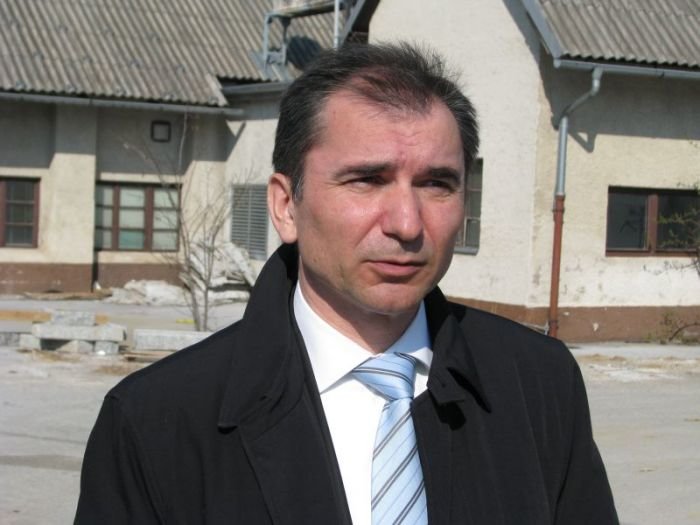
Following December resignation-in-protest of Goran Klemenčič, Rok Praprotnik and Liljana Selinšek On Friday President Borut Pahor appointed new three-member leadership of the anti-graft commission. The KPK is to be headed by Boris Štefanec (president), Jurij Ferme and Darko Stare (vice-presidents). Or is it? Namely, after it transpired Štefanec rescinded his membership in Positive Slovenia only a day earlier, all hell broke loose, mainly to the tune of Štefanec being inherently compromised whenever the KPK would be looking into dealings of prominent PS members.

20140311_pahor
President Pahor signing the appointments (source)

Now, no-one really know where Štefanec came from. He is reportedly practising corporate law in Murska Sobota and not being particularly visible at it. The word on the street also is that he applied at different times for a judicial and notary positions but didn’t make the cut in any of the cases. And yet, he was deemed fit to head the commission which sent shock-waves through Slovenian politics in the past few years and was a thorn in many-a-politician’s side for quite a while.

Knee-jerk reactions all over the place

Štefanec’s average CV combined with his recent PS membership culminated in calls from both sides of the aisle as well as from a plethora of media outlets for his immediate resignation. However, Štefanec is not the real problem . What we have here is a knee-jerk reactions by various players, all advocating the same measure (resignation) albeit for different reasons.

While some (mostly media) are demanding Štefanec step down because he does not meet the high standards they’ve (we’ve?) come to expect of the anti-graft people, most of the political elite is interested in precisely that: diluting the standard expected of the anti-graft commission as much as possible. Easily achieved by shooting down the new head of KPK even before he assumes his new role. It was Karl Erjavec of DeSUS who said if Štefanec does not resign it will be the end of the anti-graft commission. But the reality is that if he resigns, it will be the end of the commission as well. At least temporarily. Which is why it is utterly perverse for the political elite to judge whether the new KPK head is appropriate for the job or not.

It’s all being run by UDBA!

In this almost unison cry of political righteousness, three positions require special attention. Positive Slovenia made a bit of a fool of themselves as they said they had no idea Štefanec was their member but since he apparently isn’t any-more, they don’t see a problem. Which is a kind of a double whammy for them, since they a) inadvertently confirmed PS membership can inhibit proper execution of a public office and b) they basically said they don’t have a clue what’s going on in the party on rank-and-file level.

On the other hand, Pavle Gantar of Zares said Štefanec should indeed step aside toute-de-suite, not because the political elite doesn’t trust him, but because President Pahor made it very clear he was simply going through the motions as he said he’d have made a different choice had he the opportunity to do so. Which is basically a vote of no confidence from day one by the very person who made the appointment. Therefore Štefance, writes Gantar, should resign to protect his own integrity.

Finally, the SDS. They oppose the new anti-graft commission appointments because it’s being run by UDBA.

Complete lack of judgement

Anyways, back to reality: a lot of people who shouldn’t have passed judgement, did. But the person who should have been doing the judging, however, failed to do his job. Štefanec was appointed by President Pahor and it is with him where the responsibility for the current situation lies. That the outgoing KPK leadership is to be succeeded by apparently dysfunctional replacement is either a conspiracy or outright ineptitude.

The conspiracy theory is pretty straightforward: Štefanec, by sheer virtue of his PS membership, would be seen as undermining authority of the anti-graft commission, thereby exculpating Zoran Janković, the original PS guy. In fact, this is the subtext of the furious reactions of the last few days. But there’s a catch. Since Janković is more or less in the trajectory of the same fan-induced-faecal-mayhem as Janez Janša, easing pressure on Jay-Z automatically means easing pressure on Ivan as well. And who did Janša support in 2012 presidential elections? Yup, you guessed it: incumbent president Pahor.

But odds are, there is no conspiracy. Only gross negligence and pitiful ignorance. Namely, Pahor said he wasn’t aware of peculiarities of Štefanec’s case. That he “didn’t know”. Apparently, he was made aware of them just prior to signing the appointment, but hey, by then it might have been too late. The thing is that Pahor started shifting the blame from the very moment he made the appointment. He said he followed recommendation of the ad-hoc selection committee and that he wished he had more choice. Which is pure bullshit. He could have made no choice, stressing that no candidate meets the necessary criteria. But no, he rather resorted to a combination of negligence and ignorance, two elements upon which he built his entire political career.

A pattern emerges

Because this is not the first time something like this had happened. Way back in 2003 when he was still president of the parliament, the MPs approved what was then known as “technical law” on the Erased. The SDS-led opposition filed a motion for a referendum and the parliament voted to petition the constitutional court to stop the referendum, but – missed the deadline. President of the Parliament Pahor put the blame squarely on parliamentary services, never recognising that it was his responsibility as the most senior representative of the legislative body to see the thing through. Not to mention the fact that he had a political obligation to do so as the ruling LDS-led coalition of which he was a part of fought the referendum tooth-and-nail. But Pahor felt no long-lasting effects for this and got elected PM in 2008.

Similarly in summer 2012, just prior to official start of presidential election campaign, he said he didn’t know the financial and economic crisis would be that bad and that people around him are responsible for the fact that his 2008 – 2011 government almost completely overlooked the troubles in the banking sector. Without batting an eyelid the blame squarely to his finance minister Franci Križanič, while he himself sailed to a whooping victory in November that same year, becoming president of the country.

And now, with all these impressive entries in his CV and impressive fuck-ups under his belt, he does it again. It’s not his fault. It couldn’t be, for he didn’t know, he says. And yet, apparently he did know. He just couldn’t be bothered to take the responsibility for a decision befitting the office he holds.

EDIT @ 1530hrs In an interview for Murska Sobota-based Sobotainfo.com Štefanec said he has no intention of resigning. Funnily enough, minutes ago both VPs did just that. Resign. President Pahor now has a problem the size of Texas.


A Reshuffle By Any Other Name

What turned out to be a resignation-happy week, culminated on Friday last with a collective fuck-you-we-quit by the trio heading the KPK, Slovenia’s anti-graft body. Goran Klemenčič, Rok Praprotnik and Liljana Selinšek announced their resignations in what they called a protest against the fact that – despite their best efforts – the powers that be are doing their best to ignore the systemic issues of corruption in Slovenia (full statement in English here)

20131205_blog
Samo Omerzel (DL) and Jernej Pikalo (SD) (source: RTVSLO)

The move opens a plethora of interesting questions, not in the least the fact that their successors must be appointed by the very man who (at least by the virtue of his position) oversaw the making of the clusterfuck that is TEŠ6 coal powerplant. That be Borut Pahor, of course, who as PM did nothing to stop the investment which soon thereafter spiraled out of control and went from a doctored 600 million to ass-whooping 1,4 billion euro without a single megawatt of energy being produced yet. But we’ll deal with that in the coming days. Mostly because there is shit going on in executive branch of the government as well.

Namely, after she ditched minister of economy Stanko Stepišnik and minister of health Tomaž Gantar bailed out of his own accord, PM Alenka Bratušek was faced with a miniature coalition crisis. Predictably it was Karl Erjavec of DeSUS who started making noises about how a proper cabinet reshuffle is overdue and that it should include head of SocDems Igor Lukšič who opted not to take on a ministerial position when Bratušek formed her government.

This flip-flop position was thus far very profitable both for Lukšič and his party. The SD is leading in every poll imaginable not in the least because Lukšič manages to avoid the daily bad press and lets senior party figures take the heat while he supports the government unless it is opportune not to do so. Seeing this, Karl Erjavec thought he might squeeze out a concession or two, saying that unless Lukšič doesn’t take on a portfolio, he himself will “think about him remaining a part of the government as well”. Naturally, no-one took him seriously and lo-behold! Erjavec has taken on the health portfolio as well, it was announced yesterday. Which makes for a fun combo: Karl Erjavec, foreign and health minister.

A rather less funny but far more intriguing combo is Uroš Čufer, who – in addition to finance – temporarily took on economy portfolio as well, thus joining two areas (supposedly) critical to turning the fortunes of this sorry little excuse for a country. Legally, this “pro tempore” solution can only be done for a period of six months (three plus three) and it seems PM Bratušek opted for it because Erjavec may still get what he wants, while Čufer will either go boom or bust in the same period. For “boom” read survive the banking stress tests and sell off at least some state-owned companies and for “bust” read none of the above.

At any rate, while no-one is calling it like that, an across the board cabinet reshuffle is in the air. Especially since the coalition will begin negotiating a new agreement, extending until next parliamentary elections in late 2015. Also, minister of infrastructure Samo Omerzel is in a bit of a fix these past few days over his company doing business with state-owned motorway company DARS and although only today the company stated that it bailed out on extending the deal, it may be to little to late. The PS is making noises that Omerzel should go for the same reason Stepišnik had to go – not because he did anything illegal, but because it was unbecoming. And on merit, they have a point. Politically, however, this can heat up things a bit and not just because the opposition is clamouring for his removal.

The thing is that not only is DL supporting their minister (obviously) but they would – if push came to a shove – probably make demands against other coalition partners as well. Which points to the conclusion that the Social Democrats will have to say goodbye to one of their own sooner rather than later. And that can only be minister of education, science and technology Jernej Pikalo. Not because he would do anything really wrong, but because he has the least clout of the three SD ministers in the Bratušek Government.

With Dejan Židan being the Number Two of the Social Democrats and the key senior government official in a recently launched anti-tax-evasion campaign while Anja Kopač Mrak is heading the labour, family and social department which is a can of worms few people want to touch let alone open in the first place. Which leaves Pikalo. His replacement would mean that each of the coalition parties had to throw one of their own under the bus and – in theory at least – everybody would be happy.

This, combined with new ground-rules being laid, the possibility of parties switching some portfolios among themselves and the fact that PM Bratušek is looking to replace three to five ministers within a year of her taking office is nothing short of a full-blown cabinet reshuffle. It’s just that nobody will be calling it that.


Enhanced by Zemanta

Keep Calm and TEŠ6

Debating the ever more derailed project of Šoštanj power-plant bloc 6 (TEŠ6) the parliament played the blame game entire day yesterday. It was both fun and gruesome to watch. Like German 70s porn. Called by the opposition SDS it had one goal and one goal only. To put a daylight between them and a project that is spiralling out of control as has almost tripled in cost, going from 600 million to 1.5 billion euro. To put things in perspective: 1.5 billion may not seem a lot. It won’t buy you a Virginia-class nuclear submarine, to pick an example at random. But on the other hand, it represents about 4.5% of total Slovenian GDP. It will also buy you a lot of German 70s porn.

20130717_tes6a

Now, you may or may not be fully up to speed on the issue, but while quite long in the making, the issue became hot during the Pahor era, when Zares of Gregor Golobič started making noises raising hell about how this project is run so badly it is going to explode into everyone’s face. In retrospect they were right and this was arguably the single most important issue that brought down the government of Borut Pahor. Namely, it emerged that an ad hoc SD-SDS special interest coalition formed on this project specifically and passed a law of a state guarantee for a 400 million loan by the European Investment Bank. At the time it was hailed as the only infrastructure project in Slovenia worthy of its name, a backbone of Slovenian energy self-sufficiency and a jobs maker in the area.

Very few people asked themselves how exactly TEŠ6 helps energy self-sufficiency if it is only meant to replace the ageing blocs 4 and 5 and thus producing almost zero net increase in megawatt hours. Few people asked themselves just how exactly do 3500 jobs warrant over a billion worth of stimulus when the entire country is going down the shit-hole. And finally, nobody really took care of the project, which means that TEŠ6 still has to produce a single megawatt of electricity.

A shitload of people had and still have a vested interest in this project which is why it was defended furiously. Case in point being this POP TV video from 2010 (Slovenian only) where Srečko Meh, a SD heavyweight from Velenje/Šoštanj area goes after Gregor Golobič from the very beginning, defending the project as financially sound, economically justifiable and socially necessary. Fast forward three years (June 24 2013) and Srečko Meh posts a video (Slovenian only), slamming the SDS for calling the parliament debate and pre-emptively distancing himself from the project and the parliament-approved guarantee he helped secure.

You see, TEŠ6 was meant to be a hunting ground both in terms of money for pet projects as well as securing high paying jobs for selected people. Which is why the entire project was based of the principle of fait accompli, with stuff being done first and then asking the relevant authorities to either OK it or cough up the dough. or both. Energy is where the money is and TEŠ6 was earmarked to burn the local lignite which has the energy density of a well-behaved rock and is pricey to say the least. It is also a matter of some debate whether – after decades of mining – there’s enough lignite left for the entire life-span of TEŠ6 or will this mean importing coal, driving the cost up even more. In fact, yesterday’s parliament session even pointed to the possibility of the power-plant making a loss. Yes. you read it correctly. Apparently, TEŠ6 is so screwed up it is liable to lose money rather than make it. It should come as no surprise then that Uroš Rotnik, CEO of the plant at the time when the deal with Alstom was sealed is now under criminal investigation

What we saw yesterday was a classic example of pot calling kettle black. It was perverse seeing SDS and SD pointing fingers at each other and screaming bloody murder over a billion-and-a-half worth example of pork-barrel politics. In fact, in a bizarre show of complete disconnect, the SDS actually moved to have the parliament set the price tag at 1.3 billion and not a penny more. As if Alstom, the French construction company which got the contract to build under suspiciously favourable conditions, would give a damn.

But if you think anything changed, you’re mistaken. The 800 million already spent remain with Alsom and 400+ mil state guarantee for an EIB loan stands, despite a new majority in the parliament and a new government at the helm. The only decision that begs mention is a measure instructing the Court of Audit to go over the books of state-owned HSE, the mother company of TEŠ. But the law does not give the Court the power to dig into companies that are indirectly state owned, like TEŠ is. So in fact, the parliament yesterday almost unanimously decided that the project is a disaster and then voted to carry on with it.


Enhanced by Zemanta

President Pahor As Commandant Lassard

It seems that the only gauge of the state of the, errr, state these days is the yield on Slovenian bonds on international markets. Whenever it starts nearing seven percent, media and the political right-wing go apeshit and start blaring big fat headlines about impending doom. And whenever it starts dropping, the left-wing goes talk-to-the-hand-cause-the-face-ain’t-listening-biatch. But fact of the matter is that the yield on various Slovenian bonds is going up and down like a cork in the water. And that ain’t good.

20130417_blog
Borut Pahor, Eric Lassard and their, well, fishes (source and source respectively)

Which is part of the reason government of Alenka Bratušek is on a charm offensive these past few days. With limited success, might I add. AB went on CNN the other day and apparently she didn’t do a particularly good job. That seems to be the prevalent opinion of the commentariat, anyways. Truth be told, PM’s performance was somewhat lacking, both in substance and in style. While she was mostly ridiculed on account of her thick accent, the problem was that she repeated the same old mantras of Slovenia not needing outside help in dealing with our problems. While that may be true (indeed, the OECD report released this week suggest so, as does an otherwise gloom report by the European Commission), Bratušek failed to shock & awe.

You talkin’ to me?

But it is important to remember Bratušek wasn’t taking to the home crowd. In fact, she wasn’t really talking to Richard Quest either. For what it was worth, she was talking to foreign investors. At the very least, to moneymen buying Slovenian debt. And from what pengovsky hears from abroad, she did an OK job. And just to put things in perspective, while the local economic honchos were reportedly impressed with the way the new finance minister handled the OECD, the non-natives (a.k.a. the real world) were apparently left unfazed, to put it mildly. (full disclosure: pengovsky is quoted in the linked article). On the other hand, The government did manage to sell some 900 million of debt today (after failing to sell 100 million days earlier) and won a little breathing room to put together what everyone is waiting for: an actual plan.

In that respect it is somewhat ironic that Bratušek is continuing with the basic outline set up by Janša’s administration, meaning bad bank and state sovereign holding company, augmented by further cuts in the public sector. Moreover, parliament is apparently close on enshrining the fiscal rule in the constitution, the very thing which sent both left and right to the barricades a year ago. And that’s now, when the reasoning behind austerity was completely and utterly debunked. On account of an Excel error, mind you!

Where is Janša hiding?

Speaking of Janez Janša, he went below radar, more or less. (Self)demoted to being a mere party president, forfeiting his MP seat as well as ex-PM benefits, he is running around courtesy of the Institute for Cultural Diplomacy, giving lectures on human rights. Last week it was Iceland, next month it will be Berlin. Strange animal, this institute, mind you. Apparently, they take on interns to send spam. Also, their website bears strangely close resemblance to English pages of both SDS and Janez Janša. Or is that the other way around?

At any rate, Janša is apparently up for re-election as Party leader and with less than a month to go, he has yet to officially announce his bid. While former minister of infrastructure Zvonko Černač already said Janša is running, the man himself remains mum. And for a reason, pengovsky imagines. Sentences were passed in the Austrian branch of the Patria Affair and the court in Vienna concluded bribes were paid in that particular arms deal. Initially it was reported the Austrian judge said in her ruling that without a doubt Slovenian politicians were bribed. SDS went full throttle against this line of reporting, issuing a steady stream of denials, either directly or via friendly press. Be that as it may, Janša has a lot to worry about in that department.

The downfall of Žiga Turk

Speaking of SDS-friendly press, former minister of education, science, sports and culture Žiga Turk quit all party functions (but, it seems, not the party itself) citing an increasing gulf between his own convictions and party directives. Which was quite a bombshell, since Turk was widely perceived as the austerity hawk who went about dismantling as much of public sector within his purview as possible. He was also seen as the second most prominent man in the SDS, right after Janša. Maybe he became too strong and that was part of the reason that Party-friendly press tore him apart and practically labelled him a traitor to the cause.

This is not the first time Janša brought down a would-be political heir when the latter became too strong. Something similar happened to Milan Zver who was removed to Brussels as MEP soon after he started showing signs of independence. That’s the way Janša operates. He picks men (politically) lesser than himself, builds them up and then brings them down at the very moment they could have made a difference in the Party. This is also an indication that Janša is by no means leaving politics. At best, he went underground hoping to be missed. His only gamble is that he will stay underground for so long that the political landscape will have changed to the point of making him obsolete.

Commandant Lassard

Speaking of being obsolete, President Borut Pahor is increasingly starting to look like Commandant Eric Lassard of the Police Academy series. Namely, last week his office tweeted about Pahor keeping a goldfish in his office. Yes. In the midst of the crisis, when the country is just a panic-attack away from a bankruptcy and the troika descending, the president is busy fooling around with a goldfish. And drawing criticism from animal welfare organisations to boot, since at first he was keeping the poor thing in a bowl of unfiltered water. His office has installed a proper aquarium since then.

OK, so Pahor did partake in the charm offensive, visiting France today and going to Germany next week. Which is yet another proof of the fact that the prez and the reality are further and further apart. The “Franco-German train” he so vigorously promoted while he was the prime minister and was clamouring for Slovenia to get on-board, apparently still exists in his mind. But only in his mind. Which is bad enough. What’s worse is that Pahor is visiting France first, giving precedence to “mon amiFrancois Hollande, brother socialist who didn’t support Pahor in last year’s presidential campaign, despite Borut claiming otherwise (Slovene only).

Thus President Pahor snubbed Angela Merkel who (despite not being a particular favourite of pengovsky) still runs the country which just happens to be Slovenia’s largest export partner. Instead he went to see this guy who snubbed him. Looking for some tough love, are we? Anyhow, that’s just diplomatic gaffes. For all his experience in foreign relations, Pahor apparently is no stranger to them.

More worrying is the fact that the president – if his website and Twitter account are anything to go by – to date failed to make any kind of statement on the bombing of Boston Marathon, let alone offer condolences to victim’s families. It was up to Foreign minister Erjavec to save the face of this country.


Enhanced by Zemanta

Invitation-Only Public Debate

Janko Veber, the freshly minted president of the parliament today called what is known around here as a ‘public debate’, a meeting between representatives of the parliament, legal experts and general public. Topic: referendum legislation. But rather than focusing on the topic itself, which is delicate enough, Veber (SocDems) provided us with one of the most despicable, perverted and blatant displays of arrogance. Of himself, his party and the political elite he as president of the parliament represents both symbolically and in practice.

20130403_veber
Janko Veber (source)

Namely, six months after the people in the street made their dissatisfaction with the people who run the country plainly obvious, Veber set out to organise an “invitation only public debate”. And oh, the irony, the event was to be closed for public. After all hell broke loose, Veber opened the debate for general public, but the guest list remained unchanged. And what a list it was….

Knowingly or not, when picking the participants, Veber almost completely ignored the protest movement, inviting only Uroš Lubej. Granted, he was the first person to lend a face to the movement, but he doesn’t represent the entire movement nor did he ever claim that to be the case. On the other hand, the president of the parliament saw it fit to hand-pick the gay-bashing anti-same-sex-marriage firebrand preacher Aleš Primc who successfully shot down the family code a year ago (with a little help of the political right and the Roman Catholic Church).

And as if that wasn’t enough (for all his astroturfiness, Primc does have a legitimate interest in the issue), Janko Veber, the no. 2 person in the hierarchy of the country invited representatives of several (note the plural!) right-wing nationalist groups. These included Blaž Babič, a rabid opponent of Pahor-Kosor deal and a fervent commentator on this blog at one time, Ladislav “The singing major” Troha, a retired major of the Slovene Army and leader of a conspiracy-theory-happy movement OPS as well as Andrej Šiško of Hervardi, an openly nationalistic group, a guy who did time for attempted murder and made news when he threatened to call a referendum on Croatian NATO entry.

Now, one is tempted to say the stunt Veber pulled today was a fluke. That is was only the zillionth proof of the political elite either not having the foggiest or not giving a fuck (or both) about what sent the people of this nation to the streets. One is also tempted to say that Veber was actually only paying lip-service to the notion of “direct democracy”, using today’s event as an exuse to claim “the general public was part of the debate” down the road. And one is tempted to say the only criteria against which the guest list was composed was loudness. As in whoever made themselves heard in the past, got an invite today.

However, there is a more ugly side to this story. While we make fun of them, the likes of Primc, Šiško, Babič et consortes, representing the reactionary fringe of this society, get invited to the parliament to speak on behalf of the people. I mean, for fuck’s sake, how did we get here? Since when do these insignificunts get to be on stage, front-and-centre and have a say in, well, anything?

Since recently, as it happens. Case in point being the incident at the beginning of pengovsky-era, when the Strojans, a Roma family, were run out of village of Ambrus by an angry mob, prompting some well-aimed police brutality and a general outburst of good old racism. Sadly, this included Janko Veber, at the time mayor of Kočevje municipality, who went on live radio, calling the townsfolk to the barricades should the government attemptd to re-locate the Strojan family into the area. Not very social-democratic of him, no?

Fast forward a couple of years and then-PM Borut Pahor was trying to prevent a referendum on Croatian NATO entry, initiated by a little known “patriotic” group Hervardi. They claimed to have gathered the necessary signatures to put the ratification process on hold and possibly cause a major international embarrassment. PM Pahor went above and beyond the call of duty trying to persuade them to drop the subject. Unsuccessfully. And unsurprisingly so. Andrej Šiško was in fact paroled out of prison to meet Pahor and it was obvious from the start that a fringe group which got the attention of mainstream media will not stop doing the very thing that got it the (undeserved) attention in the first place.

So, on one hand we have a man who once lost no time in issuing a racist call to barricades and on the other we have a man who through his actions made a group of nationalist illegitimate-faced bugger-folk a part of mainstream politics. These men belong to Social Democrats, a supposedly left-wing party. Today, these men are President of the Parliament and President of the Republic, second and first person in the hierarchy of the country, respectively.

Pray to whatever god you believe in these were only shows of glaring incompetence. Otherwise we are truly fucked.


Enhanced by Zemanta

Shit Hits The Fan For Janša And Janković

The anti-corruption commission today released the final report on financial status of leaders of parliamentary parties (Slovenian only). It found no irregularities on the part of Borut Pahor (leader of SD until April 2012, now president of the republic), Karl Erjavec (DeSUS), Radovan Žerjav (SLS), Gregor Virant (DL) and Ljudmila Novak (NSi). However, the report states that Prime Minister and leader of SDS, the largest coalition party Janez Janša and Ljubljana mayor and leader of PS, the largest opposition party Zoran Janković failed to report substantial parts of their respective income. Additionally, the commission states that Jay-Z was on the receiving end of some 208.000 euro in transactions which originated with companies which do business with the city of Ljubljana, while JJ simply cannot the origin of some 210.000 euro of assets. Translation: shit hit the fan.

20130108_blog

The list of transgressions for both top policitos is long and distinguished. But to cut a long story short: according to the commission Janković failed to report several substantial shares and bank transactions and was repaid by various companies some 2.4 million euro of loans given. This includes the aforementioned 208k EUR where the commission states a huge potential for conflict of interest, undue lobbying and corruption existed. Janša, however, failed to report various real estate deals and loans taken, under-reporting the value of a luxury car, providing a collateral for a 500k EUR loan his SDS took out as well as providing collateral for a loan taken by family member (presumably his wife) and reporting a cash deposit in amount of 33k euro. Also, he is reported to have unduly profited some 100k EUR in a real estate deal. In addition, the report stated, Janša failed tot explain the origin of the aforementioned 210k of assets, used to finance various deals and expenses.

On a sidenote: it is interesting that despite the fact Janković lately got a lot of flak over alleged shady real-estate deals, the commission nailed him for what mostly seem to be purely financial transgressions while they threw the book at Janša on various real-estate deals (and one luxury car), despite the fact that he was rumoured to have had a hand in cash transactions in various arms deals and is standing trial on corruption charges in the Patria Affair. Ironic, to say the least. But more to the point: Both Janša and Janković denied any wrongdoing. Zoki is expected to hold a press conference tomorrow, while JJ went on national telly this evening and got the royal treatment, with the anchor kid-gloving him and letting him do the talking while she only occasionally interjected with a how-do-you-explain-this type of questions and, predictably, no follow-ups.

While it is no particular secret that the anchor in question is cosy with Janša it was still a shameless performance. Asked if he will resign, Janša played the ultimate gambit and said that…. wait for it… he doesn’t know. He then proceeded to add that he will offer his resignation to the executive council of the party and should they vote to accept his resignation as party leader he will step down as PM as well. This particular line of action is of course meant to rally the troops and close the ranks, not unlike what Janković did after the high-profile police raid in late September 2012. Also, Janša pulled the same trick on election Sunday in 2011 when he got his ass whooped by Janković, so this manoeuvre comes as no surprise and pengovsky is not holding his breath. Regardless, the TV anchor tonight said that JJ’s resignation would be “the start of a political crisis”. Just to make sure everyone knew what is at stake.

Not that anyone needed remembering. The SDS media machinery immediately went into full swing, with various talking heads decimating the anti-corruption commission as unconstitutional, biased and politically motivated. The junior coalition partners were none too happy with the story (alternatively: they were jumping with joy over the badlands JJ found himself in) and when Gregor Virant of DL called on both Janša and Janković to resign toute-de-suite, he immediately became a target himself. Sure enough, it was funny to watch Virant going all pious on Janša and Janković after his fiasco over getting ex-MP payment and earning a little extra on the side. But pengovsky is sure he relished the moment. Also, Janša himself unscrupulously went after the vice-president of the anti-corruption commission Rok Praprotnik, claiming that the latter is on a personal vendetta against him (Praprotnik reported widely on arms deals in Slovenia while he was a journalist at Dnevnik daily). Even Goran Klemenčič, the head of the commission was not off-limits, despite the fact that Klemenčič’s wife, Nina Zidar Klemenčič represents Janša in a number of lawsuits.

Also, Janša – in his trademark poor-me fashion – complained that he was not given a draft of the report so he could respond properly. Interestingly enough, the report states that during the course of the investigation, the commission found out that a request to a state-owned company for data on Janša’s dealings was leaked to him. An independent investigation into that incident was apparently launched.

As for the illustrious Ljubljana mayor: in a preliminary statement Janković pointed out that origins of his assets can be and were accounted for (which is true, according to the commission’s report) and that at no time was the City of Ljubljana defrauded (this also appears to be true, since all loans given to Janković-related companies by firms dealing with the city were reportedly repaid in full). However, Janković goes on to add that the commission did not actually find corruption, but rather found the possibility for corruption activities. This, in all honesty, is splitting the hair mighty fine. Often, appearances can be just as damaging as (non)actions. And while no-one really expect Janković to resign (he said as much this evening, reportedly), it should be noted that for some time now he was dropping hints on “a new mayor and a new team”. True, these were often off-hand remarks and no too much should be read into them, but there you go.

Oh, and in case you were wondering: the newly minted President of the Republic Borut Pahor “expressed concern over the issue”. Neat. Must be kind of weird feeling, since a month ago, while still running for president, he proudly said that “the support of Janez Janša means a lot to him”. Well, politics makes for strange bedfellows, I guess. At least this particular president doesn’t seem prone to bothering Janša with calls for resignation.

Well, at the very least, this will probably breathe some fresh air into the protest movement. The next big rally is to be held on Friday.

EDIT: I almost forgot. In a most telling sentence, the commission writes that “it does not have the authority to demand resignations of Janša or Janković”. Translation: if they did, they would have. Also, Janša’s first response was (as is usual lately) on Twitter, where he wrote that his assets correspond to his work (labour) of 30 years. A slight Freudian slip there, Jimbo. The money did’t just fall out of the sky, that’s for sure. The question is just what exactly did Janša do to get it.

P.S.: On a related note, a funny fuck-up occurred over the alleged reaction of the SDS on this report. Grega Stritar (@gstritar) has more on this. Read it up and follow him.


Enhanced by Zemanta

National Council And The Kangler Paradox

The new National Council met today for an inaugural session and gained plenty of airtime. Mostly because soon-to-be-ex mayor of Maribor Franc Kangler was elected but immediately evicted as councilman during what was later dubbed The 1st Maribor Uprising, which started the wave of protests still sweeping the country one way or the other.


Franc Kangler leaving the National Council chambers (photo: RTVSLO)

The National Council is a weird body and pengovsky has long maintained that there would be no harm in abolishing it. Its members are elected indirectly, via electoral votes with half of them representing local interests and the other half representing various trade, labour and industrial interests. And the public sector. It is in fact a classic corporatist body where representatives of particular interests are allowed a say on matters of national (public) interest. In fact, it is a prime example of the road to hell being paved with good intentions.

The National Council is not a proper second chamber. It wields certain powers, but it doesn’t automatically have a say in the every-day legislative process. Among other things it can use a holding veto, forcing the National Assembly (the parliament proper) to re-take the vote on a certain law and it can call a referendum. As such is quickly went degenerated into a place of lobbying and back-room politicking where even representatives of trade/industrial interests take votes along the party lines or hidden agendas, depending on the issue at hand. The fact that council members can be granted immunity from prosecution only adds to the shadowy clout of the institution.

Enter Franc Kangler whose election to the council was reportedly the result of some serious political horse-trading in the Maribor region while protesters outside the Maribor City Hall pelted the building with eggs and the newly elected council member had to be escorted home by riot police. Between then and now Kangler announced his resignation as mayor of Maribor (effective 31 December) but his membership in the council seemed a fait accompli.

But in what is usually a mere formality of confirming new councilmen, members of the National Council voted to deny Kangler a seat in the body on – wait for it – moral grounds. As a result, Kangler will apparently petition the Constitutional Court to overturn the decision and allow him to start his five-year term as a member of the 40-seat sort-of-upper chamber of the Slovenian parliament.

So, what actually happened? As stated many times on this blog in the past few days, the political elite is scared. Think soiled-underpants-scared. Pengovsky has it on good authority that parliamentarians are bewildered with what is going on in the streets, they are starting to realise they have a general legitimacy problem and are slowly starting to panic. As a result, they are making rash moves, trying to save their face, hoping they’ll not have to save their skin.

This was the prime reason they denied Kangler his council membership. Trying to put a daylight between him and themselves, they singled him out as the proverbial root of all evil and attempted to evict him at the very start, thus making themselves look good. Which only proves that they still don’t get it. They do not realise that Kangler is not the cause of the troubles but rather symptom of a much deeper problem of state-capture. Contrary to common sense, the Slovenian state was not captured by the economic elite (although it often seemed so) but by its political sibling. The people have had enough of it and Franc Kangler was only the straw that broke the camel’s back.

In their rash and voluntaristic approach, the newly minted councilmen proclaimed Franc Kangler morally unfit to serve on the body. Which may even be the case, but it is not their place, neither legally nor otherwise to say so. Fact of the matter is that Kangler was elected to the position, albeit with a legitimacy problem of galactic proportions. But legitimacy (or the lack thereof) is only judged with respect to the people (i.e. this nation’s sovereign) and not with respect to fellow council members.

Just as he was forced to resign as mayor, Kangler could have been forced to resign as councilman. Media and public pressure can do the trick. He has shown his fragility on the issue earlier today where he actively avoided journos and cameras. He clearly wasn’t enjoying any of this and odds were he wouldn’t last long in the council. But in their stupidity and short-sightedness, his fellow council members presented him with the perfect tool to get away with it.

What the council did today was illegal. Council members have no authority to judge appropriateness of a fellow member once he or she has been elected. But they did it anyway. As a result, Kangler will petition the Constitutional Court which will have no option but to confirm his mandate. Thus Kangler will in all likelyhood be reinstated as a member of the National Council, ironically coming out of this mess with more legitimacy than when he entered it because his council membership will have been confirmed by the ultimate guardian of the rule of law in this country.

In effect, the National Council created a situation where the rule of law (the lack of which is one of the key issues of the protest movement) will, ironically, be strengthened with Kangler in the council rather than with him outside the council.

Omnishambles indeed.

Enhanced by Zemanta