Fee Fight, A Gift That Will Keep On Giving

While the rest of the EU is musing over the antics of the Slovenian CrimPolice who are flashing search warrants left and right investigating the brouhaha regarding former PM Alenka Bratušek’s bid for the EU Commissioner post, her succerssor Miro Cerar is suddenly faced with a problem of a different and potentially much more disastrous kind. Namely, he may be facing calls for his resignation over the extra pay he earned as a consultant and/or researcher in addition to his tenure at the Faculty of Law.

20150313_blog
Both PM Cerar and FinMin Mramor made The List (source)

The whole thing exploded late last week when the ill-fated anti-graft commission released a report stating that over the past decade or so, about a billion and a half euros in additional earnings were paid mostly (but not exclusively) to high-profile university professors including minister for higher education and science Stanka Setnikar Cankar who apparently earned 600k euros on research projects. Now, 600k over eleven or so ain’t exactly peanuts. 50k per annum in Slovenian terms means doubling an already very hefty paycheck. On the other hand, research projects are where scientists and lecturers put their expertise to (good?) use and make money.

The report was a bombshell, both because the name that appeared on it and included Prime Minister Miro Cerar and financial minister Dušan Mramor and because the amounts in question were within the scope of imagination of the average Slovenian. You see, 600k euros is indeed a lot of money, but it is not an amount of galactic proportions where one would not now what to do with all that cash. Difference between 10 and 20 million? In the mind of the ordinary taxpayer almost negligible because they a) will never see that kind o money and b) would never know how to use it if they did. But 600 big ones? That could buy the house they always wanted, plus the unnecessarily oversized car and a vacation in South-East Asia. It’s the same thing that got Janša. Do millions of euros-worth of arms deals and no one cares. Fail to explain an apartment’s-worht amount of money, people will take to the streets.

So when Setnikar Cankar emerged as one of the top earners, a short but intensive barrage commenced at the end of which she offered to resign. Apparently the accepted wisdom was that due to her hefty additional income in the last decade she has no moral or political clout to negotiate changes to education system. Which poses an interesting question: are the only people acceptable to hold public office those who are unable or do not want to use resources at their disposal. Because save an apparent conflict of interests, Setnikar Cankar broke no law. Sure, it looks unhealthy (and it probably is) but odds are that the whole thing isn’t illegal. So that was mistake numero uno.

Mistake numero due was committed by Cerar who accepted the resignation. This was plainly wrong for a couple of reasons: first and foremost, he just let go a minister from his party’s quota. This suggests that a) he believes there many people who would be willing to take up the job (tehre aren’t) and b) that SMC’s vetting process still sucks donkey balls. This alone would be embarrassment enough by the PM but he exabberated it further when he indeed let Setnikar Cankar go, because he opened a direct route for attacks on himself as he is on that infamous list, too.

And sure enough, the political body of Setnikar Cankar had not even cooled off when Cerar, too, was faced with calls to resign and to take finance minister Mramor with him, forcing him to hold a press conference to respond to the allegations. He said that everything was a-ok, that he earned the extra 350 grand fair and square, ditto finance minister Mramor and that we should all just chill.

Which is a fair point. These high earners, despite their admittedly high cumulative incomes, were in fact applying years if not decades of experience. As Boštjan Narat succinctly put it in his blogpost on the issue (Slovenian only), one should be able to charge for that. Whether or not they were making research projects their private little gardens to cultivate and grow euros is, of course another matter. But this particular angle was hardly addressed. As was the question just how tangible (if at all) were results of their research. Because the issue here is – how very Slovenian – the fact these people earned money beyond their salary. Because Bob forbid you should be doing stuff on the side, let alone pay taxes from it.

But the political take-away here is entirely different. What we have here is a Prime Minister’s blunder of epic proportions which will turn a non-issue into a gift that will keep on giving.

You see, Cerar axed Setnikar Cankar within 48 hours of the story breaking. Probably in the name of political expediency, hoping the issue will go away. But they never do, do they? Thus in effect what PM Cerar had done was

a) accept the issue as a legitimate one (which it needn’t be), thus
b) admitting there was a sense of urgency to is and
c) letting the situation to spiral out of control.

As a result, the issue is no longer a semi-important minister with a semi-important portfolio (gone are the days of then minister Gregor Golobič threatening coalition rift to get additional budget funding for technology and research), but the fate of the prime minister himself.

Sure, Cerar tried to impress on the media that his case was different, but in the end, no one really cared. Why should they? If a portfolio minister is axed because of excess earnings while she was not holding public office, why should the PM be treated any softer? Indeed, going on past experience, the PM is held to an even closer scrutiny, justified or not, than his ministers.

This will not blow over easily. Slovenian public and indeed the media are much more comfortable thinking in the price range of a couple of thousands of euros. To stave off the now inevitable scenario of Cerar himself being in the crosshairs, the PM should have kept Setnikar Cankar in her position, at gunpoint if need be for as long as necessary, letting her go only after the issue had blown over completely.

But as things stand, the prime minister once again fell hostage to his pre-election rhetoric of “higher ethical standards“. The platform which got him elected is now being used against him, not entirely unsuccessfully, regardless of whether accusations are based on fact or fiction.

Days ago the PM finally took stand to defend finance minister Mramor and by extension himself. But if this drags on and if he fails to follow-up with more drastic measures which could very well include an across-the-board reshuffle of the coalition, Cerar’s countermeasures might prove too little too late.


Same-Sex Marriage: Third Time’s A Charm. For Now…

Hours ago Slovenian parliament voted 51-28 to legalize same-sex marriage, extending all the rights and benefits of a married heterosexual couple to their same-sex counterparts. To the horror of those opposing the legislation, this includes the right to adopt children, exchange wows (and, indeed, vows) and generally do what married people can do. Thus Slovenia became 21st country in the world to legalize same-sex marriage which sort of makes us special. But not really.

20150303_blog

As both readers of this blog know, a complete overhaul of the Family Code which – among many other things – legalised gay marriage, was rejected on a referendum two-and-a-half years ago. So in effect what was passed today by the parliament was just a severely stripped-down version of th Code which solved only one pressing issue. Everything else, including the all-encompassing definition of a family, i.e. granparents adopting their grandchildren, non-blood-related people consenting to become a family and so on, was left for another day. If that day ever comes.

Because while the rabid right-wing is expecting the four horsemen of the Apocalypse to ride in about now, the sad truth is that the quote/unquote revolutionary potential of the left-wing has been exhausted. At least on this issue. “Revolutionary” because this wasn’t really a revolution. Not when fucking Alabama is allowing gay weddings. The LGBT community in Slovenia is apparently extatic and has every right to be so. But the country as such is only marginally better due to today’s vote and the fact the phrase “a historic vote” was applied liberally only further strengthenes the point. When history is (pretended to have been) made, politicians start sitting on their laurels. And Bob knows they think they’ve earned them.

Finally on that train

Well, they didn’t. At the very best what happened today was Slovenia catching the train it should have boarded long ago. Slightly more realistically speaking, what we have seen today is again a demonstration that the left-right division does not always correspond to the progressive/conservative division. Today’s was the third attempt at some sort of legalisation of same-sex marriage, the first one dating back to 2002 (then it would rightly have been called revolutionary). And in the first two attempts the whole thing fell through not so much due to fervent opposition from the right (their attitude is no secret) but rather due to lacklustre support on the left.

That the third time was the charm is mostly the result of leftist ZL (United Left) finally being proactive and filing a forward-looking piece of legislation as well as SMC, the party of PM Miro Cerar (now being rebranded as Party of Modern Centre) somehow trying to make amends for their failure to support same-sex marriage during the election campaign. Which probably bought them a couple of votes last summer.

It was a clever trick, really. The ZL put forward the draft law at the very moment when the right-wing is split over Janez Janša and the SDS-NSi combo is no more a given. Especially since the Roman Catholic Church withdrew its unconditional support for Janša’s party. Also, the SDS tied down a lot of resources trying to fight back their leader’s imprisonment and the judiciary in general. And it seems the party and its civil-society-satelites lack the manpower and materiel to wage (political) war on two fronts. Specifically, Aleš Primc, the guy running the NO campaign the last time around, is busy these days rallying the faithful in front of the Supreme Court, being all vocal about Janša’s court case(s). As a result, today’s protest in front of the parliament against changing the law was flimsy at best, given the gravity of the issue.

Thus the ZL managed to get the ball rolling and pass until now a seeming impossible piece of legislation.

Unless…

Unless, of course, the legislation is beaten after the parliament. This does not so much mean a referendum, although one is possible. Namely, ever since the changes in referendum legislation, it is next to impossible to kill a piece of legislation by keeping the attendance number low and making sure ony your fervent supporters vote. And, a referendum can not be held on a question of human rights. Which marrying people you love definitely is. But the referendum is not the real threat.

The real threat comes from the way the law was passed. Namely, for some reason, probaby that of political expediency, trying to slam-dunk the issue while the right wing is more or less in tatters, the majority in the parliament voted early on that the changes in law would be debated and voted on in an extraordinary (i.e. shortened) procedure, where all three readings the final two readings are condensed in one session with the parliamentary committee doing the debate first.

Ordinarily, the parliament would debate this in tree separate readings, giving enough room for a civil exchange of pros and cons. Additionally, parliamentary Rules of Procedure specify in Article 143 142 clearly under what conditions can the extraordinary procedure be invoked. It seems no such conditions were met. This opens a pretty big hole in the armour and could mean that in the challenge before constitutional court the former could ignore the contents of the law and go straight to technicality of passing it. This also means that the court would not be de iure ruling on human rights but rather on whether the parliament applied the appropriate procedure in defending and expanding those rights.

And suddenly things would get tricky, again…

Eurothings Slovenly But Syrizaously Going South

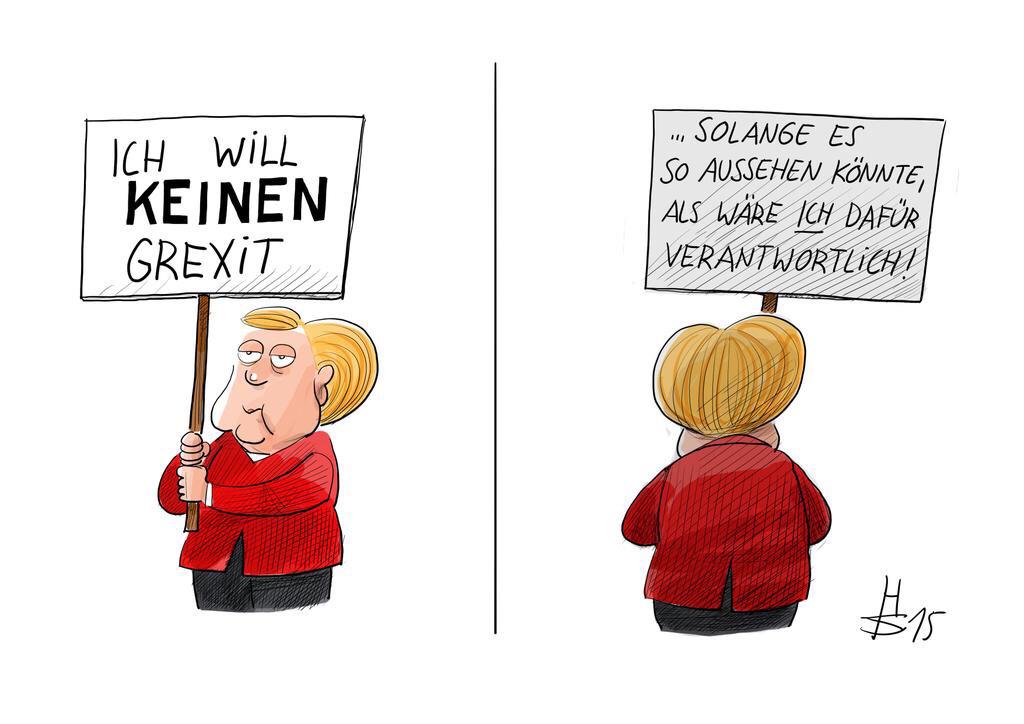
Since Greece and the rest of the Euro zone gave each other the finger the other day, a few things need to be said before things go syrizaously wrong in this neck of the woods. What was expected to be the day of another euro-compromise, brokered in the wee hours of the morning, the whole thing fell apart, seemingly with Greece and its new government on one side and he rest of the Eurozone on the other.

20150218_blog

But in reality, what we have here is not a game of playing chicken, with Greece and the Eurozone counting on each other to blink first. Rather, what we are witnessing is a Mexican stand-off of gigantic proportions where almost every member of the Eurozone is holding a gun to the head of most other members and at the same time virtually all Eurozone governments are held at gunpoint by their electorate, something they’ve only themselves to blame. Namely, by bailing out German and French banks with their taxpayers’ money and now trying to make the Greeks foot the bill, they’ve found themselves in exact opposite of Greek Syriza: while Tsipras and Varoufakis promised to end the vicious cycle of more cuts for more money, leading to less growth which creates the need for even more cuts and the need for even more money (and so on ad nauseam), the governments of Germany, The Netherlands and even Slovenia (to name but a few) are under increasing pressure to make sure the taxpayers get their money back.

Thus, a clustefuck of gigantic proportions was created, where legitimate positions of all governments involved preclude one another and are starting to resemble the old joke about an irresistible force and the immovable object. There rarely was a greater need for the (black) art of the European compromise.

The position of Slovenian government is especially interesting in this case. Apparently, finance minister Dušan Mramor more or lees told his Greek colleague Yanis to go Varoufakimself with his ideas of increasing public sector employment and expenditure while everyone else – including Slovenia – is slashing costs to make ends meet. Not that the ends are anywhere near each other – Slovenia will have to raise 1.5 billion, 15% of the budget, in loans in 2015 alone.

Reassuring Mramor

Mramor was apparently indignant over the fact that in per capita terms Slovenia is among the most exposed member states in the Greece omnishambles but was having no say in the matter as Tsipras and Varoufakis were negotiating with the big boys (and girl) only. As if Mramor way trying primarily to reassure himself by lashing out at Greece rather than trying to find some middle ground or even support Greece in its, well, “need for more time“.

But reassuring himself or the Slovenian taxpayer Mramor is not. It is more than obvious that most (if not all) money loaned to Greece will never get repaid and that Franci Križanič, FinMin in the Borut Pahor government (2008-2011) was talking bullshit when he said Slovenia will make money with the loan.

Mramor’s going after Greece suspiciously coincides with feces coming dangerously close to a mechanical air ventilator in the case of 3-billion-heavy bailout of Slovenian banks in late 2013.

Junior bonds extinction

Namely, accusations were made by Tadej Kotnik (curiously, a biophisycist and vicedean of faculty of Electrical Engineering) that recapitalisation of the banks and especially the accompanying extinction of subordinated bank bonds (in effect, complete nationalisation of Slovenian banks) was illegal, pre-arranged and non-transparent. But the gist of it, it seems, lies in the allegation that the Bank of Slovenia (this country’s central bank, aptly shortened to BS) back-dated a key measure to cover up the fact that eradication of junior bonds was agreed-upon in advance with the European Commission and was not some sort of a last-ditch measure to save the banks.

Now, Kotnik, a private individual and a member of the Association of Small Shareholders, apparently invested heavily in subordinates and thus lost quite a substantial amount of money. He also challenged the bond extinction at the Constitutional Court but the court deferred to the European Court of Justice as the bailout measures were coordinated with the European Commission and under EU law directly.

Anyhoo, the thing is that the Bank of Slovenia, specifically Governor Boštjan Jazbec fucked up their initial response, hiding behind legal clauses and non-disclosure of financial information, thus giving credence to Kotnik’s accusations which are, it seems, mostly based on one or two sources within the BS.

obviously all hell broke loose, with MPs screaming for a parliamentary investigation, various political parties scrambling for cheap political points and Jazbec, after a press conference was finally held, fucking up further with a seriously distorted view of (non)accountability of the institution he heads and the office he holds.

Namely, Jazbec, after explaining that everything is OK and within the bounds of the law and that two wildly different appraisals of the state of the largest bank NLB are not all that unexpected decided to explain the matter further to… the government. As if it wasn’t the parliament who appointed him to the position and as if it wasn’t the parliament who represents the sovereign of this country, the people. Or, as they are more commonly known these days, the taxpayers.

While the government of course needs to be in the loop, Jazbec would do well to address the parliament first, since it was the people’s euros he spent on propping up the banks. But as things stand now, he is making one small(ish) mistake after the other and if he doesn’t stop digging soon, he may find himself in a hole too deep to climb out of. Especially since political parties are scrambling to put a daylight betweeen them and anything that might make them look responsible for the disastrous state of the banking sector. Which is why the Social Democrats are all of a sudden deeply worried about the situation. As if it wasn’t them who ran the financial portfolio in the ill-fated Pahor government (when things started going south for real) and who were junior partners in the Bratušek government which engineered the bailout. Almost the same goes for the SDS, which led the government during the pre-2008 spending spree and which performed a couple of smaller recapitalisations of the NLB (couple a hundred million a pop) and is now screaming bloody murder and demanding a parliamentary investigation.

The sad reality

The reality, of course, is much more prosaic. After Greece and Cyprus, Slovenia was to be next in line for the Troika Treatment. And since the political mantra in the Eurozone at the time was that individual stakeholders, not just the state as such must bear the cost of the bailout, it was more or less obvious that erasing junior debt was unavoidable. Even more. If there is one point where Tadej Kotnik is correct is that the whole process was most likely pre-arranged and coordinated with Brussels. You see, at the time Slovenia for all intents and purposes was under administration, with the European Commission pouring over every aspect of economic and/or fiscal policy, confirming some, rejecting others. And so it seems plausible that the bailout of the banks, the extent and the mechanics of it were approved by the EC before they were enacted by the Bratušek-Čufer-Jazbec trio. That the Commission formally approved the measures taken fairly soon thereafter only goes to strengthen the point.

The above seems to suggest that the problem was not so much in the execution of the bailout but in the definition of the problem. You see, at the time the fate of Slovenia was in the hands of a budget specialist (Bratušek), a higher-level bank manager (Čufer) and a macroeconomist (Jazbec). None of them were in office for a particularly long time, while the country as such was held at gunpoint, not to mention the political turmoil on the home front. For them to understand that the problem was one of policy concept and not (only) of numbers would demand an extraordinary insight. Even more – even if they had the insight (it seems plausible that at least some people advising them did manage a wider outlook), it remains doubtful if they had the room to manoeuver.

Which, not surprisingly, brings us back to the current Greco-German spat. Unlike the Slovenian government of Alenka Bratušek, the new Greek PM Tsipras and his FinMin Varoufakis fully understand the problem is political, even ideological. But they, too, have precious little wiggle room. Because just like Syriza is acting on a mandate by the people, so, too, are the Germans and the rest of the Eurozone. At some point they will have to explain to their voters why they used their money to prop up mostly German and French banks, overexposed in Greece. I’m sure it seemed a good idea at the time and in the panic that gripped the EU when Greece all but defaulted, the last thing anyone wanted was a bank run. But to bailout its banks, the Eurozone took out an even bigger loan with their voters and not being entirely candid on what the money was being spent on.

Extend and pretend

With this in mind, it is not only Greece that is – in the words of Yanis Varoufakis – resembling a drug addict. The (rest of the) Eurozone, too, is asking their voters trust and understanding they may not be ready to give anymore. Which makes the ruling centrist(ish) parties in Europe nervous which, by extent, leads to some uneasy moments of disturbing clarity, such as German FinMin Schäuble apparently saying the Tsipras government is acting irresponsibly. Patronising, even smacking of colonialism. But in reality most likely nothing more than a show of frustration at the realisation that even if the new Greek government does decide to play ball and continue with the established sparprogram, the game is more or less up and “extend and pretend” is from now on a two-way street.

And that no one knows how long the voters are going to continue buying it.


Why “Who Started First” Doesn’t Explain Charlie Hebdo

The Charlie Hebdo Massacre is resonating in Slovenia as well. For some strange reason it seems to have resonated with the people more than prior terrorist/hate-speech/other attacks on European media. Perhaps it was the fact that a few weeks ago most of the country was fiercely debating the role of media in a suicide of a headmaster of a Maribor high school. Or maybe it was brutality of the attack itself, apparently happening just as the new issue of the magazine was being finalised. Or the fact that Slovenian police picked up an individual (ethic Slovenian!) who apparently fought on the ISIL side of the Iraq-Syria clusterfuck. Or maybe the fact that it was Paris, just two-hours-flight away from Ljubljana. Or maybe the fact that pengovsky seems to follow a lot of journos on Twitter and is looking only inside his bubble. Fuck me if I know. However, a few things need to be said, especially to those who put the massacre into the context of (alleged?) European multiculturalism, with the bottom line being that Charlie Hebdo were sort of asking for it.

20150108_jesuischarlie
A gathering of journalists in Ljubljana in support of Charlie Hebdo.

Now, that Europe is anything but truly multicultural is a given. In a continent teeming with former colonial powers of various Christian denominations who by far and large still sport some sort of racist/chauvinistic behaviour, being of non-white skin is not exactly a walk in a park, I imagine. Even worse, it is often enough to have a surname with the “wrong” suffix (Balkans in general) or wear white socks and a track suit (Slovenia in particular).

And yes, if one wants to embark on a fruitless and yet painful voyage of “who started first”, European countries and by extension the continent itself are anything but innocent. But bringing up Lybia, Afghanistan, Iraq, Syria, Palestine, the Crusades and whatnot leads to a false sense of a single act in the distant past unleashing an unfortunate chain of events which led to the clustefuck of today.

And if you really wanted to be brutally cynical (an attitude pengovsky tends to respect) you could argue that whatever pain and suffering terrorism perpetrated in the name od Islam brought to the Western world, it is still eclipsed by far by the pain and suffering brought upon the Muslim world by the West in the name of democracy.

But you would be wrong.

What happened yesterday was not an act of religious piety or a fight against oppression but a murderous rampage against freedom expression. That it was done while shouting the name of Allah does not make it any more pious or holy or acceptable whatever the fuck someone wants to call it. Sure, Charlie Hebdo pulled no punches when it lampooned Islam. But neither did it pull punches when it dealt with Christianity. Or French politics, from what I hear.

Muslims had and still have every right to be offended by many an issue of the magazine. But that’s what it was there for. To insult. Even its tagline bears the words “journal irresponsable”. The irresponsible magazine. This was their shtick. You can insult back (and try to be clever about it). You can ignore it. You can press charges (European countries have an impressive set of anti-hate-speech legislation), you can laugh at it or laugh with it, but you can not kill for it.

Because if you try to rationalise the massacre from the standpoint of West’s (admittedly) double standards towards the Muslim world or by defaulting to “they see freedom of expression differently”, you implicitly condone kidnapping of schoolgirls in Nigeria, Branch Davidians or Jews forcing their way into the Al-Aqsa mosque. Or that Norwegian sick fuck. Or the Crusades, if you want to go that far back.

I don’t want to to into the “Islam/Christianity/Buddhism is religion of peace” shit. I’ve my own views on faith in general and organised religion in particular. Because this was not about it. This was not France’s 9/11 or Paris version of Madrid bombing. This was about a group of people killing a dozen people in cold blood because they did not share the same values. Think brownshirts of Europe’s 1930s, Brigate Rosde and Gladio bombings in Italy or Rote Armee Fraktion in Germany. Or even the Oklahoma bombing by Timothy McVeigh.

The Charlie Hebdo Massacre was not religious but political. And even that only insofar it was carried out by a group of people with a particularly degenerate derivative of an otherwise valid ideology who believe they have a license to kill anyone they dislike for whatever reason they see fit.

And journalists usually work on being generally disliked.

UPDATE:

This lovely clip from No Man’s Land, an Oscar winning film by Danis Tanović shows the futility of “who started first” while people are dying.

Janez Janša Walks Out Of Prison. But Is He In The Clear?

Janez Janša walked out of prison earlier today. This followed an injuction by the constitutional court which suspended execution of his two-year prison sentence pending final ruling in the Patria Affair. The court unanimously agreed that – in a nutshell – it’s Janša’s MP status which would have been impeded beyond repair should the final ruling be made in Janša’s favour. Should, however, the court in the end rule against Janša, the leader of the SDS will continue to serve the remainder of his sentence.

20141212_jj
Free Ivan (source)

Now, immediately after the injunction was announced, all hell broke loose and (as per usual) Slovenia was all of a sudden teeming with legal experts. Obviously, most of the interpretations were and still are wildly off the mark. Among the disappointed crowd, the story was being spinned as if Janša was released from prison because he is a politician.

Among the faithful, on the other hand, Janša out of was prison akin to quashing the prison sentence against Janša, confirmation of their belief that Janša is a “political prisoner” and prompting them to call for the heads of most of Slovene judiciary, starting with president of the Supreme Court Branko Masleša.

All of the above is painfully wrong.

Janša was released from prison (possibly only temporarily) not because he is a politician but because he is an MP. Now, whether we like it or not, the constitution states that every single MP is the representative of the entire people. While the MPs debated Janša’s ejection from the parliament, his posse kept on babbling about how the rights of his 6000+ voters are being hindered if he is barred from serving as MP while in prison.

The constitutional court, however, took it one step further, but not necessarily in the direction Janša and his crew wanted. Namely, it had stated that it was representation of the people of Slovenia that was at stake. Not just JJ’s 6000 voters. However, the said representation was only at stake if the man is innocent (i.e.: is found to have not been tried fairly).

Meaning that the court en passant confirmed the controversial decision of the parliament to deny MP status to a convict, but had not yet decided if Janša was convicted fairly.

This of course opens up a plethora of other constitutional and political loopholes which the parliament knew existed for years if not decades, but was unwilling to plug them.

So, what at first seems like good news for Janša, really may turn out to be not-so-good news. Because Janša is out only because he is a serving MP. It is this particular specific situation which makes his case different from that of his co-convicts, Ivan Črnkovič and Brigadier (Ret.) Tone Krkovič. The trio was convicted simultaneously, but only Janša gets to walk out. Because he is an MP and not because the constitutional court would imply the final outcome of the ruling.

In fact, in the text of the injuction (Slovene only) the judges make an extended effort to press this exact point: the injunction does in no way, shape or form preclude the final ruling in the matter.

And that is all there is to it. Representation of the people matters most. The court recognises a possibility, however remote, that a serving MP was convicted unjustly and set him free to execute his mandate until final decision. Should that decision be reached in favour of the plaintiff all hell will break loose, possibly forcing early elections. But if the judges find against Janša et al., the leader of the opposition simply continues in prison where he left off today.

    A Killer Of A Story

    Somewhere in the middle of this year’s local elections campaign in Ljubljana Martina Valenčič called a press conference and provided for a good thirty minutes of incoherent rambling which included turning the center of the city into an RV parking lot, liasioning with wealthy businessmen to bring in tourism, talked about CIA and the Russians conspiring against Slovenia and said she will return the Ljubljana Castle to its rightful ower, king Boris I. of Slovenia who just happens to be her husband. pengovsky and another journo were the only ones covering it and while the event was expected to be bizarre, no-one expected industrial-grade bizarre during those thirty minutes. In the end pengovsky decided not to produce a piece for The Firm™ but rather uploaded the entire thirty minutes of the press conference to YouTube. Where all hell broke loose.

    20141201_joker
    Picture not necessarily related. Just the first thing that came to mind (source)

    The video went viral, clocking in 65k+ views and was the talk of the town for a couple of days while (not entirely unexpectedly) the commentariat took it out on Martina big time. And while she admittedly isn’t the quickest of cats at the best of times, she genuinely believed in whatever she was saying. It was at that point that pengovsky was starting to have second thoughts. I mean, clicks were going through the roof, the otherwise lacklustre campaign got its first WTF moment and life was good. But the amount of shit random YouTube users were spilling over Martina was disturbing.

    Convincing myself that she did run for mayor and that no-one forced her to hold that press conference, only went so far. Because, it must be said that a lot of stupid shit is being said on other press conferences as well. It’s just that the delivery is better. It was only when she herself posted a comment with her bank account details, soliciting campaign donations that I stopped worrying over it. Apparently she was cool with whatever attention she was getting. Life was good again.

    In the end, Martina came in last, winning about two hundred votes. So, until next time, I guess. But for pengovsky the lesson was as important as it was unexpected. Things, when published, do take on a life of their own. This, I knew. But what I didn’t know (or, at least, didn’t experience first hand until then) was the swiftness and brutality of the internets. Luckily, Martina was cool with it. A headmaster of a Maribor high-school wasn’t.

    Namely, weeks ago a YouTube video of two people having oral sex surfaced on YouTube, with the claim being made that it featured the said headmaster and his teacher colleague. The video, allegedly shot through a door ajar by a pupil was picked up by several high-profile news media and soon no amount of denial by the headmaster would help. The call was made, the judgement passed, ad-spadce sold and links clicked. The media process was complete. Or, rather, the man was fully processed by the media. For on Saturday, he took his own life.

    Truly, a killer of a story.

    When the initial shock started to dissipate, the reactions, as strong as they were (and still are) can be grouped into three broad categories: those media which have exploited the story are keeping as low a profile as possible. Then there are others, which have ignored the story are now taking the moral high-ground, setting themselves as an example and en passant exploiting the story now, which is self-defeating to say the least. And lastly, there are those who are trying to make a distinction between various angles from which the story was covered (sleaze vs. privacy intrusion).

    But all of the above are little more than thinly veiled face-saving attempts. Because the real problem lies someplace else: with the media industry itself.

    You see, the prime reason that certain news outlets picked up the story are not clicks, ad-space and ratings. All three are achievable by any other means. They did it because they could. They did it because there was no-one to tell them it was wrong. That it was unacceptable. That it was the opposite of what media are supposed to be doing.

    Sure, there is the lack of a decent editorial process. This is the original fail. If the media in question had editors with sufficient mileage to a) know the right from wrong and b) the guts to defend it in the face of owners/CEOs demanding results by any means possible, this would not have happened.

    But there’s the larger problem of other media organisations not taking a collective stand against such practices which (only slightly less extreme) have become a staple of Slovenian media landscape. We’re learned to look the other way, mutter a little something about tabloidisation of the media and be done with it. Sure, times are tough, it’s hard enough to win advertising money and put bread on the table as it is.

    But as with many other things we as a society hold dear, by ignoring the ever more changing frame of the media discourse, we were slowly but surely losing our grip on the most basic of things: common decency. One of the more perverted excuses was that the media was only giving the public what it wants. And that people, individuals who wanted to see or have indeed seen the video are just as much to blame. Wrong.

    Sure, the kids who (allegedly shot and) uploaded the video should be punished. Even if the headmaster chose not to end his life, what they did was beyond excusable. And since authenticity of the video was never fully established, it is impossible to pass judgement on the alleged acts of the headmaster and the teacher. But, generally speaking, it is a bad idea to get laid in your place of work. However, one suspects that the kid in question will have to live with this burden for the rest of his life. But he is not alone.

    Granted, there are individuals in Slovene media who bear the lions’ share of responsibility for what had happened. But the industry as a whole is not without blame. If nothing else, because it tacitly condoned practices which have ultimately led to events of this weekend.

    Bob knows what will come of this. If anything, that is. Nothing can bring the headmaster back. What is done is done. But the lessons of this sad episode can only be learned if we as news people want to learn them. Rolling a few editorial and/or journalistic heads will not be enough (again, if heads will roll at all). A public apology will go a long way, but will do nothing to prevent something like this happening again, someplace else with some new people. And with the burn-through rate of Slovenian media people increasing, that moment can come sooner than we think.

    Perhaps a meticulous and transparent investigation of decision-making processes that took place from the moment that kid fucked up and uploaded the video to the bitter end would be a good place to start. After that – who knows. Maybe the things we learn about ourselves and each other by that stage will be enough to prompt some true changes in the way we do our business.

    Because clicks and ratings and ad-space are indeed the lifeblood of the media, but at least in Slovenia the media have been on transfusion for a while now and it seems that we’ve stopped caring at what exactly we hook ourselves up to.

    I’m sorry.

    From Prison To Prison

    Janez Janša, leader of the largest opposition party SDS was stripped of his MP seat yesterday on Wednesday, thus bringing to a close a protracted period of post-election second-hand embarrasment this country was collectively experiencing due to the fact that a convicted criminal was elected to the parliament and was indeed executing his office.

    20141018_jj
    The SDS put up a sign where Janša sat in the parliament saying “Political Prisoner” (source: sds.si)

    In case you live in the real world and not in this sorry excuse for a country, here’s a quick rundown: Janša was sentenced to two years in prison for corruption in the Patria Case. He appealed his sentence, got his appeal dismissed by the higher court and then again by the supreme court. Some time in between (at the height of the election campaign this summer) he started serving his sentence, but was elected to the parliament nevertheless. Thus prompting a legal and political clusterfuck because – you’re not going to believe this – the law says an MP is stripped of office “if convicted to a prison sentence exceeding six months” but doesn’t specify if this means sentences after he/she was confirmed as an MP or does this apply to sentences passed before an MP is elected to office.

    And while this legal minefield was navigated, Janša was sleeping in a prison cell but was coming to Ljubljana whenever parliament was in session. Which was quite often in the past couple of months. And since Janša had no intention of resigning of his own accord (after all, he sees his prison sentence as a result of a global communist conspiracy), a curious situation was created where a person convicted of criminal activity was deciding on laws in this country. Even more – staying true to form, i.e. pushing the envelope to breaking point – Janša tried to have himself appointed in the parliamentary Intelligence Oversight committee.

    Which apparently was the straw that broke the camel’s back as the ruling SMC repeatedly blocked constitution of this committee, on the grounds of Janša being able to access sensitive information as a member of the committee. Which is true. Having a convict attending a surprise inspection of a police wire-tapping facility is simply preposterous. Therefore, the question at hand was not only that of legality of Janša’s MP seat, but that of legitimacy of the parliament. Because what kind of a sorry-ass parliament allows a convict to hold it by the balls through procedural maneuvering?

    After months trying to have the cake and eat it, the ruling SMC of PM Miro Cerar finally got their shit together and realised the situation will require a political decision (preferably one which survives legal challenges) rather than a legal decision passed by a political body. Which was a marked improvement from their initial approach which was designate an ad-hoc committee of outside legal experts since the parliamentary legal service stated that in their view Janša can not legally be stripped of his term.

    Obviously a whole lot of brouhaha was made about this document, especially by the SDS. But the parliamentary legal service is a child everybody likes to kick around when they feel like it and feign to protect when it makes them look good. Virtually every party in the parliament at one stage hailed documents by the legal service but flat-out ignored them at another stage. SDS is no exception. Even worse, whenever they disagreed with the position of the parliamentary legal service, they accused it of currying favour of communists, carrying bag for powers that be, etc, etc. Point being, that the new-found faith of the SDS in the legal experts of the parliament is probaby short-lived and confined to this particular issue.

    Anyhoo, on Wednesday parliament finally voted on the matter and decided to strip Janša of his term as per law. Which means that not only have the parliamentarians ejected a convict from their midst, they’ve also set a precedent and passed an interpretation of the disputed Article 9 of the Law on Deputies. Clause “if convicted to a prison sentence exceeding six months” is now interpreted as “regardless of whether conviction took place prior to MP actually being elected or after he/she was already sworn in” provided the sentence is still being served.

    Again, Janša can and probably will mount a legal challenge, but his luck seems to be running out. Not only is his star-lawyer Franci Matoz repeatedly failing to deliver for his client, he also has a couple of other cases against him due in court. Nothing of the Patria magnitude, but enough to be more than just a hassle. Despite the fact that there is a merry band of followers picketing the Ljubljana Court building every day, there is noticeable and growing dissent among the faithful. Even Reporter magazine, usually a mouthpiece for the most crackpot of SDS ideas (not to be confused with Demokracija magazine, which is actually part-owned by the Party), threw Janša under the bus a couple of weeks ago, much to the man’s annoyance.

    In 1988, when Janez Janša was put in prison, he was catapulted into top-tier politics where he remained ever since. It seems only fitting he should make his exit in the same manner.