SuperKarl and Croatian Rapid-Fire Mode

Karl Erjavec is one lucky sonofabitch. In fact, he is so lucky that his middle name could well be changed from Viktor to Felix. I mean, the lucky with this guy is so strong that if he’d been thrown out of an airlock in the middle of the universe, he’d beat the probability of survival of two to the power of 276,709 to one against. Because that’s how improbable it is that Karl Erjavec found himself at the epicentre of not one, but two political and diplomatic scandals in Slovenia and was told by PM Cerar that he will not seek his replacement.

20150728_blog
SuperKarl and the Mystery of The Arbitration. Sounds like a film with Harrison Ford

You see, if this was a time like any other, Erjavec would be flying out of the ministry, legs first, over a scandal with Slovenian ambassador to France where she allegedly embezzled state funds, repeatedly went on unauthorised leaves and fabricated reports. Shit was apparently brewing for some time, while the wrongdoing was uncovered months ago by an internal audit results of which were then sat on by the foreign ministry. The report was released only yesterday after the Information Commissioner ordered the ministry to do so, following an apparently unusually long deliberation on the issue.

However, since Slovenia is momentarily embroiled in the Arbitration Agreement omnishambles which already claimed the two directly involved senior diplomats, PM Miro Cerar apparently decided against beheading the foreign ministry in what is shaping to be a crucial, all-hands-on-deck period in the arbitration on the Slovenia-Croatia border dispute.  Not to mention the quite probable outbreak of a political crisis in Slovenia dismissing the leader of the second largest coalition party would probably incur. Thus SuperKarl lives to see another day.

Namely, after the initial panicky response to what is now dubbed PiranLeaks, Slovenian political class is finally getting its shit together. Thus a new national arbiter will be appointed soonest (probably today), circumventing the usually protracted process in the parliament, in the hope that the arbitration proceedings can continue and ultimately conclude. Which is precisely what Croatia wants to prevent.

The government of Zoran Milanović went into rapid-fire mode, upping the ante almost daily. Thus on Sunday FM Vesna Pusić was still writing a concerned letter to the Arbitration Tribunal, formally notifying it of what had happened, but on Monday PM Milanović already announced the government is considering withdrawing from the arbitration altogether. And when his Slovenian counterpart Cerar said neither country can quit the arbitration (as per agreement), Milanović retorted by saying that it can and it will.

This is the point where things start to get tricky indeed. For all its bravado (probably amplified by the de facto election campaign Croatia is in), the incumbent Croatian government has talked itself into a rather cramped corner. Not putting their money where their mouth is would mean certain ruin for Milanović and his fellow political travellers. But the signals they are receiving are anything but clear and/or encouraging. Namely, the European Commission stated in no unclear terms that it expects the rules of the agreement to be adhered to and for the tribunal to finish the job at hand. The tribunal itself demanded Slovenia explain its version of events. Whether or not this heralds a chastising of Slovenia or not remains to be seen, but it does suggest the tribunal sees itself fit to handle the current clusterfuck as well.

Point being that Croatia used up most of its ammo (provided there’s not another batch of phone-taps waiting to miraculously appear in Croatian media) while everyone else barely made a move. This, too, suggest the pace of Croatian moves is dictated by internal political dynamics (looming elections) rather than the arbitration itself. And while one can fully expect attempts at broadening the field (like Zagreb filing a complaint with the Int’l Maritime Tribunal in Hamburg), the fact is that the Arbitration Tribunal has it within its power to conclude the proceedings as per the agreement. Even if that means unilaterally appointing a new arbiter for Croatia, since Vukas is rumoured to be stepping down at the behest of the government in Zagreb which will not name a replacement, or so the wisdom goes.

Unless, of course, Slovenia has a trick or two up its sleeve, as well. That, at least, that was the translation of Branko Grims’ cryptic praise of SOVA, the Slovenian spook service yesterday. Namely, Gizmo (generally, a pretty undesirable character) said the country’s intelligence services had done an excellent job which led to speculations that Slovenia, too, had been listening in on Croatian convos (link in Slovenian).

If that really is the case, one can only hope no one is stupid enough to actually release the recordings. We’ve seen enough embarrassment these days to go around. Twice over.

UPDATE
This, via the STA


Oxi


… and then, after the dust had settled, after placards had peeled away and the international clamour dissipated and supporters from foreign lands went home, when hangovers were cured and the euphoria subsided, when there was nothing more to say that hadn’t been said a million times over, the people of Greece were left to pick up the pieces all by themselves…

Shituation in Greece: What We Have Here Is Failure To Communicate

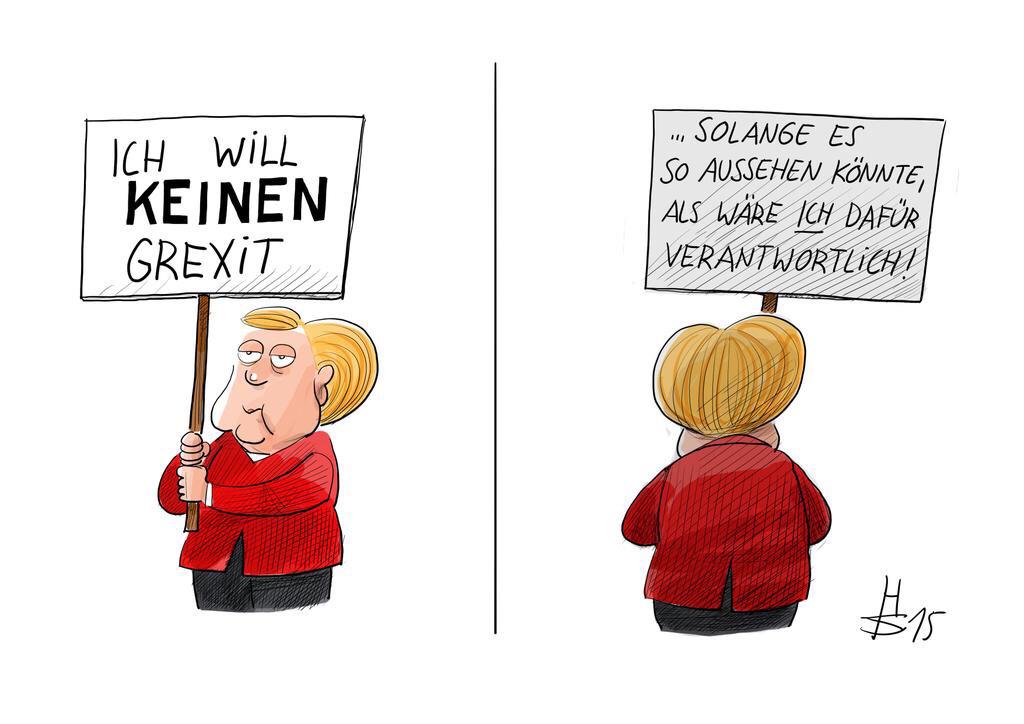
A few things need to be said vis-a-vis the impending Greek clusterfuck. Namely, we’ve been listening for weeks on end how the two sides, that is the heavily indebted Greece on one side and the don’t-call-it-Troika on the other were haggling over the finer points of tax hikes, spending cuts, projected values and sums calculated. But for some time now the one thought that has been bugging pengovsky was that we’ve seen it all before. Not in terms of the current economic and financial omnishambles – although one could argue that nothing has apparently been learned either from the Cypriot example or from previous failures of “saving Greece” – but more generally.

20150629_grexit
(source)

While most of the following is, obviously, based on media and other reports which inherently carry their own bias, it would seem that what we’ve got here is a failure to communicate. The shituation in Greece is not unlike the run-up to World War One or The Cuban Missile Crisis. In both cases, the conflicting sides were convinced they understood the position of the other side perfectly and in 1914 it ended in disaster, while in 1962 disaster was only narrowly averted. This is what happens when parties involved expect each other to behave according to their respective plans. When that doesn’t happen, bad things occur. And when bad thing occur, every new move, if not carefully calculated, only adds to the clusterfuck. And it is safe to say that calculated and measured moves were very few and far between, on both sides.

Greek PM Tsipras and his stellar FinMin Varoufakis seem to have expected the EU will simply roll over for the two of them after Syriza won the Greek elections. As if things will automatically start moving in a new and more healthy way just on their say so. Well, they didn’t and had they understood what was it that the Troika was after, they would not have spent months grandstanding and posturing (look ‘ma, no tie!) around Europe, achieving practically nothing. But on the other hand, had the Eurogroup and especially Frau Merkel understood what the Syriza victory in Greece actually meant in terms of legitimacy of austerity policy (rather than trying to prove to Greek voters they voted wrongly), things might have moved forward, despite the initial clumsiness of the Greek Duo. As things stand, there is not an innocent party in this sorry story. All of them have boxed themselves in with their own rules of engagement that could only degenerate into the current shituation.

As pressure bar goes way up into the red, accusations of communists in Athens trying to set Europe alight as well as accusations of fat cats in Brussels trying to make an example of Greece and shift the burden of the bailout squarely on the shoulders of the poorest strata of Greek society. Neither are exactly true, in pengovsky’s opinion.

Yes, this is an ideological fight. Whoever maintains that it is only the Greek government who is flaunting ideology suffers from a massive (self-inflicted) blind spot. Even adhering to pure maths means taking an ideological position. But just as the Greek government is “far left” only in terms of the general European discourse being right-of-centre, the don’t-call-it-Troika is a far cry from a 21st century incarnation of the Sherrif on Nottingham, case in point the latest proposal by the European Commission which, for example, calls for a larger cut in defence spending, a wider base for luxury tax, closing of tax loopholes, et cetera.

Point being there is nothing to be gained from an ideological shouting match. Other than shifting the blame, that is. Which is what the current rush to win the battle for interpretation looks like. Not so much wanting to find a way forward but making sure the other party is to blame when things go all the way south. Thus Varoufakis says Greece has a clear conscience re negotiations. That may be. And I’m sure Merkel, Dijsselbloem and the lot feel the same.

Isn’t that nice. The whole common currency project is about to go tits-up, possibly dragging the Union with it but everyone will have a clear conscience. Here’s a newsflash: you dimwits were not tasked with runing the show to have clear consciences but get shit done.

Conspiracy theories aside, plenty of European press seems to be clamouring for a “12th hour deal”, either counting on Tsipras/Varoufakis to see the light or Merkel, Draghi and even Juncker balking at the idea of going down in history as leaders under whose stewardship the euro (and by extension the EU) started to disintegrate. This line of thought has a big problem: Both “The Institutions” and the Greek government are convinced it is precisely their actions which can save the euro/EU while actions of the opposite side are “uneuropean, inhumane and illogical”. Not necessarily in that particular order. It is, as KAL some time ago so aptly pointed out, a classic case of irresistible force meeting an immovable object. It seems doubly ironic that a renowned expert in game theory should be an active participant in the dismal failure of the entire enterprise. Yes, I’m looking at you, Yanis.

True, both Greece and the don’t-call-it-Troika seem to have gone so far down the chute that a working deal is for all intents and purposes impossible without either of the sides caving in completely. So perhaps what is needed is a non-working deal? Something both sides need to save their respective faces (if not asses), knowing full well that the goals laid out will not be met. Because it is not as if all the previous goals set for Greece were met with flying colours.

So, here we are, with Greek banks closed, capital controls in place and EUR 60 cash withdrawal limit per bank account and/or person. Save a surprising yes vote by the Greeks on the #greferendum (which would, in turn, probably trigger new elections, further complicating events), the country is moving rapidly towards leaving the euro. Just how this plays out no-one knows.

A wise man once said that to jaw-jaw is better than to war-war. The same goes for current omnishambles. The EU and the euro were always perceived as one-way streets. If Greece leaves the euro and possibly the EU as well, the Pandora’s box will have been opened and things thought impossible will suddenly become deceptively easy and many-a-politician’s weapon of last resort. Because if Greece leaves the euro, why not Germany? I’m sure a relevant political party with an anti-euro agenda would appear in no time.

Oh, wait…


Eurothings Slovenly But Syrizaously Going South

Since Greece and the rest of the Euro zone gave each other the finger the other day, a few things need to be said before things go syrizaously wrong in this neck of the woods. What was expected to be the day of another euro-compromise, brokered in the wee hours of the morning, the whole thing fell apart, seemingly with Greece and its new government on one side and he rest of the Eurozone on the other.

20150218_blog

But in reality, what we have here is not a game of playing chicken, with Greece and the Eurozone counting on each other to blink first. Rather, what we are witnessing is a Mexican stand-off of gigantic proportions where almost every member of the Eurozone is holding a gun to the head of most other members and at the same time virtually all Eurozone governments are held at gunpoint by their electorate, something they’ve only themselves to blame. Namely, by bailing out German and French banks with their taxpayers’ money and now trying to make the Greeks foot the bill, they’ve found themselves in exact opposite of Greek Syriza: while Tsipras and Varoufakis promised to end the vicious cycle of more cuts for more money, leading to less growth which creates the need for even more cuts and the need for even more money (and so on ad nauseam), the governments of Germany, The Netherlands and even Slovenia (to name but a few) are under increasing pressure to make sure the taxpayers get their money back.

Thus, a clustefuck of gigantic proportions was created, where legitimate positions of all governments involved preclude one another and are starting to resemble the old joke about an irresistible force and the immovable object. There rarely was a greater need for the (black) art of the European compromise.

The position of Slovenian government is especially interesting in this case. Apparently, finance minister Dušan Mramor more or lees told his Greek colleague Yanis to go Varoufakimself with his ideas of increasing public sector employment and expenditure while everyone else – including Slovenia – is slashing costs to make ends meet. Not that the ends are anywhere near each other – Slovenia will have to raise 1.5 billion, 15% of the budget, in loans in 2015 alone.

Reassuring Mramor

Mramor was apparently indignant over the fact that in per capita terms Slovenia is among the most exposed member states in the Greece omnishambles but was having no say in the matter as Tsipras and Varoufakis were negotiating with the big boys (and girl) only. As if Mramor way trying primarily to reassure himself by lashing out at Greece rather than trying to find some middle ground or even support Greece in its, well, “need for more time“.

But reassuring himself or the Slovenian taxpayer Mramor is not. It is more than obvious that most (if not all) money loaned to Greece will never get repaid and that Franci Križanič, FinMin in the Borut Pahor government (2008-2011) was talking bullshit when he said Slovenia will make money with the loan.

Mramor’s going after Greece suspiciously coincides with feces coming dangerously close to a mechanical air ventilator in the case of 3-billion-heavy bailout of Slovenian banks in late 2013.

Junior bonds extinction

Namely, accusations were made by Tadej Kotnik (curiously, a biophisycist and vicedean of faculty of Electrical Engineering) that recapitalisation of the banks and especially the accompanying extinction of subordinated bank bonds (in effect, complete nationalisation of Slovenian banks) was illegal, pre-arranged and non-transparent. But the gist of it, it seems, lies in the allegation that the Bank of Slovenia (this country’s central bank, aptly shortened to BS) back-dated a key measure to cover up the fact that eradication of junior bonds was agreed-upon in advance with the European Commission and was not some sort of a last-ditch measure to save the banks.

Now, Kotnik, a private individual and a member of the Association of Small Shareholders, apparently invested heavily in subordinates and thus lost quite a substantial amount of money. He also challenged the bond extinction at the Constitutional Court but the court deferred to the European Court of Justice as the bailout measures were coordinated with the European Commission and under EU law directly.

Anyhoo, the thing is that the Bank of Slovenia, specifically Governor Boštjan Jazbec fucked up their initial response, hiding behind legal clauses and non-disclosure of financial information, thus giving credence to Kotnik’s accusations which are, it seems, mostly based on one or two sources within the BS.

obviously all hell broke loose, with MPs screaming for a parliamentary investigation, various political parties scrambling for cheap political points and Jazbec, after a press conference was finally held, fucking up further with a seriously distorted view of (non)accountability of the institution he heads and the office he holds.

Namely, Jazbec, after explaining that everything is OK and within the bounds of the law and that two wildly different appraisals of the state of the largest bank NLB are not all that unexpected decided to explain the matter further to… the government. As if it wasn’t the parliament who appointed him to the position and as if it wasn’t the parliament who represents the sovereign of this country, the people. Or, as they are more commonly known these days, the taxpayers.

While the government of course needs to be in the loop, Jazbec would do well to address the parliament first, since it was the people’s euros he spent on propping up the banks. But as things stand now, he is making one small(ish) mistake after the other and if he doesn’t stop digging soon, he may find himself in a hole too deep to climb out of. Especially since political parties are scrambling to put a daylight betweeen them and anything that might make them look responsible for the disastrous state of the banking sector. Which is why the Social Democrats are all of a sudden deeply worried about the situation. As if it wasn’t them who ran the financial portfolio in the ill-fated Pahor government (when things started going south for real) and who were junior partners in the Bratušek government which engineered the bailout. Almost the same goes for the SDS, which led the government during the pre-2008 spending spree and which performed a couple of smaller recapitalisations of the NLB (couple a hundred million a pop) and is now screaming bloody murder and demanding a parliamentary investigation.

The sad reality

The reality, of course, is much more prosaic. After Greece and Cyprus, Slovenia was to be next in line for the Troika Treatment. And since the political mantra in the Eurozone at the time was that individual stakeholders, not just the state as such must bear the cost of the bailout, it was more or less obvious that erasing junior debt was unavoidable. Even more. If there is one point where Tadej Kotnik is correct is that the whole process was most likely pre-arranged and coordinated with Brussels. You see, at the time Slovenia for all intents and purposes was under administration, with the European Commission pouring over every aspect of economic and/or fiscal policy, confirming some, rejecting others. And so it seems plausible that the bailout of the banks, the extent and the mechanics of it were approved by the EC before they were enacted by the Bratušek-Čufer-Jazbec trio. That the Commission formally approved the measures taken fairly soon thereafter only goes to strengthen the point.

The above seems to suggest that the problem was not so much in the execution of the bailout but in the definition of the problem. You see, at the time the fate of Slovenia was in the hands of a budget specialist (Bratušek), a higher-level bank manager (Čufer) and a macroeconomist (Jazbec). None of them were in office for a particularly long time, while the country as such was held at gunpoint, not to mention the political turmoil on the home front. For them to understand that the problem was one of policy concept and not (only) of numbers would demand an extraordinary insight. Even more – even if they had the insight (it seems plausible that at least some people advising them did manage a wider outlook), it remains doubtful if they had the room to manoeuver.

Which, not surprisingly, brings us back to the current Greco-German spat. Unlike the Slovenian government of Alenka Bratušek, the new Greek PM Tsipras and his FinMin Varoufakis fully understand the problem is political, even ideological. But they, too, have precious little wiggle room. Because just like Syriza is acting on a mandate by the people, so, too, are the Germans and the rest of the Eurozone. At some point they will have to explain to their voters why they used their money to prop up mostly German and French banks, overexposed in Greece. I’m sure it seemed a good idea at the time and in the panic that gripped the EU when Greece all but defaulted, the last thing anyone wanted was a bank run. But to bailout its banks, the Eurozone took out an even bigger loan with their voters and not being entirely candid on what the money was being spent on.

Extend and pretend

With this in mind, it is not only Greece that is – in the words of Yanis Varoufakis – resembling a drug addict. The (rest of the) Eurozone, too, is asking their voters trust and understanding they may not be ready to give anymore. Which makes the ruling centrist(ish) parties in Europe nervous which, by extent, leads to some uneasy moments of disturbing clarity, such as German FinMin Schäuble apparently saying the Tsipras government is acting irresponsibly. Patronising, even smacking of colonialism. But in reality most likely nothing more than a show of frustration at the realisation that even if the new Greek government does decide to play ball and continue with the established sparprogram, the game is more or less up and “extend and pretend” is from now on a two-way street.

And that no one knows how long the voters are going to continue buying it.


Brussels Bruises For Bulc And Bratušek

As pengovsky writes this, Jean-Claude Juncker (yes, he of selfie-with-a-convict fame) concluded his meeting with Violeta Bulc, Slovenia’s second entry for the post of the European Commissioner later today. Thus a sordid saga of backstabbing, ruthless power-play, misoginy and blatant incompetence continues, reportedly with Bulc being nominated for the transport portfolio.

20141014_blog
JCJ with Frau Komisaar vol. 1 and vol. 2 (photo credit: @NatashaBertraud)

Pengovsky sadly didn’t have the time to cover the first instalment of this particular tour-de-clustefuck as he was too busy covering Ljubljana local elections for The Firm™ and has yet to write it up for this blog as well (Janković won, in case you didn’t know). But you all know the final outcome: Alenka Bratušek, Slovenian former MP in the end withdrew her nomination after a humiliating 113-12 vote rejecting her appointment as Commission VP for Energy Union.

Bratušek debacle

Now, what happened to Bratušek was about as brutal as can get and in all honesty her being singled out as the lone reject of the Juncker Commission is unfair at very least. From the moment the former prime minister was appointed as one of three possible nominees from Slovenia a chain of events was set in motion that – combined with her (admittedly) very much lacking performance during the committee hearing – could only end in a disaster.

You see, the main sticking point of Bratušek nomination in Slovenia (as presented by her political rivals and happily carried by numerous newsmedia) was not her lack of expertise, but rather the fashion in which she was nominated, her supposed singing of communist songs at an event last year and her potential paycheck (the latter two being typically Slovenian issues). The fact that she knew about as much about the emerging Energy Union as the next guy came a distant fourth.

While some criticism was well deserved, Bratušek was subject to daily, no, hourly abuse that was blatantly misoginous in nature and was not unlike all the shit thrown at her during her year-long reign as this country’s PM, from the length and pattern of her skirt, colour of her shoes, the dress she wore when she met the pope to rampant speculation whom was she sleeping with to get where she was. And yes, at one point Jucker was mentioned as her bed-trophy. Despicable doesn’t even being to cover what Bratušek was subjected to. Thus the character assassination that commenced immediately after Juncker picked her from the list containing Tanja Fajon (Slovenian MEP for S&D) and Karl Erjavec (foreign minister and leader of the pensioners’ party DeSUS).

Adding to that was the anti-graft commission (KPK) which took issue with her (self-)nomination process and the fact that Bratušek handled that part of the equation pretty badly, giving the appearance that he was avoiding a quick closure of the case by first waiting until the last possible day to pick up the registered mail, then letting her attorney deal with it and in the end even picking a new attorney. Pengovsky is still dumbfounded as to why she didn’t tackle the issue head-on, especially as the KPK found her actions amounted only to a conflict of interest and not a full-blown corruption (while we’re on the issue: in formulating the case against Bratušek, KPK created an infinite loop and more or less emasculated itself. More on that soon)

And then there was the horse-trading in the European Parliament where no-one even bothered to hide that it was going on over Bratušek’s back. The EPP and the S&D struck a deal to rub each others’ backs regardless of their respective nominees inappropriateness for selected portfolios, perhaps with a few cosmetic adjustments. This left Bratušek (an ALDE nominee) as the odd one out and boy did they let her have it.

But, at the end of the day, it was her under-prepairedness that made every other piece of her downfall-puzzle to fall into place. A blunder here, a blunder there, her signature lackluster and repetitive performance, sub-par use of euro-speak (where the fuck were phrases like “fully acknowledging the sovereignty of member states we will strive to create a fair, transparent and effective single market, blah, blah, subsidiarity, blah, blah, competition, blah, blah, and so on) and – finally – the fact that the Energy Union still but a figment of European imagination, this horse was not only out of the race, but was lying by the race track, panting, being kicked, screamed at and reduced to sun-dust.

The only one who on the surface at least played a fair game was Jean-Claude Juncker, who stood by his nominee and had his PR people maintain there were no changes to the Commissioners’ roster until Bratušek withdrew herself. Whether Jucnker really stood by her, helped Bratušek reach that decision or was only happy to see EPP and S&D do his bidding, we’ll never know. But at the very least, the next EU top dog kept his composure and class, which can not be said for anyone else involved in this story.

This goes for Slovenian PM Miro Cerar as well. The ruckus he raised when outgoing Bratušek government (acting well within its authority) put forward its list of nominees, was epic. He later came about but only after he was told by Juncker personally that it was he (Juncker) who is putting together the Commission, not Cerar or any other PM. And when Bratušek came tumbling down, it was up to Cerar to come up with a nominee.

Enter Bulc

The newly minted PM all of a sudden found his spine and flat-out rejected demands by EPP and S&D to appoint Tanja Fajon as the new Slovenian nominee, going with Violeta Bulc, his government’s VP for development instead. And almost immediately the whole wheel of disqualifications-ad-nauseam started turning yet again. To be sure, Bulc nomination carries a few gems, as well. Mostly, these have to do with more-than-eyebrow-raising entry of her being an alumnus of Shamanic Academy in Scotland and her statements about “syntropy”. But on the other hand, Bulc has had a successful career as a businesswoman, both in IT as well as a consultant. Her main drawback, however, are not crackpot theories about space and time. After all, how many MEP believe in the existence of a super-natural being which will ultimately judge our lives on this Earth? Or, how many of them are anti-vaxxers? (I’m shooting at random here).

Her main drawback is her lack of experience in a senior governmental position. Which – unless Bulc gave a stellar performance tonight during here tete-a-tete with Jucnker – means that a Commissioner from Slovenia will not be appointed Commission VP. Serves us right, I guess. At any rate, this wasn’t a “Slovenian” job Bulc is now aiming at, it is a Bulc job, formerly a Bratušek job, both of them got to have a shot at because they’re Slovenian. But I guess this still is a lesson we need to learn as a nation. There seems to be an unhealthy notion prevailing that we should do everything possible to prevent any of our compatriots from making it outside Slovenian borders. And if he/she makes it despite everything, we collectively expect this individual to disperse the goodies of his/her position among the rest of us. Just because.

But as far as lessons go, the biggest one was served not to Bratušek nor to Bulc but to Miro Cerar. For if there never was more poetic a justice served when the new Cerar government had to rush their decision on the new nominee and did so in a correspondence session, the very same way Bratušek rushed her outgoing government’s approval for Juncker’s original roster and drew some serious flak over it. Indeed, questions were raised as to legality of the issue. Bogus questions, but still. At the time they added to the fog-of-war surrounding Bratušek nomination.

And you can expect the same pattern to repeat again in the next few days. Even though the whole thing is not about Violeta Bulc, Alenka Bratušek or even Slovenia as a whole. What we have here is a power-play between the Juncker Commission and the European Parliament where the latter is looking to draw first blood (which it did) and keep the upcoming Commission in check for the duration of the five-year term. On the other hand, new new Commission boss has more than enough experience to know that in the curious menage-a-trios of EU top institutions he must subjugate the parliament early on lest he be spending more time fighting off rabid parliamentarians than actually making policy.

Which means that the Bulc hearing in the EP will quite possibly be just as bruising as Bratušek hearing was. Juncker did not go along with his own conservative EPP and socialist S&D suggestions-cum-blackmail about Tanja Fajon, nor did Slovenian PM Cerar. And with the credibility of any Commissioner candidate from Slovenia being question to begin with (and highly likely to go south from there), Juncker and now Bulc are fighting an unexpectedly steep uphill battle. Of course, say the EPP and S&D, if Commission President-elect were to nominate Tanja Fajon, or perhaps, former EPP MEP Romana Jordan, then all of his remaining problems could simply just.. go away. Get it?

In this respect (the inevitable portfolio reshuffle notwitstanding) Slovenian nominees were nothing more than collateral damage in a high-level, high-stakes game of political poker. And yet, a good portion of this country was weighing in as though Juncker was waiting for their opinion before he made his next move. In reality, however, it was just a freak-show at the outer edge of the circus, where they keep the ugly people.

    Alles Klar, Frau Kommissar?

    Six years ago, most of the free world this poor excuse for a country (pengovsky included) was aghast at foreign minister Dimitrij Rupel putting his own name forward to fill a vacant ambassador post in Vienna. While not illegal, it reeked of self-aggrandizing, cronyism and (ab)use of public office for personal gain. Back then, president Danilo Türk stopped Rupel dead in his unhealthy ambitions, forever insulting the man and his ego. Which is why speculation that outgoing PM Alenka Bratušek might put herself forward as a one of nominees for the post of European Commissioner isn’t exactly top form, if you catch my meaning.

    20140731_komisar

    Now, the issue of the Slovenian nominee for the new European Commission led by Jean-Claude Juncker exploded in the past few weeks as the timetable set by Juncker made it obvious Slovenia will have to come up with a name while government of Alenka Bratušek will still be taking, well, care of business. And while this prime human resource dilemma was in the spotlight on-and-off, it really went ballistic after the winner of July 13 snap elections and PM-presumptive Miro Cerar said the outgoing government should consult him before giving Juncker what he wants.

    Going south

    In all honesty, it would be sporty of Bratušek to keep Cerar in the loop and even allow him to have a say in what ultimately still is a business well within the purview of the outgoing government. But that didn’t happen and things went south almost immediately. Cerar decided to play hard-ball and told junior partners in AB coalition that he expects them to toe his line and that their failure to do so will result in their weakened negotiations positions when he forms the government. SD and DeSUS fell in line almost immediately and – voila! – ideas of Alenka Bratušek jumping up quite a dew notches in the political food chain were, well, flushed down the toilet. Temporarily, it turns out.

    But first, let take a moment and dissect Cerar’s harball tactics. Miro Cerar, supposedly ever the legalist, didn’t bat an eyelid when he shot way outside hi legal status in order to gain a political advantage. Namely, until tomorrow, when the new parliament is expected to convene for an inaugural session and confirm new MPs, Miro Cerar is merely a private individual. A private individual who won elections, sure, but a private individual nevertheless. And as such he has no mandate whatsoever to decide on public matters. Even more: while Cerar is indeed PM-presumptive, he does not begin to execute PM powers until his cabinet is approved, which will not happen until September at the earliest. Therefore, the veto power on the Brussels appointment which Cerar claimed for himself has no legal backing whatsoever. Period.

    In fact, it seems quite probable Cerar overestimated his political clout stemming from election victory and – crucially – underestimated the political and legal clout his potential coalition partners have stemming from their current positions in Bratušek caretaker government. But Cerar realized too late that by meddling in the outgoing administration business he is way out of his comfort zone, where margin of error is close to zero. Mistake numero uno. Trying to solve this self-imposed conundrum quickly, the PM-presumptive said he wants to see current EU Commissioner for environment Janez Potočnik re-nominated for a third term. Mistake numero dos. Will he make it to number three?

    Erjavec rocking the boat

    Namely, what was looking like a smooth ride towards a majority coalition is turning into a leaking boat that is being rocked violently by none other than Karl Erjavec of DeSUS. The man who could bring Cerar enough votes to form a single-vote majority was tipped to be the next Speaker of the Parliament (a post traditionally manned by the second largest coalition party) but has had a change of heart yesterday saying, he will run for this particular office.

    Media reports suggest Cerar and Erjavec had a deal early on that DeSUS would provide the necessary votes to get the parliament up-and-running even if the coalition deal would yet be done, whereupon Erjavec would take the Speaker job temporarily and be then nominated for the EU Commissioner post. Now, whether or not that is true is a matter of some speculation. But if true, then the SMC bailed on the deal by putting forward Potočnik, probably in light of Commission president Juncker expecting a nominee by today. This of course infuriated Erjavec, who in retaliation threw a large wrench in the delicate wheel of coalition-building.

    Omnishambles

    And suddenly, everyone wanted a piece of the pie and every option was back on the table, but with a twist. PM Bratušek was back as a possible nominee, with Slovenian Press Agency (STA) even quoting an “unnamed but reliable” source in Brussels that Juncker specifically asked for her and was even considering her for the position of Commission Vice-president. This, of course, is unverifiable, but people who are more intimate with the inner-workings of the EU say it is not entirely inconceivable.

    On the other hand, since the issue turned shambolic, various members of the outgoing coalition wanted to make the most of it. Thus the Social Democrats wanted nominate their sole MEP Tanja Fajon. This, of course, would be a major upgrade for the former TV SLO reporter from Brussels who made her name as EP rapporteur on visa liberalisation for Western Balkans countries.

    But SD putting forward Fajon has other implications as well. Should she become the new Commissioner, the interim-SD leader Dejan Židan kills two birds with one stone. Not only does he get rid of a possible leadership rival in the upcoming party congress, where he can expect to be taken apart following the rout in the 13 July parliamentary elections. Turns out Fajon’s empty seat would be filled by none other than Igor Lukšič, the man whom Židan replaced at the helm of the party following the rout the party suffered in the European elections in May. Thus Židan also gets to placate his bitter predecessor who never really came to terms with his own defeat in the EU elections (where Fajon beat him on preferential votes, mind you) let alone his responsibility for SD’s poor showing both in EU and parliamentary elections.

    Going once, twice…

    The plot, of course, thickens. With two possible nominees there is no reason not to add a third one. Or fourth one. And this is precisely what is going to happen. The outgoing government is apparently going to short-list three or four candidates, leaving to Jean-Claude Juncker to pick one. With Delo reporter from Brussels just tweeting that Janez Potočnik will not agree to his name being put on such a list (presumably as opposed to him being the only nominee), this probably means Juncker will be looking at a three-item list consisting of Alenka Bratušek, Tanja Fajon and Karl Erjavec.

    https://twitter.com/ZerjavicDelo/status/494778374884442112

    Juncker will have to take into account both gender- and party-representation when cobbling the new Commission. While Bratušek and Fajon solve his lack-of-women problem, it is Bratušek alone who solves the apparent lack of ALDE-affiliated people on Jucker’s team. True, Erjavec could possibly meet this criterion by virtue of Ivo Vajgl MEP who ran on a DeSUS ticker in EU elections joining ALDE group, but officially DeSUS is not affiliated with any EU party, which basically rules Erjavec out.

    But since the game Junkcer is playing is in an entirely different league, one can not entirely rule out Fajon either. There are other EU members which have not yet put forward their nominees and in the end the Commission president might end up chosing not what he or Slovenian government would like most, but what conveniently fills the gap.

    Jean-Claude Cerar

    In this respect, his problems are not unlike Miro Cerar’s. The difference being that Jean-Claude is the smooth operator, while Miro is making every mistake in the book, burning assets at a surprisingly high rate. Pengovsky was quoted by the Monitor Global Outlook saying that if “Cerar drops the ball in any of the fields of policy making, coalition handling and internal party dynamics, we are looking at another elections within 18 months.“. And Cerar seems to have been caught off-guard by internal party dynamics. He needs to learn that particular lesson fast.

    As for the unseemliness of the PM signing her own nomination… To be honest, it’s sad to see the escapades of Dimitrij Rupel becoming the new normal. But here we are, apparently.

    EU Elections: Left Man Standing

    Two years ago, shortly after clinching the leadership of the Social Democrats, Igor Lukšič observed, administrative core of the party notwithstanding, most of the party’s elected leadership are just gifted amateurs, people who have day jobs and dabble in politics a bit on the side. Today, following a rout at yesterday’s EU elections he was forced to submit his resignation to those very same gifted amateurs, putting an abrupt end to his ambitions of a higher office and maybe even his political career as such.

    20140526_luksiczidan_sarkic
    Outgoing SD leader Igor Lukšič and his politburo-sanctioned replacement Dejan Židan (photo: Denis Sarkić)

    But Lukšič was by far not the only victim of yesterday’s rout at the polls. In fact, the entire political left was beaten to a pulp, falling victim to in-fighting, clashes of egos, cross-party divisions, past grudges, lack of a meaningful agenda and an utterly uninspiring campaign. The other two high-profile victims were Gregor Virant, who quit as DL chief on election night and Pavle Gantar who threw in the towel as leader of Zares earlier today. Their parties scored 1.1 and 0.9 percent respectively. Adding to this the meager results of Positive Slovenia (6.6), soon-to-be-ex MEP Jelko Kacin (4.8) and Solidarnost (1.6) it becomes plainly obvious the voters opened a big can of whoop-ass on the political left.

    Can of whoop-ass

    Sure, not everybody is unhappy. Igor Šoltes has yet to form a party, yet he won himself an MEP spot with his 8-member candidate list. Ivo Vajgl, who switched allegiance from Zares to DeSUS surprised a lot of people by winning another term (especially after he fucked up royally during the last debate, forgetting he was with DeSUS and said he was a Zares candidate). The United Left (think Syriza Light) won an impressive 5.4 percent with their “democratic socialism” platform. Still 2.6 percent below the threshold, but a fair achievement in its own right. And, last but not least, the Social Democrats did win a single seat in the European Parliament. It’s just that it wasn’t leader of the list Lukšič who got elected but rather Tanja Fajon, who thus gets another go at the MEP job, courtesy of preferential votes, where she scored better than Lukšič.

    Now, although Virant and Gantar quitting more or less means their parties are now clinically dead which in turn means the political centre is in ever worse shape than it was a year ago, the real story are, obviously, Social Democrats. They entered this election round with two MEPs and looked to repeating the result (at the very least). They tried to sell Slovenia as a swing-state in the pan-EU battle between conservative EPP and socialist PES, leaning heavily on Martin Schultz as PES candidate for President of the European Commission and trying to rally the troops with the cry of “Europe will either be red or disintegrate”. Little good it did for them.

    From Slovenia with love

    Although EPP and PES results are fairly close, Slovenia was in nowhere near becoming the “kingmaker country”. And although there was a lot of love for Schultz on SD part, the feeling apparently wasn’t all that mutual. Not only that. Lukšič seemed to have angered a lot of people within the party by muscling his way on top of the candidate list. Moreover, the run-up to elections which coincided with disintegration of the Bratušek administration and emergence of new parties, saw Lukšič playing hardball politically and turning to cynicism in media-wise. Neither won him any friends, neither with his (potential) political allies nor with the electorate.

    Which is why Dejan Židan, the person groomed to replace Lukšič sooner or later as head of the SD, was slowly being pushed from the edge of the frame more towards the centre, finally taking over today, after he spent most of Sunday night denying he had any ambition whatsoever to lead the party. And since one is not to believe anything until it has been denied at least twice, it took Židan a bit longer to become the party regent, so to speak. It was all done in a manner of a good old-fashioned “politburo putsch” where the senior party figures conspire against their president and have him unceremoniously replaced. Predictably, Židan said he “realizes the daunting task ahead of him” and “recognizes the future of the left lies in cooperation”. Translation: “I fucking made it!”.

    Offtopic: it is possible there will be more to this story than just a change at the helm. Apparently, schemes are aplenty within the SD as a lot of people are looking to replace a lot of other people, both on political as well as administrative party positions.

    Plus ça change, plus c’est la même chose

    Anyways, the fun starts now. SD is about to perform an about-face vis-a-vis left-wing cooperation. Which is about a day late and a dollar short. Had they done so while the public opinion polls had them neck-and-neck with the SDS, they might have even been able to dictate terms. But as things stand now, either Igor Šoltes or PM Alenka Bratušek are best positioned to try to create some sort of momentum. With all the caveats, of course. But before that happens, the left has some serious thinking to do, mostly on what it actually stands for.

    In the last couple of years we’ve witnessed a long series of knee-jerk reactions, ad-hoc political platforms which were either a patchwork of often mutually exclusive ideas, too far out progressive to register with the voters or the usual buzz-word-heavy crap. Often all of the above at the same time. And if snap elections are indeed to be held in July, time to think just ran out.

    While we’re on the issue, pengovsky wouldn’t be surprised if the parliamentary parties which got their asses kicked on Sunday were suddenly to find a July election date “incovenient and not in the voters’ best interests”.

    But despite the left-wing rout, in pengovsky’s opinion, too little had changed. Of eight Slovenian MEPs, half got re-elected. Alongside old hands Fajon and Vajgl and newcomer Šoltes, Milan Zver of SDS and Lojze Peterle of NSi+SLS get to see the inside of the European Parliament for another five years. Joining them are leader of the SLS Franc Bogovič (for NSi+SLS) with Romana Tomc and Patricija Šulin for the SDS. And while EP veterans are expected to stay put, at least three out of four newcomers are suspected to return to national politics as soon as possible. Šoltes and Bogovič will most likely run in the parliamentary elections as well, while Romana Tomc looks ever more like she is tapped to replace Janša after he starts serving his prison sentence and become the SDS nominee for PM if the party wins that vote (as everyone expects it to).

    Thus the pace of political change, which right now needs to border on revolutionary (in terms of speed, not necessarily in terms of content), will probably be sluggish at best.

    Third-lowest turnout

    Which is probably one of the reasons only 24 percent of the voters bothered to shop up and vote. Only a handful of candidates appeared to have their hearts really in it. Others saw these elections as a trial run before the real (parliamentary) thing. And even those candidates and parties who did take the whole thing seriously, managed to make a lukewarm mess of it. Which is why the turnout more or less matched your average referendum turnout in Slovenia. More or less only political diehards voted. People who’d have cast their vote even in a referendum on the height of grass on the Stožice football pitch. Like yours truly. The other big reason for the third-lowest turnout in all of EU being the general disgust with politics, of course

    20140526_udeležba
    Votes not cast vs. votes cast for specific parties (via FB)

    Anyhoo, the right-wing won this one fair and square. As for the left, it will be the last man (or woman) standing who gets to pick up the pieces and try to start from scratch. But before we get there, more heads will roll.