Lessons of Maribor

While ministers-in-waiting were undergoing parliamentary hearings and while pope Francis was being installed with President Pahor rushing to be there when it happened, a short lull descended upon Slovenian politics which can and should be used to analyse Maribor mayoral elections which took place Sunday last. Pengovsky delivers.

20130319_blog
(source: vecer.com

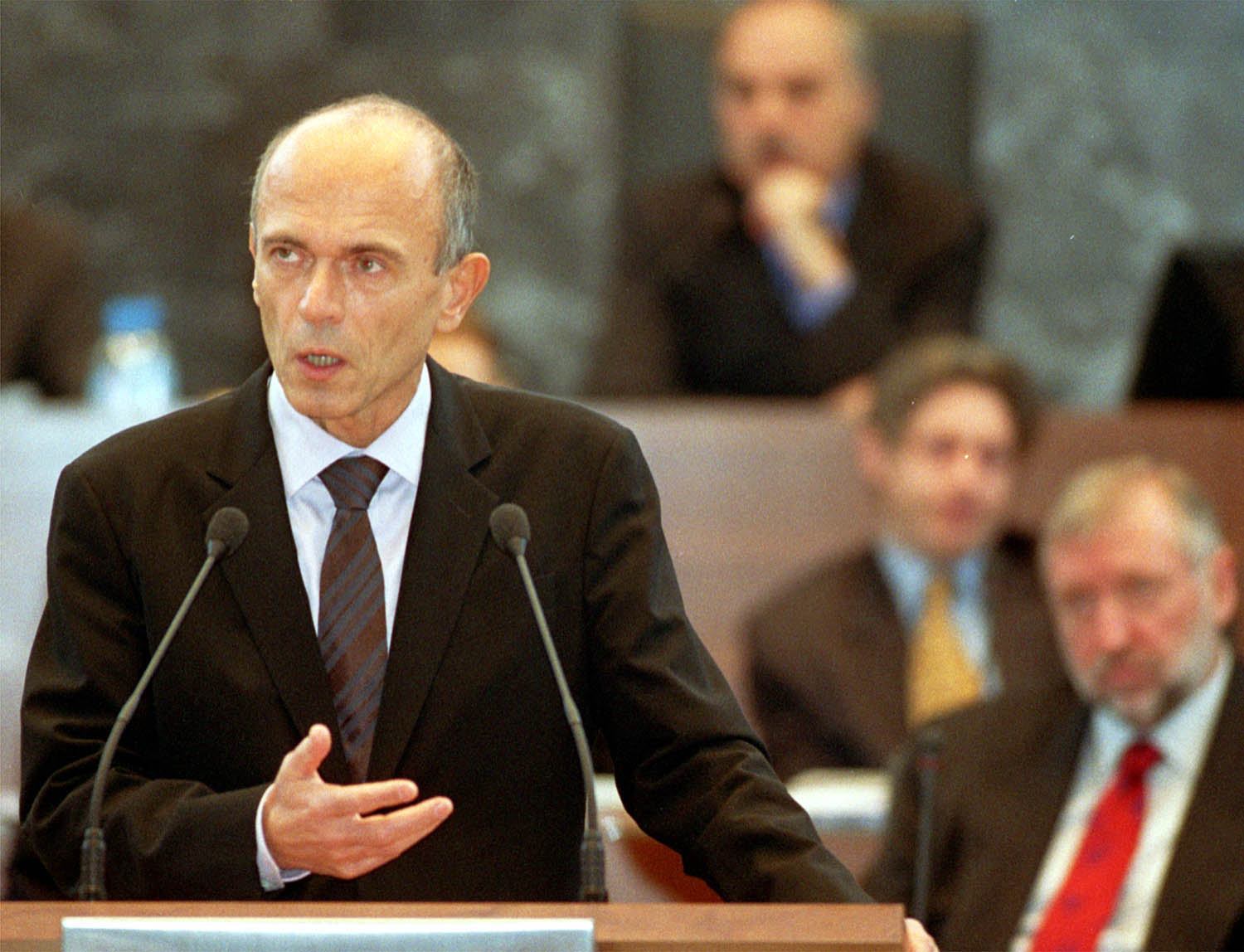
Maribor, as you know, was the original flashpoint of the Slovenian uprising. Provoked by speed-traps installed around the city as a public-private partnership between the city and a privately owned company, it uncovered deep resentment, anger and rejection of political elite and politics in general by general population and quickly spread throughout the country. As a direct result of (occasionally violent) protests, Maribor mayor Franc Kangler stepped down, prompting mayoral elections held last Sunday where independent Andrej Fištravec won by a landslide in the first round, leaving other candidates, most of them running on party tickets, in the dust. There’s only one problem: the turnout was only 31 percent, criminally low even by Maribor standards where historically fewest people ever bothered to partake in a popular vote. Rok Kajzer (@73cesar) has a good piece on the aftermath of the Sunday vote (Slovenian only), but there are other implications as well.

Namely, the low turnout shows that resignation of a despised politician (in this case mayor Kangler) does not solve the basic problem, the disillusionment of the people with the political process and the waning legitimacy thereof. Even more: Maribor may have gotten a new mayor on Sunday, but the city council remains largely intact, although the protesters demanded councilmen resign as well. Only a few did, not enough to have the council dissolved. Meaning that while a new mayor will soon be in the office, the coalition in the city council more or less remains the same one which supported mayor Kangler. Which spells bad news for the new mayor as he will have precious few people to cover his back. It is as if the people sensed that the basic problems of this society can not be solved by early elections only.

Which brings us to lessons learned: firstly, that the entire political process is so tainted in the eyes of the people, that simply putting up new faces up for elections will get you nowhere. Sure, you may win the elections (as Fištravec did) but the actual problems remain the same. Or worse. And secondly, that early elections alone can not offer anything new if force(s) stemming from the protest movement are not able to properly form and present a viable alternative to the existing ruling elite.

Had other parties (most notably the SD) gotten their way and forced early elections as soon as this summer, chances are the turnout would be spectacularly low since only established political parties have the resources to mount a campaign in snap elections. Like Maribor. And had snap elections be called in Slovenia today, the turnout would possibly be equally horrid.

The notion that early elections alone can be harbingers of changes is ultimately flawed under present Slovenian circumstances, even though this is one of the core demands of the protest movement. The only way early elections can change something is by altering the political arena first. And that takes time. Plenty of it. Otherwise the established elite can also brush newcomers off as incompetent.

All The Bratušek Men (And Women)

With deadline only hours away, PM-designate Alenka Bratušek finally submitted her list of nominees for ministerial posts yesterday evening. The name everyone was waiting for was that of the new head bean-counter (usually known as minister of finance) which was apparently also the toughest nut to crack. Media was rife with speculation about possible nominees and it would seem those who projected the first female minister of finance were not all that wrong. Namely, Bratušek said on live TV she wanted a woman to fill the post, but none would take the the job which ultimately befell Uroš Čufer, head of NLB asset management centre.

20130315_blog_pop1

When Bratušek emerged as the person to de-throne Janša, she subscribed to the usual mine-will-be-a-government-of-experts rhetorical bullshit. Save a possible technocratic Monti-stlye administration, every government is political. Even more, political theory is clear on the fact that every decision taken by a government (even a technocratic one) is political. Thus it is only right this government is a political one. Because plenty of political decisions will have to be made. Starting with what to do about the banking sector. And before you start: yes, the decision on how to tackle the crisis in inherently political. In fact, it is ideological by its very nature. And when someone tells you that we should leave it to the experts, that in itself is a grossly ideological position.

It’s OK, we’re here now

So in this respect, the frankness of political appointees to ministerial posts is refreshing and shows that Bratušek will – at the beginning at least – not try to hide behind “experts” of various denominations. The nominations also create (or, at least, try to create) a sense of normalcy. It’s as if the coalition is trying to say “It’s OK, we’re here now”.

Whether or not this is true, remains to be seen. On one hand this country could use a break from the nervous and tense environment that Janša administration deliberately cultivated, but on the other hand the problems of this country go way beyond a political option subscribing to crack-pot political, economic and social theories. The problems are deep-rooted and most likely beyond the capacity of this government to solve them. In fact, the primary role of this government is not to actually solve the problems, but rather to create an environment where socio-economical and political problems can being being solved. Yes, it’s that bad. That Bratušek was shopping for a finance minister nominee practically until the 11th hour only reiterates the fact.

The other blunder she made early on was about reinstating the ministry of culture (which is good) and asking the civil society to provide a nominee (which is just plain dumb). Again: a government is an inherently political body. Putting a non-political person in charge of a portfolio makes him or her enter the political arena and become a politician. Thus asking the civil society to provide a nominee is akin to asking it to stop being what it is. Sadly, some groups within the protest movement have fallen for this. Not-so-sadly, Bratušek has smarted out of this blunder and put forward Uroš Grilc, head of culture department at the municipality of Ljubljana and the man who squeezed ludicrous amounts of money for cultural project from mayor Zoran Janković.

Speaking of Jay-Z, he is widely expected to abide by the conditions of his letter of resignation which stipulate its coming into effect the moment Bratušek sees her cabinet sworn in. Which can happen as soon as Wednesdays next. Unless rumours of a brewing rebellion within Gregor Viratn’s Citizen’s List are true. Also, shit it hitting the fan in DeSUS, where Karl Erjavec is crushing what little opposition he has left in the party. But more on that in the coming days.

Doing it right

One thing Zoran Janković failed to understand when attempting to form his coalition back in 2011 was that you simply have to have leaders of your coalition parters in the cabinet. It’s a matter of political prestige, yes and far from a perfect solution. But right now, that’s the name of the game. Janković tried otherwise and failed. Not just because of this, but also because of this. Bratušek and her team seem to have learned their lesson. Which is why Igor Lukšič of Social Democrats is the only coalition party leader who rejected a ministerial post. Probably because he calculated early elections are closer than they appear and he wants to be as “clean” of government politics as possible. We’ll see if he made a good bet.

Here’s the full list of Bratušek ministerial nominees:

Minister for Foreign Affairs: Karl Erjavec (DeSUS)
Minister of Interior and Public Administration: Gregor Virant (DL)
Minister of Defence: Roman Jakič (PS)
Minister of Family, Health and Social Affairs: Andreja Kopač Mrak (SD)
Minister of Education, Science and Sports: Jernej Pikalo (SD)
Minister of Culture: Uroš Grilc (PS)
Minister of Justice: Senko Pličanič (DL)
Minister of Economy: Stanko Stepišnik (PS)
Minister of Infrastructure: Igor Maher (DL)
Minister of Health: Tomaž Gantar (DeSUS)
Minister of Finance: Uroš Čufer (PS)
Minister of Agriculture and Environment: Dejan Židan (PS)
Minister w/o portfolio in charge of Slovenes Abroad: Tina Komel (PS)

P.S.: tittage to follow later in the day

Habemus Congregatio

With Gregor Virant‘s Citizens’ List (DL) ting in favour of joining the coalition of Alenka Bratušek earlier tonight, the PM-designate is expected to present to the parliament a full list of ministerial nominees tomorrow. This brings Slovenia a step closer to having a fully operative government which is to replace the administration of Janez Janša. Thus the coalition agreement between PS, SD, DL and DeSUS was signed shortly before midnight tonight. It gives Bratušek a majority of votes which can, if need be, excpanded to 55 out of 90 votes, including the three independent MPs and two MPs for Italian and Hungarian minority.

20130313_blog
(source: RTVSLO)

In a curious twist of fate, the Vatican curia needed less time to elect the new Pontifex Maximus (that be Francis I., in case you were just unfrozen cryogenically) than the new Sovenian coalition needed to hammer out a deal. In fact, “habemus papam” beat the “habemus congregatio” by a few hours. But I guess it is easier to pick the supreme minister than a minister in a Slovenian government.

We’ll leave the list of nominees for some other day (maybe tomorrow) but even now it is perfectly obvious that the real winners is Karl Erjavec, who is poised to continue as foreign miniser. A few other people are expected to continue in their current positions, notably minister of health Tomaž Gantar (DeSUS) and minister for justice Senko Pličanič (DL).

Speaking of DL, there seems to have been hell to pay tonight at DL HQ, since Janez Šušteršič quit vice-chairmanship of the party. He said he will continue as party member, but the rift between his faction and that of Gergor Virant seems insurmountable. Although it must be said that the move to enter the coalition got a pretty solid backing tonight at DL. However, it appears that a party schism is forming within the DL and that could present PM Bratušek with more of a problem than she may anticipate this early in the game.

At any rate, the coalition agreement is signed and if there are no last-minute surprises Slovenia could have a new government within a week’s time. It will move away from purely austerity and across-the-board-cuts policies into a combination of spending cuts and growth stimulation with special emphasis on infrastructure projects. That and the banking sector. Plus a few other points of interest. And a possible increase of value added tax.

But we’ll deal with these issues in the coming days. Until the new cabinet is sworn in, the old one is still fully in charge, making last-minute appointments left and right.

Enhanced by Zemanta

Awaiting Virant’s Call, Bratušek Mulls Minority Government

While caretaker PM Janez Janša was busy signing a memorandum on Ljubljanska banka (LB) bank with his Croatian counterpart Zoran Milanović, his likely successor Alenka Bratušek was busy hammering out a deal that would see her cabinet sworn in on Thursday. And while the deal between two Balkan states is to delegate the problem, indeed the very decision what in fact constitutes the problem, to the Basel-based Bank for International Settlements (and got a perfunctory pat on the back for it), Bratušek is seeing her problems shape-shift, forcing her to come up with plan B, that is to say, the possibility of forming a minority government.

20130312_blog
(source)

Plenty of people fretted about the Slovenian Sovereign Holding (SDH) and the bad bank which were seen as the main sticking points between Igor Lukšič‘s Social Democrats (SD) and Gregor Virant‘s Citizens’ List (DL). The brain-child of outgoing finance minister and DL’s no. 2 man Janez Šušteršič these issues were seen as possible deal breakers, especially since Šušteršič was adamant about how bad bank collecting bad debt and then covering it by selling assets concentrated in SDH is the only way to go about solving the crisis.

But some days ago, while he was in a head-to-head with his predecessor of social-democratic persuasion Franc Križanič, he made a seemingly off-hand remark about how there will still have to be some form of bank recapitalisation directly by the state (i.e. taxpayers). Which goes along the lines of his being adamant how not an euro of taxpayers’ money will be spent on recapitalising the NLB but did precisely that only months later. Križanič, on the other hand, was in his merry-go-happy mood and went on how state recapitalisation is cheaper and more transparent and is basically just an accounting operation as the state already parked vast amounts of cash in the banks. If it’s so easy and effective, why hasn’t it been done yet, then? Preferably while Križanič was the head-beancounter in the country?

However, that seems to be water under the bridge. For all its importance, the SD/DL spat was apparently solved fairly easily. But the bill is being presented to Bratušek personally. The deal with SD brought DL on the verge of a schism. The Šušteršič-led faction in the party fell out with Virant-led part over leaving Janša’s coalition and those wounds haven’t even begun to heal when the bad bank/state holding compromise was reached, further alienating the Šušteršič wing. Which means Virant has to give them something fast, lest he sees his party break into two for good. That “something” is, predictably, the energy department.

Under existing government organisation, the said department is within the portfolio of ministry of infrastructure. It is to be a part of DL quota, but Bratušek was looking to move the energy department into a PS-ran portfolio (possibly economy). Latest reports indicate that Virant won that particular round and got Bratušek to back down. While no details have emerged yet, pengovsky is speculating Bratušek agreed to Virant’s demands on condition that she gets to veto a nominee for that particular ministerial post.

But while the horse-trading session is still on, PM-designate Bratušek is being dragged through the mud by the more rabid part of the right-wing (i.e.: the Party and its media entourage). Riding on the coat-tails of several high-profile plagiarising cases recently discovered in Slovenia, an anonymous (!) letter circulated the interwebz, supposedly revealing that Bratušek did not write her master’s thesis according to academic standard. The university had initiated proceedings in establishing authenticity of her work, but the story stuck and the damage was done.

This allowed Virant to be righteous yet again (after walking out on Janša over the anti-graft report) and demanded Bratušek resign all positions should her thesis be shown plagiarised. Apparently, Bratušek agreed. But the thing is that for the more fervent part of the right-wing, she is already guilty beyond any reasonable doubt and will be dogged by this for the entire duration of her term. That the Party faithful are serious banging this particular drum for the foreseeable future is obvious by the fact that they’ve even set up a Wikia page, citing alleged academic transgressions of the would-be prime minister.

In case you’re wondering about SDS connection into these plagiarism accusations: Party-friendly media reported that, university inquiry aside, the “lead investigators” in this matter are Bernard Brščič, a never-realised economic wunderkind of Hayekian persuasion and Janez Janša’s recent edition to his ever-increasing number of staff-appointees and Matej Makarovič, former head of SDS youth organisation, dean of FUDŠ, a right-wing-friendly university and a regular talking head when the cause of the Party needs to be advanced. Not only does the academic Duo Fantasticus not instil confidence in their work, they’re doing it at the behest of the Party which – as we know – doesn’t really have a clean bill of health when it comes to handling of archive material.

EDIT (12/03/12@1000hrs): SDS youth organisation just announced on Twitter it will deliver an annotated copy of Bratušek’s M.A. to every parliamentary group, supposedly proving plagiarism accusations. Of course, potentially different findings of the university committee will be dismissed as a conspiracy.

This is the setting in which Bratušek is waiting for DL to make the call. If Šušteršič wing prevails, she will have to put forward a minority government, which could be confirmed with an absolute majority with the understanding that DL or any other party or parliamentary group will consider its support on a case-by-case basis. Alternatively, the whole deal can still go down the drain, with the PM-designate being blocked to name even two thirds of her ministers in three consecutive votes, thus triggering early elections.

At any rate, until a new government is sworn in Janez Janša is still very much holding the reins of power since there is no legislation on dos and donts of a caretaker government. More will be known tomorrow, so watch this space.

P.S.: Apologies for being mum for a week. Things to see, people to do and all that jazz…


Enhanced by Zemanta

Alenka Bratušek Ousts Janez Janša as PM

Earlier today Alenka Bratušek was sworn in as Slovenia’s first female Prime Minister. In what was mostly lack-luster but long (10+ hours) debate which picked up only in the latter stages, the parliament voted 55:33 to have Bratušek replace Janez Janša as head of the government. Thus Bratušek became the first woman in the history of Slovenia to have been designated PM and only second individual to have ascended to the position in a “constructive no-confidence” vote. The last time the prime minister was replaced in this particular manner was in 1992 when Janez Drnovšek replaced Lozje Peterle.

20130227_bratusek
Alenka Bratušek signing her oath as PM-designate (source: rtvslo.si)

While momentous in its own right, this event is only the first step in a treacherous process of coalition negotiations between parties that have considerable history between themselves. Although technically ousted, Janša’s government remains in a caretaker role until a new government is confirmed by the National Assembly which must be done in 15 days starting tomorrow. Failing to do so in three attempts, her designation is voided and the procedure to nominate a new PM kicks is with president of the republic front and centre. In this case that would translate into early elections. And, truth be told, this is not an altogether unlikely scenario.

The key players in this particular game of political poker are Igor Lukšič‘s Social Democrats and Gregor Virant‘s Citizens’ List. While Bratušek announced that she – provided her cabinet is approved – she will seek a confidence vote in a year’s time, setting the stage for elections in early 2014, both Virant and Lukšič made noises today and in the past few days that early elections within a few months time are a viable option, especially if no deal on agenda of Bratušek government is reached.

While Virant is probably bluffing, Lukšič knows his current good fortune in the polls can not last. Also, if the SD enter the government, they will necessarily see their ratings plummet and within a year their current popularity will be but a distant memory. Therefore it is entirely possible that in the world of Slovenian cloak-and-dagger politics, Lukšič (or Virant) would engineer a disagreement which would allow them to derail coalition negotiations and still make it look as if they did everything they could. And since early elections would present Janša with a good chance for a comeback, he wouldn’t mind having them as soon as possible either.

This was the easy part, especially since even part of the SLS voted in favour of removing Janša. Hard work begins now. As of today and without SLS onboard, PM-designate Alenka Bratušek will need just about every vote she can muster and hope that (primarily) Lukšič isn’t in this simply to double-cross her at the very end.


Enhanced by Zemanta

When It Rains It Poors For Janša

MPs are gearing for a no-confidence vote against Prime Minister Janez Janša tomorrow and the heat is on. Positive Slovenia nominated acting party leader Alenka Bratušek for the post and if things don’t change too much until tomorrow, Janez Janša will have been voted out of office in about 18 hours.

20130226_jj
(source)

That things undoubtedly went south for Janša became obvious yesterday, when both SLS ministers, Radovan Žerjav and Franc Bogovič (who is to replace Žerjav at the helm of the party) tendered their resignations. In response, Janša tweeted about Žerjav that “the worst minister of economy this country ever had left the post”. A classic poor-me-fuck-you response by Ivan, the reason for which became obvious a bit later in the day, when Žerjav said he’s in favour of the no-confidence vote. This probably clinched the deal for Bratušek, since any vote without SLS on-board would be tricky, especially since not every MP of the hastily assembled coalitions (PS, SD, DeSUS, DL and now SLS) will vote for Bratušek and (by extension) against Janša.


The said tweet

Now, the problem with Janša’s tweet is many-fold: First and foremost and for the umpteenth time, this is no way for a prime minister to communicate. I mean, ferfucksake dude! I realise you’re convinced everyone is out to get you, but have some self-respect. Second: While it is true that there’s precious little to be said about Žerjav as minister of economy, it was Ivan who nominated him. OK, so there was a fair amount of horse-trading involved when Janša was forming his coalition, but it’s not as if anyone held a gun to Ivan’s head while he was picking ministers. Quite the opposite, one would think. Thirdly, tweeting in this fuck-you-very-much attitude makes him an ever more sore loser than he already is, especially after Žerjav replied via SLS’ twitter account thanking Ivan for the assessment of his work and wishing him all the best in the future.


Who knew: Žerjav is capable of sarcasm

But tomorrow’s no-confidence vote is not the only fall from grace which befell the stricken PM. Adding insult to injury, the Slovenian PEN club is set on ruling whether to expel Janša due to his “public statements in violation of PEN’s charter to defend freedom of expression”.

When it rains, it, well, poors

Despite writing his first book in 1992 (Premiki, Mladinska knjiga), Janša was made a member of PEN in 1988 immediately after his arrest by the Federal Army. At the time, the PEN club stretched its rules a bit, but since it was all for a good cause, no-one really minded. Well, a quarter-of-a-century later, the tables have turned and those same people who stood up for him are now standing up to him. Problem is, Ivan don’t take that too well. In fact, he blasted PEN saying it had degenerated into a den of informants of Yugoslav secret police (see here for Google translate)

Nor did he take it well when the Supreme Court (not to be confused with the Constitutional Court) denied him an injunction against the anti-graft commission. Janša disputed the report and sued to have the anti-graft report removed from the web pending the ruling. The Administrative Court denied the last request and when Ivan petitioned the Supreme Court to revise the decision, citing violation of his human rights (“I am at the peak of my political career”, he wrote), he was denied again and told that “his human rights were not violated in any way, shape or form, since being a prime minister is not an individual’s human right“. Ouch. Basics, of course, but… ouch.

Ivan response was predictable: “The decision was expected. The PM has no human rights. Bull mastifs do, if they belong to the right owner” (Google translate here). Lovely, innit? Bringing back the drummed-up scandal which basically wiped out Katarina Kresal and where every single charge was dropped, because there simply was no proof. But that of course did not stop Janša from bringing it up. And the list goes on. Recently, his daughter was in the media after the anti-graft commission concluded t she and son of Jože Tanko, SDS’ parliamentary chief landed jobs at the state-controlled gas company after undue pressure was exerted. Not a full week had passed when the Party-friendly media started clamouring that anti-graft’s commission second-in-command Rok Praprotnik had landed that particular job not on merit but because he knew the right people.

By now you’re starting to see the pattern, right? Whenever Ivan or the Party land in deep shit, they start throwing it around in every direction possible, hoping that some will stick one way or another. That they are brazen in mixing fact and fiction in doing that doesn’t bother them one bit. Thus they’ve launched an “anonymous letter” alleging the PM hopeful Alenka Bratušek plagiarised part of her masters thesis. This comes after a string of high-profile revelations of MPs, elected officials and managers stealing academic work of others and claiming it as their own. Or simply forging academic credentials. It’s not that the SDS would be the only party with such a credibility problem, but theirs were among the most problematic cases, as Branko Marinič was forced to forfeit his MP post after receiving a suspended sentence in a criminal case, while Alenka Koren Gomboc was forced out by a procedural trick by her own party, after a long running scandal. And today yet another SDS MP was faced with allegations that his masters thesis is not entirely his own. So when the “anonymous concerned citizen” found out Bratušek mistyped the title of an otherwise credited source, they made it into an affair of practically biblical proportions. Indeed, it seems nothing but bad news for poor Ivan. If if rains, it poors. Pun very much intended.

Non-interpelation

We’ve come all this way and the vote hasn’t even been taken. One person who must feel slightly miffed about all of this is the super-minister Žiga Turk, who wrote up a 60-page response to the ill-conceived interpelation proceeding initiated by the SD. Pengovsky wrote back then that was one of the stupider moves SD made lately (and there were no shortage of them) but added that the stupidity was matched by Turk’s initial reply. Well, the full text only furthers the image.

The self-styled “humble engineer who sometimes just doesn’t get modern culture” went all out against SD, calling it a relict of the past, reeking of naphthalene and not even having come as far as Deng Xiaoping had in the 60s with his “it doesn’t matter if the cat is black or white” doctrine. A classic text which would make Dick Cheney and Karl Rove proud not only disputes everything SD holds against Turk, but extols some of those very same things on the grounds of market economy. Also, at first he claims to have fought vigorously for this budget which was slashed almost 20% due to austerity policies, but a bit further down admits that there’s nothing he can do if there’s no money. Well, it seems there’s lack of money and then there’s lack of money (if you catch my drift).

Also, he extols President Pahor’s political leadership while he was running the SD, while at the same accusing his government of being the worst there ever was (he must not have gotten the memo about Žerjav, though). All this did not stop him from taking credit for projects that were pretty much near completion before he took office. Indeed, there wasn’t such an ideology-heavy text in Slovenian politics since, well, since he was writing about “re-communisation of Slovenia” or indulging in Haidt’s pseudo-science. Again, a pattern. Who would have thought, eh? Too bad Janša will probably get voted out of office first, denying Turk from standing front-and-centre, telling those fucking Commies off. It would have been quite a sight.

Bring popcorn

Not that there will be any shortage of fun in the next few weeks. Bratušek looks poised to oust Janša, but that only means Janša is in a care-taker capacity until she forms a government. And that might prove harder than it looks, since SLS will not be joining that particular party and both SD and DL are making noises about early elections sans an interim government not being such a bad idea.

Tomorrow will be ugly. Bring popcorn.


Enhanced by Zemanta