Thus Spake Zoran Janković

As expected, Ljubljana mayor and leader of the opposition Positive Slovenia Zoran Janković rejected the findings of anti-graft commission which released its bomb-shell report yesterday. Indeed, Jay-Z made his case today con mucho gusto. He maintained that no specific corruption was found in his case, stressed that he was at the commission’s disposal to clarify details if need be, that his personal assets have not increased unduly and that all of it has traceable origins. Obviously, he also ruled out the possibility of his resignation. As a bonus, the executive council of Positive Slovenia did not even take confidence vote, thus going the whole nine yards for Janković. And while we’re at it: in a confidence vote by council of his SDS, Janez Janša won 98,6 percent of the vote (281 out of 285). So, no surprises there. Yawn.

S
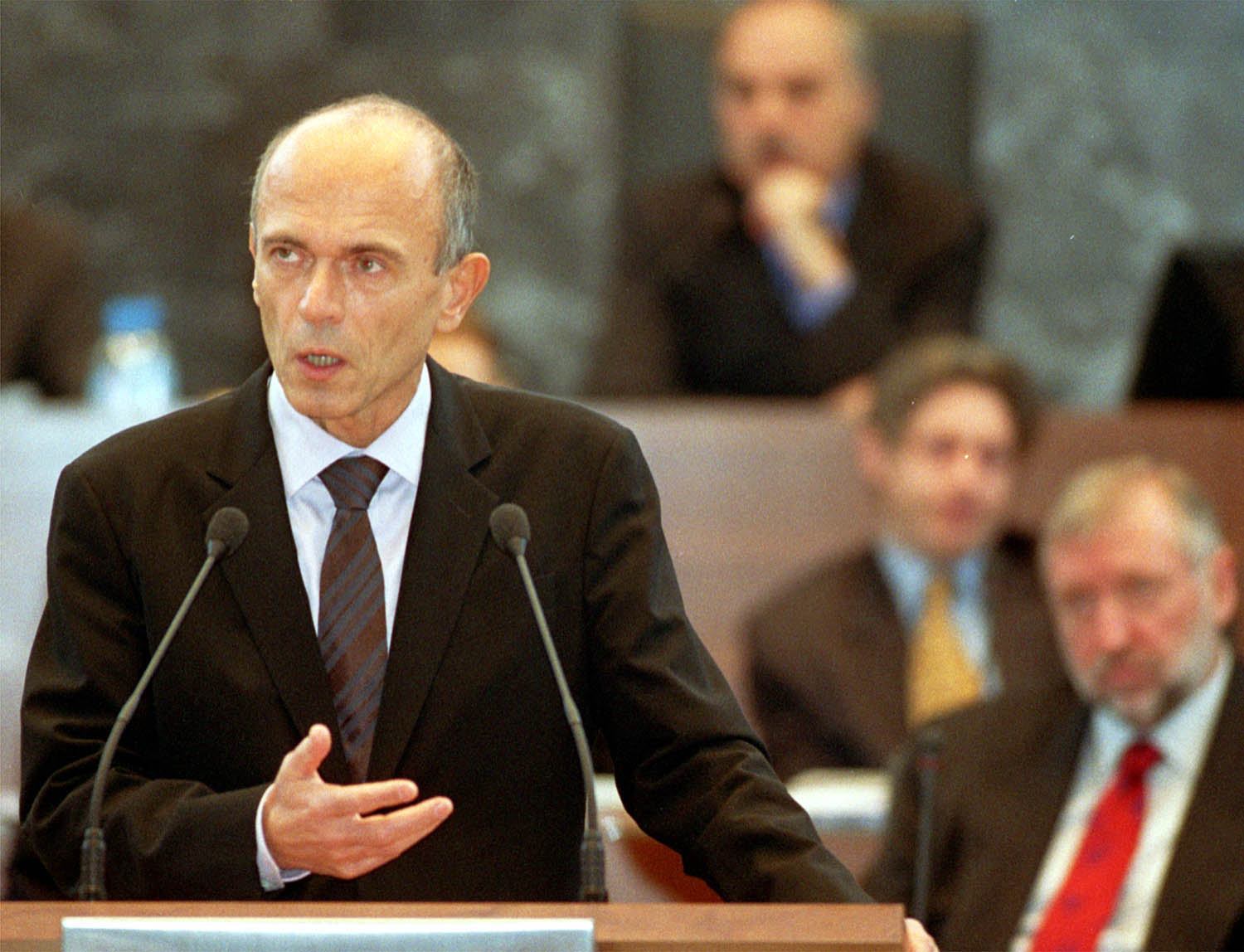
Zoki wrapping up his remarks. Photo by The Firm™

Now, it must be said that Janković did a slightly better job at explaining himself on telly this evening than Janša did last night. And that despite the fact that the anchor was the same one which kid-gloved Janša. Tonight she actually tried to press Jay-Z on a couple of points, but by the time he got on the air he got his story straight enough to go sail the programme like hot knife through butter (sail, knife, butter? Pengovsky, really? :-o) He whizzed through the numbers, made a couple of off-handed remarks about how he knows to crunch the numbers and reiterated that his assets have not increased, they’ve only changed in form (loans were returned, shares were bought, et cetera).

Playing Risk

Throughout the day Zoran Janković refused to concede a single point made in the report. And if one was very generous, one might even say Janković is correct. At least asset-wise. But what the commission states in no unclear terms is that Janković was repeatedly exposed to a high-level risk of corruptible behaviour and has indeed made this risk worse by his actions. Specifically, by having his sons every so often return part of the 8 million euro loan he effectively granted them by deferring payment when they bought his company Electa off of him and at the same time allowing the company to partake in financial transactions which included firms doing business with the city of Ljubljana or (indirectly) the city itself.

Janković maintains that no corruptive activities have taken place. Indeed, the report stops short of even hinting at such activities. OK, so Zoki is under criminal investigation for some of these activities since late September. But that’s not really the point, is it? What in pengovsky’s opinion the commission is trying to say is that not only must there be no corruption, but that elected officials must actively avoid situation where the possibility of such corruption activities existed. Janković responded by saying (more or less) this risk is always present. Which is true. But it would be awfully nice if this risk were as low as possible. For example, by not having the company your kids own do business with firms you deal with as mayor. It could be that everyone plays by the book but it don’t look very nice.

But come what may, Janković is standing ground and will not yield an inch, let alone a yard. And that has its own inner logic. Ideally, a politician resigns when the burden of fighting off allegations prevents him from doing his job effectively. He/she clears up the mess and goes back in action squeaky clean. However, this being Slovenia and all, a resignation is viewed as practically the same as admission of guilt. Just ask Katarina Kresal. Janez Janša probably did the same math and came up with the same result. Which is why both leaders have not shied away from astonishingly unanimous support by their respective parties and have had other people denounce the commission for overreaching and/or not doing its job properly.

Mexican Stand-off

On this note: the outburst by MP for Positive Slovenia Maša Kociper who went squarely against the commission saying that it did not execute due process and that such things have been known to have been politically motivated. Now, we’ve become used to statements like this from the people over at SDS and fellow travellers. Indeed, we have heard them. Today and yesterday. Plenty of them. But apparently even Maša Kociper whom Janković tipped as his choice for the president of the parliament back in 2011, could not resist the urge. Which is a shame, really.

So, what we have here is in fact a political Mexican stand-off Slovenia style. Neither Janša nor Janković will resign, but their posses are screaming bloody murder demanding the other guy quits. Lovely, innit? Add to that the predictable but nevertheless disgusting manoeuvres by Janša and his team about how Slovenia will come to a standstill if his government is not allowed to continue (and that whoever brought it down better know what they are doing) and you see that Friday will be much fun indeed.

Enhanced by Zemanta

Shit Hits The Fan For Janša And Janković

The anti-corruption commission today released the final report on financial status of leaders of parliamentary parties (Slovenian only). It found no irregularities on the part of Borut Pahor (leader of SD until April 2012, now president of the republic), Karl Erjavec (DeSUS), Radovan Žerjav (SLS), Gregor Virant (DL) and Ljudmila Novak (NSi). However, the report states that Prime Minister and leader of SDS, the largest coalition party Janez Janša and Ljubljana mayor and leader of PS, the largest opposition party Zoran Janković failed to report substantial parts of their respective income. Additionally, the commission states that Jay-Z was on the receiving end of some 208.000 euro in transactions which originated with companies which do business with the city of Ljubljana, while JJ simply cannot the origin of some 210.000 euro of assets. Translation: shit hit the fan.

20130108_blog

The list of transgressions for both top policitos is long and distinguished. But to cut a long story short: according to the commission Janković failed to report several substantial shares and bank transactions and was repaid by various companies some 2.4 million euro of loans given. This includes the aforementioned 208k EUR where the commission states a huge potential for conflict of interest, undue lobbying and corruption existed. Janša, however, failed to report various real estate deals and loans taken, under-reporting the value of a luxury car, providing a collateral for a 500k EUR loan his SDS took out as well as providing collateral for a loan taken by family member (presumably his wife) and reporting a cash deposit in amount of 33k euro. Also, he is reported to have unduly profited some 100k EUR in a real estate deal. In addition, the report stated, Janša failed tot explain the origin of the aforementioned 210k of assets, used to finance various deals and expenses.

On a sidenote: it is interesting that despite the fact Janković lately got a lot of flak over alleged shady real-estate deals, the commission nailed him for what mostly seem to be purely financial transgressions while they threw the book at Janša on various real-estate deals (and one luxury car), despite the fact that he was rumoured to have had a hand in cash transactions in various arms deals and is standing trial on corruption charges in the Patria Affair. Ironic, to say the least. But more to the point: Both Janša and Janković denied any wrongdoing. Zoki is expected to hold a press conference tomorrow, while JJ went on national telly this evening and got the royal treatment, with the anchor kid-gloving him and letting him do the talking while she only occasionally interjected with a how-do-you-explain-this type of questions and, predictably, no follow-ups.

While it is no particular secret that the anchor in question is cosy with Janša it was still a shameless performance. Asked if he will resign, Janša played the ultimate gambit and said that…. wait for it… he doesn’t know. He then proceeded to add that he will offer his resignation to the executive council of the party and should they vote to accept his resignation as party leader he will step down as PM as well. This particular line of action is of course meant to rally the troops and close the ranks, not unlike what Janković did after the high-profile police raid in late September 2012. Also, Janša pulled the same trick on election Sunday in 2011 when he got his ass whooped by Janković, so this manoeuvre comes as no surprise and pengovsky is not holding his breath. Regardless, the TV anchor tonight said that JJ’s resignation would be “the start of a political crisis”. Just to make sure everyone knew what is at stake.

Not that anyone needed remembering. The SDS media machinery immediately went into full swing, with various talking heads decimating the anti-corruption commission as unconstitutional, biased and politically motivated. The junior coalition partners were none too happy with the story (alternatively: they were jumping with joy over the badlands JJ found himself in) and when Gregor Virant of DL called on both Janša and Janković to resign toute-de-suite, he immediately became a target himself. Sure enough, it was funny to watch Virant going all pious on Janša and Janković after his fiasco over getting ex-MP payment and earning a little extra on the side. But pengovsky is sure he relished the moment. Also, Janša himself unscrupulously went after the vice-president of the anti-corruption commission Rok Praprotnik, claiming that the latter is on a personal vendetta against him (Praprotnik reported widely on arms deals in Slovenia while he was a journalist at Dnevnik daily). Even Goran Klemenčič, the head of the commission was not off-limits, despite the fact that Klemenčič’s wife, Nina Zidar Klemenčič represents Janša in a number of lawsuits.

Also, Janša – in his trademark poor-me fashion – complained that he was not given a draft of the report so he could respond properly. Interestingly enough, the report states that during the course of the investigation, the commission found out that a request to a state-owned company for data on Janša’s dealings was leaked to him. An independent investigation into that incident was apparently launched.

As for the illustrious Ljubljana mayor: in a preliminary statement Janković pointed out that origins of his assets can be and were accounted for (which is true, according to the commission’s report) and that at no time was the City of Ljubljana defrauded (this also appears to be true, since all loans given to Janković-related companies by firms dealing with the city were reportedly repaid in full). However, Janković goes on to add that the commission did not actually find corruption, but rather found the possibility for corruption activities. This, in all honesty, is splitting the hair mighty fine. Often, appearances can be just as damaging as (non)actions. And while no-one really expect Janković to resign (he said as much this evening, reportedly), it should be noted that for some time now he was dropping hints on “a new mayor and a new team”. True, these were often off-hand remarks and no too much should be read into them, but there you go.

Oh, and in case you were wondering: the newly minted President of the Republic Borut Pahor “expressed concern over the issue”. Neat. Must be kind of weird feeling, since a month ago, while still running for president, he proudly said that “the support of Janez Janša means a lot to him”. Well, politics makes for strange bedfellows, I guess. At least this particular president doesn’t seem prone to bothering Janša with calls for resignation.

Well, at the very least, this will probably breathe some fresh air into the protest movement. The next big rally is to be held on Friday.

EDIT: I almost forgot. In a most telling sentence, the commission writes that “it does not have the authority to demand resignations of Janša or Janković”. Translation: if they did, they would have. Also, Janša’s first response was (as is usual lately) on Twitter, where he wrote that his assets correspond to his work (labour) of 30 years. A slight Freudian slip there, Jimbo. The money did’t just fall out of the sky, that’s for sure. The question is just what exactly did Janša do to get it.

P.S.: On a related note, a funny fuck-up occurred over the alleged reaction of the SDS on this report. Grega Stritar (@gstritar) has more on this. Read it up and follow him.


Enhanced by Zemanta

Slovenian Protests: The End Of The World

Trade unions should have waited with protests until spring, when the weather will be warmer” – PM Janez Janša, late 2005

Certain lessons of twenty years ago must be repeated and I expect we’ll see each other on city streets and squares” – Opposition leader Janez Janša, late 2009

If I were your age again, I’d take the banned at least once a week and hold a protest in front of the parliament demanding implementation of fiscal rule” – PM Janez Janša, October 2012

There is a background operation coordinating these protests which are timed to coincide with the new president taking his oath and aimed at weakening the coalition” – PM Janez Janša, December 2012

20121220_blog
Kongresni trg in 1988 (top) and 2012 (below). Photos by Tone Stojko and pengovsky respectively

Twenty-four years ago, in 1988, tens of thousands of people swarmed Kongresni trg in Ljubljana supporting Janez Janša and three other people detained by the Yugoslav national army. Today, in 2012, tens of thousands of people are protesting against Janez Janša all over the country with the biggest rally so far planned for tomorrow, 21 December. Also known as The End Of The World.

Pengovsky said a couple of times that the political elite is scared. We’ve seen plenty of evidence for this in the past few days. PM Janša had a bad interview on state television where he (albeit slightly ill) was his usual paranoid self, blaming the opposition and the media for the protest wave. The difference this time around was that on occasion he was gasping for air, so to speak, which was a novelty. Interior minister Vinko Gorenak who survived a no-confidence vote on Tuesday, accused the opposition of trying to undermine the coalition (as if that was somehow illegal) by trying to place a wedge between SDS and DL (some 36 pages of signatures calling for now-nixed referendum on bad bank were “lost” last month, with ministry of interior, led by SDS’s Gorenak and the parliament led by DL’s Gregor Virant pointing fingers at each other).

Also, the swearing-in ceremony for the new president Borut Pahor was rescheduled. Originally planned for tomorrow, it will now be held on Saturday. Officially, this is a cost-cutting measure, unofficially, a security one. Today, ministers Senko Pličanič (justice) and Gorenak demanded that people who are organising the protests show themselves and register the event with the proper authorities. I guess they didn’t get Janša’s memo about the opposition and the media being behind protests. And finally, the hunt for “left wing extremists”, meant to “level out” the fact that neo-nazis are on the rise again in Slovenia, finally yielded results this evening, with the police reportedly confiscating Molotov cocktails and granite cubes in the Metelkova Mesto area in Ljubljana, where left-wing, alternative and similar groups gather for concerts and other events. The problem is that eye-witness reports claim the evidence was planted.

So, the party is on for tomorrow. The National Uprising, they call it. Rumours are flying around and the nervousness is in the air again. There’s talk of army personnel being drafted as reserve police force. Riot barricades are already deployed in Ljubljana and it only remains to be seen whether it will be a Big Bang or a Gnab Gib. But the ball is rolling and the protest movement is starting to voice its various demands ever more clearly.

It does seem as if the world is ending for some.


EDIT: If you’re interested in today’s events in Ljubljana, follow hashtag #ljprotest on Twitter. Or, you can start following The Firm™ 😉

Enhanced by Zemanta

Patriot Act: Constitutional Court Gives Goverment Carte Blanche

Earlier today the Constitutional Court nixed referendums on laws on state holding company and bad bank. Brainchildren of finance minister Janez Šušteršič, these are perhaps the most crucial pieces of legislation the government of Janez Janša pushed through the legislative procedure so far. Or will have pushed at all. However, regardless of one’s take on this particular set of laws, it is the ruling of the constitutional court that will go down in history. Namely, in its drive to prevent referendums on these to laws, the court – willingly or by chance – gave this (and every other) government a carte blanche. Allow me to elucidate with references to specifics…

20121219_blog
The sa(i)d ruling. Full text here

Normally, pengovsky would go apeshit over denied referendums. After all, that same court in that same composition allowed a referendums on pension reform and the family code. In the latter cases judges defended the right to vote at all costs, while this time around they liberally applied “values before rights” approach. Specifically, they said that the right to a referendum must give way to values of a functional state including creating conditions for economic growth, human rights, including social and labour security and freedom of enterprise, fulfilling international obligations and effectively enforce EU legislation in Slovenia.

The last item was the usual mantra of every government in the history of this country. “It’s the EU” was the trump card which effectively ended every debate. The fact that the Constitutional Court succumbed to it leaves a sour taste in one’s mouth. Ditto for “fulfilling international obligations”. Both items mean that any government can make whatever deal anywhere in the world, be it Berlin, Brussels or Washington, ratify a treaty and have a referendum bid killed almost instantly.

The second item, about human rights and social security is pure cynicism, the likes of which we’ve come to expect from Janša’s government but not from the supreme defender of the constitution. Allowing referenda on pension reform and family code a year ago, knowing full well both laws will be rejected and thus making sure life got no better for a lot of people, the very same constitutional court denies the right to a referendum on how to manage state (that is taxpayers’) property.

However, all of the above pales in comparison with the first item. Functional state including creating conditions for economic growth is nothing short of a “State Protection Act” or, to use its international moniker, The Patriot Act. As of today, the government can do whatever the fuck it pleases. Traffic fines. Education. The budget. Bad bank. Voting system. You name it. Anything can fall in the “functional state” category. With this, democracy is no longer a system but a random act of benevolence of the powers that be.

In the final analysis, the people of Slovenia are no longer the sovereign of this country. Instead, they’ve been relegated to status of “consultation body” which the government may ask a thing or two from time to time, but whenever the people would want to question decisions of their elected representatives, the need for a functional state” card can (and will) be played.

Not buying it? Try this on for size. When this same constitutional court nixed Tito Street in Ljubljana, again citing various values, it made it clear that was a one-off decision, although the court’s rulings are usually taken as precedents. This time, however, there is no such clause. This is it. Functionality of the country comes first, our rights as citizens be damned.

If you don’t agree with it, you can take it up with the Constitutional Court. Oh, wait..

Enhanced by Zemanta

National Council And The Kangler Paradox

The new National Council met today for an inaugural session and gained plenty of airtime. Mostly because soon-to-be-ex mayor of Maribor Franc Kangler was elected but immediately evicted as councilman during what was later dubbed The 1st Maribor Uprising, which started the wave of protests still sweeping the country one way or the other.


Franc Kangler leaving the National Council chambers (photo: RTVSLO)

The National Council is a weird body and pengovsky has long maintained that there would be no harm in abolishing it. Its members are elected indirectly, via electoral votes with half of them representing local interests and the other half representing various trade, labour and industrial interests. And the public sector. It is in fact a classic corporatist body where representatives of particular interests are allowed a say on matters of national (public) interest. In fact, it is a prime example of the road to hell being paved with good intentions.

The National Council is not a proper second chamber. It wields certain powers, but it doesn’t automatically have a say in the every-day legislative process. Among other things it can use a holding veto, forcing the National Assembly (the parliament proper) to re-take the vote on a certain law and it can call a referendum. As such is quickly went degenerated into a place of lobbying and back-room politicking where even representatives of trade/industrial interests take votes along the party lines or hidden agendas, depending on the issue at hand. The fact that council members can be granted immunity from prosecution only adds to the shadowy clout of the institution.

Enter Franc Kangler whose election to the council was reportedly the result of some serious political horse-trading in the Maribor region while protesters outside the Maribor City Hall pelted the building with eggs and the newly elected council member had to be escorted home by riot police. Between then and now Kangler announced his resignation as mayor of Maribor (effective 31 December) but his membership in the council seemed a fait accompli.

But in what is usually a mere formality of confirming new councilmen, members of the National Council voted to deny Kangler a seat in the body on – wait for it – moral grounds. As a result, Kangler will apparently petition the Constitutional Court to overturn the decision and allow him to start his five-year term as a member of the 40-seat sort-of-upper chamber of the Slovenian parliament.

So, what actually happened? As stated many times on this blog in the past few days, the political elite is scared. Think soiled-underpants-scared. Pengovsky has it on good authority that parliamentarians are bewildered with what is going on in the streets, they are starting to realise they have a general legitimacy problem and are slowly starting to panic. As a result, they are making rash moves, trying to save their face, hoping they’ll not have to save their skin.

This was the prime reason they denied Kangler his council membership. Trying to put a daylight between him and themselves, they singled him out as the proverbial root of all evil and attempted to evict him at the very start, thus making themselves look good. Which only proves that they still don’t get it. They do not realise that Kangler is not the cause of the troubles but rather symptom of a much deeper problem of state-capture. Contrary to common sense, the Slovenian state was not captured by the economic elite (although it often seemed so) but by its political sibling. The people have had enough of it and Franc Kangler was only the straw that broke the camel’s back.

In their rash and voluntaristic approach, the newly minted councilmen proclaimed Franc Kangler morally unfit to serve on the body. Which may even be the case, but it is not their place, neither legally nor otherwise to say so. Fact of the matter is that Kangler was elected to the position, albeit with a legitimacy problem of galactic proportions. But legitimacy (or the lack thereof) is only judged with respect to the people (i.e. this nation’s sovereign) and not with respect to fellow council members.

Just as he was forced to resign as mayor, Kangler could have been forced to resign as councilman. Media and public pressure can do the trick. He has shown his fragility on the issue earlier today where he actively avoided journos and cameras. He clearly wasn’t enjoying any of this and odds were he wouldn’t last long in the council. But in their stupidity and short-sightedness, his fellow council members presented him with the perfect tool to get away with it.

What the council did today was illegal. Council members have no authority to judge appropriateness of a fellow member once he or she has been elected. But they did it anyway. As a result, Kangler will petition the Constitutional Court which will have no option but to confirm his mandate. Thus Kangler will in all likelyhood be reinstated as a member of the National Council, ironically coming out of this mess with more legitimacy than when he entered it because his council membership will have been confirmed by the ultimate guardian of the rule of law in this country.

In effect, the National Council created a situation where the rule of law (the lack of which is one of the key issues of the protest movement) will, ironically, be strengthened with Kangler in the council rather than with him outside the council.

Omnishambles indeed.

Enhanced by Zemanta

Do Things Really Bode Well For Slovenia?

A guest post by Primož Cencelj of KD Funds in today’s web edition of the Financial Times (link kindly provided by @AdriaanN) provided an itch pengovsky needs to scratch.


The new national logo (via FB)

Now, for the record: I wholly understand the FT serves a specific (if wide-ranging) public and I’ve no problem with Slovenians providing insight into Slovenian matters for foreign public. After all, this is exactly what pengovsky.com is about. That and tits. But I digress…

The problem with the said blogpost is that yet again an economist is trying to pass as a political analyst. Specifically, Cencelj argues that “while the low turnout indicates a majority of Slovenes feel disenchanted with politics, those who voted [in the presidential elections on 2 December] expressed a willingness to cooperate, to support austerity measures and to break the political deadlock – in effect echoing the cries of the protesters. So, in practice, the 66 per cent landslide for Borut Pahor has boosted support for a long-overdue programme to curb public spending. As a result, on December 4, parliament voted for pension reform and on December 6 for stringent state budgets in 2013 and 2014.” (full article here)

Now, if this were a government spokesperson, one could say that this was a thinly-velied attempt at a media spin (blaming both left- and right-wing radicals for the riots included) But since Cencelj is working for a private investment firm, one can only quote Val Kilmer in Top Gun. I mean, ferfucksake, there is no way in hell you can interpret a 60-percent absence in Slovenian presidential elections as any sort of support for anything. As pengovsky wrote days ago, the wave of protests and the low turnout are an across-the-board rejection of politics as we know it.

Pension reform, which was passed days ago, has absolutely nothing with the protest wave. In fact, the adopted pension reform, although unquestionably a good thing given the current demographics, is such a watered down version of what the previous government pushed for, that a new reform is inevitable in three to five years. Which is OK, but will do precious little for a lowered credit risk. Even more, the fact that the trade (labour) unions finally came to an agreement with the government shows the former still operate well within the framework of “politics as usual”. As such they are part of the problem, not part of the solution.

Case in point: days ago Branimir Štrukelj, one of the more prominent union leaders showed up at one of the rallies in Ljubljana. Seeing that he was fast becoming the centre of media attention, other protesters started chanting “no one represents us”. Which is a fact. The pension reform does not address the issue of the precariat. It only addresses the needs and issues of full-time workers. Which is all fine and dandy, but the point is that in a year and a half since trade unions and the now-ruling SDS shot down the previous government’s attempt at pension reform, so much has changed that the existing corporatism model of “social dialogue” between the unions, the government and the employers is of limited legitimacy at best. It should be noted that Štrukelj and his teachers’ union supported the previous pension reform attempt and that Pahor’s goverment for all intents and purposes could have been slightly more flexible in negotiations back then. But the point is that eighteen months later Slovenian economic future is no longer solely in the hands of the usual players. The new guys (the amorphic protest movement) don’t give a pair of fetid dingo’s kidneys about rating agencies, credit risk rating and equity premium risk.

Also, Cencelj writes that “the living standard will get worse before it gets better”. Which is the usual mantra in the age of austerity. And it may even be partly true. Partly, because in the five years since the crisis struck, the living standard only got worse. And it shows no signs of improving. History shows that things will eventually get better. But at what cost? One of the common messages of the protest movement, apart from “we’ve come to take back the country you stole”, is that the people are not the cause of the crisis, therefore are no longer willing to pay for it. And this is the (economic) gist of it. The bill for the economic slump is being shoved down people’s throats. And those who took to the streets are saying they will not foot it.

Some say those who protest really have no reason to, because they are not having it all that bad. Well, they’re not having it bad yet. According to the Slovenian Statistics Office as much as 13.6 percent of the population are officially poor while additional 5.7 percent are subjected to social exclusion (data for 2011). Altogether as much as 19.3 percent of Slovenes are not living the life considered average in Slovenian society.

Interestingly enough, the country with the highest rate of poverty is Latvia, which is being put forward as the model for solving the crisis. Really? This is the good that bodes for Slovenia? You see, when the really poor come out to protest, the credit risk will be the last thing on anyone’s mind. A lot of people will hold on for dear life if/when the boat starts rocking in that particular manner.

Bob forbid it should come to that. But if the proponents of “business as usual” continue to refuse accepting the new reality where the usual measures of things simply don’t count any-more (or, if they’re extremely lucky, don’t count as much any-more), everyone will find themselves yearning for the good old days of solid “industrial action”. And that includes labour unions.

Enhanced by Zemanta

Tango Down: Franc Kangler. Now What?

Maribor mayor Franc Kangler resigned on Thursday, effective 31 December. Three protest, several dozen wounded and tens of thousands of euros in damage later the original demand of the people of Maribor was met. Alas Kangler was a day late and a dollar short. Protests have now spread all over the country (Koper, Kranj, Ljubljana and even Bohinj being the latest flashpoints) and what started as public show of discontent against a specific mayor is fast turning into a popular uprising of sorts. In fact, Thursday was a rather good day for protesters. Not only did Kangler call it quits in Maribor, but another rally in Ljubljana also forced last-minute changes in the budget which the parliament passed later that day. Namely, several thousand students and teachers from universities in Ljubljana, Maribor and Koper converged in front of the parliament and demanded the monies for higher education and research not be further slashed in the next two years. Surprisingly, they succeeded.


Protesting students formed a human chain around the parliament on Thursday

The university protest was the first such rally with a specific agenda. On one hand this might herald the next stage of the protest movement, where various groups will put forward their agendas, but it also shows that it was the initial stage of complete and utter public contempt for all things political which paved the way for a more targeted agenda. Namely, if it wasn’t for the massive, general and non-discriminatory protests (violence we could do without), then the agenda-driven ones would be flat-out ignored. As was usually the case in the last 20 years.

If protests are really to achieve something, they need content beyond just seeing heads roll. To be sure, Kangler is out. It seems possible even that the entire Maribor city council will dissolve itself and call for early elections in the city. Which is entirely legitimate and probably not a bad thing for the second largest city in the country. But this would only give us one election more and put the process front-and-centre which doesn’t really solve the problem. I mean, it should, but it doesn’t

As pengovsky wrote a couple of days ago, the problem are not just the specific people in power, but the entire political class and the unrecognisably bent rules they’ve set for themselves during the last twenty-odd years. The problem is a complete and utter de-legitimisation of the political process. Better yet, the people have (correctly) diagnosed a disconnect between the “political” and “democratic” and sided with the latter. Hence the protests in the streets and the nervousness in political offices. It must be said, however, that siding with the democratic sentiment can quickly dissolve into more sinister things. For example, just as they stole the country, the political class can also steal the revolution (yes, I’m exaggerating to make a point). Take a look at Egypt.

To make sure that doesn’t happen, the protest movement must start forming its agenda. Or, rather, agendas, since the movement is decentralised. A part of this agenda is already forming. That students and professors succeeded in preventing more budget cuts to higher education and research is worth noting. But that was just a budget item. The potential of the “uprising” is much greater. Think new social contract. Think sustainable development. Think human development index.

This has the potential to be it. The political class is scared. If it weren’t, it would have simply ignored the university protests on Thursday. It is and it didn’t. The people have shown that they have the guts to go out in the street. Now they have to show the guts to think. And the political class has to show the guts to listen. Because it is finished, one way or another. But if it starts to listen, the head-on with reality will be much less brutal.

So, start thinking, people. My two cents: stop tinkering with the constitution, start tinkering with universal basic income. And institute preferential vote in elections. Somewhere along the road we might even stop calling each other names.

Enhanced by Zemanta