Emperor’s New Logo

logo.jpg
Slovenia’s new “corporate identity”. For the time being… (source)

Some ten days ago the government chose its new logo and design. Created by Gigodesign, the design is rational, simple and technically universal. It establishes a clear and recognisable system of visual communication. It allows for easier management of public administration’s comprehensive graphic identity, saves time and optimises costs. At least, that’s what the government press release says.

pengovsky says the new design is slick, likeable and provides ample opportunity to make fun of. Case in point being the images below, which landed in my mailbox this morning via the good doctor 😈

logo_mo.jpg
Ministry of defence. Love the reference to the Liberation Front

logo_tr.jpg
Ministry of transport

logo_mf.jpg
Ministry of finance. How very true…

logo_mz.jpg
Guess which department…

EDIT: as noted below by abaris, the first image was made by him, while the other three are by Stalker. Good work, guys! 😀

Is Janša’s SDS Reconsidering Its Position on Pahor-Kosor Deal?

In the past few days Slovene opposition parties, spearheaded by Slovene People’s Party (SLS) led by Radovan Žerjav were becoming ever more adamant in demanding a referendum on the Pahor Kosor agreement. They aimed to call a consecutive referendum (i.e.: after the parliament would have ratified the agreement), making its results binding. Pengovsky already noted that in order to call a consecutive referendum, SLS would have to get support of at least 30 MPs, which means that it must get Janez Janša’s SDS on board, as that party alone has 28 MPs. But although Janez Janša has been making noises of agreement, has so far not confirmed that his party would chip in its 28 signatures for a referendum bid. Probably thinking that he can have the cake and eat it, Janša is counting on SLS collecting 40.000 voters’ signatures without him and his party appearing to disregard the country’s interests. Slightly unexpectedly, however, yesterday the government of Borut Pahor struck back.

20091111_blog.jpg
Debate on yesterday’s Odmevi programme on RTVSLO (source)

In all honesty, “struck back” might be overstating it a bit. Rather than a proper Chuck-Norris-style-roundhouse-kick in the head, the government delivered more of a half-botched pussy-punch, the sort one aims at his enemy’s plexus, but which invariably lands on their upper thigh. Or something like that. Namely, in what was apparently a Monday all-nighter, coalition parties decided to call a consultative referendum on Pahor Kosor deal. Which would be all fine and dandy, hadn’t there been one slight detail – while consecutive referendum is legally binding, a consultative referendum (as the name implies) is not.

Had all things been equal, this would have been a sound decision – get the voters’ opinion, possibly obey it, but keep the door open if a sudden opportunity to capitalise on the deal arises. However, things are not equal. Opposition was screaming for a referendum as it was and by calling it themselves, coalition members gave the impression of buckling under pressure. The reality is that the referendum move takes the wind out of opposition sails. Especially after some polls showed that a majority of votes are actually in favour of the referendum (rebuking Janša’s earlier threats about the referendum result being a foregone conclusion). However, by closing one flank, the government opened up on another and immediately drew fire on why did it sign the deal in the first place if it felt it would have to ask the people about it.

Things were not helped by the fact that the draft of the referendum question is incomprehensible to say the least. Recapping basic points of the deal, it does its best to confuse anyone who is not familiar with specific stipulations of the agreement. It is now emerging that the actual question will probably be a lot simpler, but the damage had been done. And to top it all, PM Pahor complicated everything even further, by saying that he’d been willing to withdraw the referendum bid if the opposition would withdraw its bid. So, no matter how you look at it, a lot of people will have a lot of ‘splainin’ to do…

Not that everything is ticking like clockwork on the opposition side. Pengovsky’s suspicions that Janša’s SDS has not completely rejected the Pahor Kosor deal grew even stronger yesterday after watching a debate on state television, where president of SLS Radovan Žerjav went into full attack mode, while SDS’ Zvonko Černač (the Big Kahuna himself was curiously missing) somewhat unexpectedly harshly criticised the government for splitting the people into proponents and critics of the agreement, rather than striving to reach a consensus on the issue. On the other hand his criticism of the specific stipulations was much more muted. SDS’ main objection yesterday read more like “why weren’t we part of the deal” than anything else.

Which could imply that the largest opposition party is reconsidering its position on the issue, at least for the time being.

How Dimitrij Rupel Will Bring Down The Berlin Wall

There is an old Yugoslav joke where Mujo (Bosnian equivalent of Paddy) takes a biology exam and is asked to describe butterflies. Mujo obviously knows didlly-squat about butterflies, flunks the exam and goes home to read up on his butterflies. Next week he’s back re-taking the exam, only this time he is asked to describe elephants. Mujo thinks about it long and hard, then says: “Elephants are big animals. They’re bigger than butterflies, which we divide into following species…“. This is the trick former foreign minister Dimitrij Rupel employed yesterday when he posted a statement on his current party’s website which is supposedly aimed at criticising the fact that in Slovenia no formal celebrations of the 20th anniversary of the fall of the Berlin Wall were held.


Rupel’s video clip on Berlin Wall for his party website. Contrary to his text this is almost unproblematic

However, after skewing the history a bit (failing to mention reform communists and ZSMS – the socialist youth organisation as key players in democratic changes in Slovenia, while overstating the role of Slovene dissident groups had in that same enterprise, making up a direct link between them and the fall of Berlin Wall), Rupel changes the subject completely and goes on a rampage against the current government, specifically its prime and foreign minister. Even more specifically, he went after the Pahor-Kosor agreement. But it is noteworthy that – staying true to his enumeration style – he should first point out the fact that the new government rescinded nominations of some key ambassadors, prepared under the previous government (where Rupel last served as FM). These nominations included the posting of Slovenian ambassador to Vienna. Those with at least average memories will remember that Rupel nominated himself to the post and was promptly rejected by President Danilo Türk with whom the power of ambassadorial nominations ultimately lies.

But that’s just an appetiser. Having failed to become Ambassador to Austria, after the elections and Janša’s loss of power Rupel was – to astonishment of many – first made special advisor on general matters to the newly minted PM Borut Pahor, but was soon ditched to become “just” a senior government official on the Ministry of Foreign affairs. This made Samuel Žbogar (the new foreign minister who was Slovenian ambassador to the US while Rupel was FM) his direct superior, and yet this did not stop Rupel from taking a dirty swipe against his boss, accusing him of trying to sabotage US/EU policy on recognition of Kosovo back in 2008. The fact that the fuck-up over a leaked memo was as much Žbogar’s as it was Rupel’s apparently don’t count no more.

However, refuting claims that the US was pressuring Slovenia on Kosovo, Rupel goes on to say that Obamaland pressured Slovenia over agreement with Croatia and that Slovenia succumbed to that pressure against its best interests. This is a piece of intellectual bravado few but Rupel can cook up. There is absolutely no evidence that the US is involved in solving the dispute other than continuous Croatian claims that the US has their backs. The US was not a party to signature of the agreement and has constrained itself to sending muted positive signals on reaching the deal. But this does not prevent Rupel from going all out on supposed Slovene subjugation to the US.

Dimitrij Rupel was Slovene foreign minister for a huge chunk of the last 18 years. He was the main proponent of Slovene signature of the Villnius declaration, making this country a member of the “coalition of the willing”. If there ever was a person in this country who made sure US interests in Slovenia were looked after, it was him. He has absolutely no right to lecture others on how to run an independent foreign policy. Furthermore, if during his tenure as Foreign Minister he bought every Croatian bluff the way he bought this last one, it is no wonder that the border dispute could not be solved while he was in office.

Rupel’s antics were funny if they weren’t tragic. (Ab)Using the anniversary of bringing down the Berlin wall to attack the very government he works for is of course perfectly legitimate, but it is also bad sport and utterly pathetic. If he has a problem with the way Slovenian foreign policy works, he should resign his post immediately. But he is unlikely to do that. Years ago, when he was Slovenian ambassador to the US he publicly went head-to-head with then-FM Boris Frlec (as in: was writing articles against his boss) and in the end forced Frlec to resign, while he (again) became foreign minister. Not that he will remember it that way, of course, but as pengovsky has shown some time ago, Rupel is prone to adjusting history to the need of the moment, so it should not come as a surprise if ten years from now he claims that he personally brought down the Berlin Wall

So, if Rupel won’t resign, what is to be done? In my opinion this lashing out against a government he works for is enough to simply cut him loose. But you know what they say. Keep your friends close, but your enemies closer.

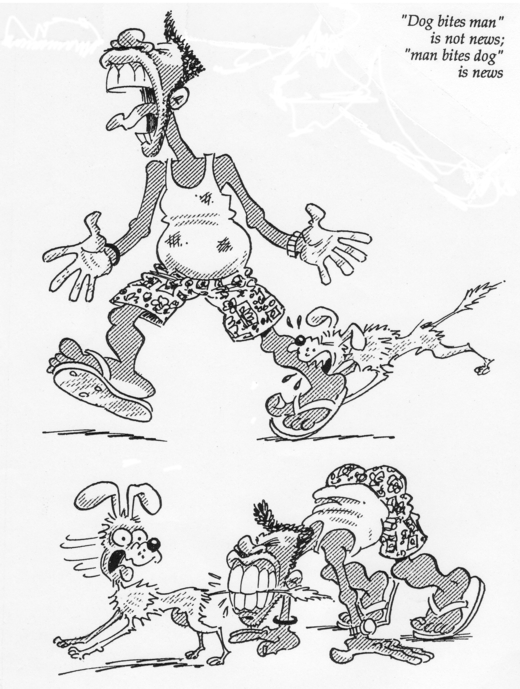
Slovenian Man Bites Two At Dog Show

20091105_blog.jpg
(source)

OK, so it’s not exactly the same as the legendary “Man Bites Dog“, and I’m sure you’ve probably seen it already, but to lighten the load of international treaties, accusations of high treason and the fact that suddenly this country is replete with experts on international law (just as it was replete with experts on English language a week ago), here’s something completely different

(…)a man is alleged to have bitten two people following a dog show in the Latvian capital, Riga, on Sunday, the Baltic News Service reported Tuesday. Police were called after a 27-year-old dog handler from Slovenia reacted in canine fashion when the dog he was parading failed to perform as well as he had hoped. (source)

Apparently the guy was from Maribor. Figures 😈

Pahor-Kosor Agreement Could Usher Major Shifts In Slovenian Politics

Prime Ministers Jadranka Kosor and Borut Pahor signed the agreement on arbitrage in the border dispute between the two countries in Stockholm, Sweden an hour ago. This brings the process almost back to the point it had once already reached with the Drnovšek-Račan agreement of 2001. This time around, however, we do not have a final solution, but rather an agreed mode of seeking the solution in front of a court of arbitrage. However, once the agreement is signed, it will have to be ratified by both parliaments. Specifically, this means that Croatian parliament will have to support the agreement with a 2/3 majority, whereas Slovene parliament will need to secure a relative majority of all MPs present at the time of the vote. In case of Slovenia, this is where it gets interesting.

20091104_blog.jpg
Pahor and Kosor sign the deal, witnessed by Swedish PM Fredrik Reinfeldt (source)

After parliamentary committee on foreign relations supported the agreement yesterday (enabling PM Pahor to sign the deal), opposition leaders started talking about holding a referendum. Technically, it should be a cakewalk. All that would be required are 30 MPs (a third of the parliament) formally requesting the referendum. Between Janez Janša’s Slovene Democratic Party (SDS) with 28 votes, Radovan Žerjav’s Slovene People’s Party (SLS) with seven and Zmago Jelinčič’s Slovene National Party with five votes, this should really not be a problem.

However. A little birdie told pengovsky yesterday that Janez Janša is not at all keen on a referendum. Janša himself said as much later in the evening after appearing on state television and saying that it will probably come to a referendum, but as a result of a civil initiative. Which means that SDS will not chip in their 30 MPs, but will let SLS and SNS collect 40.000 signatures needed to hold a consecutive referendum on ratification of the Pahor-Kosor agreement.

Why is that? We’ve touched upon the answer in yesterday’s post. By signing the agreement PM Pahor basically put all of his eggs in one basket, crucially exposing himself and (by extension) his coalition. Should the agreement fail one way or the other, he will probably have to resign. Janša obviously sensed that and is doing plenty to make this happen. However. As former PM and having been humiliated by former Croatian PM Ivo Sanader on the border issue (Ivo Sanader famously cajoling him into accepting international law as the sole point of reference in solving the dispute), Janša knows perfectly well just how fantastically complicated a quagmire this border dispute actually is. So Janša is looking to bring down the government by beating Pahor over his head by repeating incessantly just how bad this agreement is, but stopping short of shooting down the agreement itself, hoping that SLS and SNS will do the dirty work for him.

The nationalist are in this probably just for fun, because their “postmodern” politics allows them to quicky adopt a new political platform, which does not necessarily correspond with anything they’ve advocated to date. All they need is an unoccupied political niche which will bring enough votes. If the dispute is solved, my bet is that they will either run on a platform of protecting Slovenian minorities in neighbouring states or start advocating some far fetched “solution” for the economic crisis.

As we noted yesterday, SLS is following its own agenda, which is basically very simple. Solving the border dispute would deprive them of a big part of their political platform, so it is in their vital interest that the agreement does not come to fruition. Basically, they’re fighting for survival. And this is where it gets complicated, as SLS’ political demise is one the of not-so-covert mid-term goals of Janez Janša. His ambitions to be the sole political factor on the political right (the only one worth mentioning, at the very least) were nearly fulfilled in 2008 elections, where he squeezed his junior coalition partner Christian Democratic Nova Slovenija (NSi) out of the parliament. The party didn’t make the 4% cut, a fate SLS (the other Janša’s coalition partner) only narrowly avoided.

Things get an additional thrust when one takes into account the fact that municipal elections are less than a year away. Municipal (local) elections are interpreted as a mid-term measure of strength of political parties. And although people tend to read too much into them, they can have a huge psychological impact. And this time around, autumn 2010 can be a turning point for future development of political right in Slovenia.

Namely, NSi is desperate to stage a comeback. They managed to hold on to the fringes of the political arena by their fingernails by winning a single seat in this year’s European elections and are desperate for a strong showing on local level, which would give them enough base and confidence to try to re-enter parliament in 2012 (which would be a first, by the way. Until now, once a party dropped out of the parliament, it stayed there). Given the fact that their near-death experience left an unhealthy vacuum in the Christian democratic niche of the political spectrum, they actually stand a chance, since both SDS and SLS have failed to move in and fill the vacuum completely. But the question is if there’s enough space left for them (errr… right for them… errr… nevermind…)

On the other hand, Janša and his SDS will want to reassert their dominance over SLS and NSi as well as stick one up Pahor’s ass and score an all-round victory. Which is not all that unlikely a prospect given the fact that the government’s ratings are going south as it is and that a rebound is nowhere in sight. In a year’s time the Pahor-Kosor agreement will again become a hot political potato, provided Pahor survives the referendum or at the very least avoids one in the near future. By autumn 2010 Croatia will probably have finished the negotiations and the ratification process will begin. Which is the trigger for the actual arbitrage proceedings to start, which will then cue in vicious rhetoric on betrayal of national interest and that is very much likely to hurt the electoral result of Pahor’s Social Democrats and of the ruling coalition as a whole.

So, what we’re seeing today is actually a multi-way chess game with everyone playing against everyone else simultaneously. Slovenian government against Croatian government. Then we have Slovenian government against Slovenian opposition, which is aiming to destabilise the government by undermining the treaty. Then we have the three opposition parties against each other, each with its own agenda. Putting all of this together, it can start a chain-reaction which will culminate in local elections, where finally, we have the ruling coalition which will want to capitalise on their election victory and score major points in local communities as well, with the opposition looking to hurt the coalition as much as possible.

And suddenly, a year from now, we might end up with a significantly different political landscape, regardless of the fact that things looked boringly predictable only a week ago. And the Pahor-Kosor agreement signed today can be a catalyst for all of it.

Croatian Parliament OKs Agreement, Slovenian Opposition Mulls Referendum

Yesterday evening Croatian parliament voted to approve the arbitration agreement between Croatian PM Jadranka Kosor and her opposite number in Slovenia Borut Pahor aimed at finally solving the border dispute between the two contries. The debate in Sabor (the parliament) was fierce and Kosor had to endure a barrage of criticism and insults. She was even accussed of “premeditated high treason” (as if there’s any other kind), giving away 100 square kilometres of Croatian sea and so on ad nauseam. Kosor responded by saying that the agreement is the best possible under current conditions and that the clause 3b does not automaticlly mean direct Slovenian access to high seas. But just to be sure, she attached an unilateral statement to that effect, which she hopes will be co-signed by the Swedish EU Presidency. In the end, despite everything eighty MPs out of 134 voted in favour of the agreement.

20091103_sabor.jpg
Sabor votes on the agreement (photo: Ranko Šuvar, source)

One of the results of the vote is that we can now finally see the official text of the agreement (scroll down to page 7 for English original), specifically, the infamous clause 3b, which speaks of “Slovene junction to high seas”. But even more importantly, the document reveals (in Article 11) that the whole procedure will begin only after Croatia signs the EU accession treaty. Now, as with clause 3b, this particular stipulation is being read almost as many ways as there are people reading it (on that note, let me add that the amount of experts on English language has risen dramatically on both sides of the border in the past few days since the document was leaked).

Anyhoo. The Croatian position seems to be that Croatia will enter the arbitrage proceedings as a full member of the EU which should even the odds against Slovenia in terms of political leverage. It also believes that this is a way to avoid a possible Slovenian referendum on Croatian EU entry due to an unfavourable decision by the court. Given the fact that the EU membership process usually lasts about a year, while the court is expected to deliberate at least three years, they may well be on to something.

Thus the ball entered the Slovenian court, where the unilateral statement Croatia added to the document is making everyone nervous. PM Pahor already said that – should the Swedish presidency co-sign the Croatian statement (as per Kosor’s wishes) – the deal is off as the statement can be understood to deny Slovenian direct access to high seas and can therefore influence the interpretation of the text of the actual agreement. But as he is preparing to run the agreement by the parliamentary foreign relations committee once again, the opposition is rumoured to be preparing a motion to severely stall the process or even to call a referendum on the agreement itself.

This is in part fuelled by an opinion by former judge at the constitutional court Janez Čebulj, who days ago wrote that referendum on the arbitrage agreement should be held before the two PMs sign it and not after the deed. Now, one can say that Čebulj’s opinion is biased and politically motivated. After all, he is known to be on good terms with the political right and rumour had it that he on more than one occasion leaked information on politically sensitive issues to SDS before the Court’s final rulings. However, on the whole he was a good constitutional judge, much better than many people are willing to admit. Therefore his opinion carries weight. PM Pahor and the coalition will have to present good arguments against holding a referendum at this junction (pun very much intended)

On the other hand, it has to be said that the opposition, specifically, Janez Janša of SDS, Radovan Žerjav of SLS and Zmago Jelinčič of SNS probably have ulterior motives for shooting down the agreement. This is a very tricky moment for the government as well as for PM Pahor personally. If he fails, his credibility will have been damaged the field of foreign relations, the only area where he indisputably knows where his towel is. So, shooting down the agreement basically means shooting down Pahor and forcing him to resign from office. Or, at the very least, making him extremely docile.

Also, resolving the border dispute would deprive the current opposition of a big part of their political platform and – as a result – of their electorate. Curiously enough, this would least affect Jelinčič’s nationalist party, as their platform shifts to accommodate an untapped source of votes (being strongly nationalistic in 1992 and 1996, they campaigned on a pro-Serb, anti-NATO platform in 2000). Lack of Slovene-Croat border dispute would damage Žerjav’s Slovene People’s Party (SLS) as the dispute is more or less their raison d’etre, but it would also make dent Janša’s ratings, although not by much.

So, there are a few ways how this could still go wrong. We’ll see later today how things turn out. A Cabinet session is due to start in about 15 minutes, after which parliamentary committees on foreign and EU relations will convene in a special session and debate the issue.

However, the opposition can use its 30+ votes to call a subsequent referendum only after the agreement is ratified in the parliament (presumably mid-December). If they wanted to hold a conslutative referendum, they’d have to convince a majority of MPs, which is not likely to happen any time soon. The bottom line therefore is, that the referendum is most likely to be held some time in early 2010. Unless of course someone devises a smart way of avoiding it altogether.